Bellevue, WA
Siding Replacement in Bellevue, WA
King County assessor records put the median Bellevue single-family home at 1972, and 63% of the city’s 30,505 single-family houses went up between 1950 and 1979. Only 5% carry a recorded renovation. For a home siding company in Bellevue, those figures matter more than any other: a house’s era tells you what is likely on its walls and what the replacement has to solve. Below is what you will likely find on local walls today, how our siding types fit Bellevue’s conditions, and the signs that yours is due.
What’s on Bellevue homes now
Assessor data splits Bellevue’s single-family stock into clear eras: 2% built before 1950, 63% from 1950 to 1979, 20% from 1980 to 1999 and 16% from 2000 on. Each era tends to have its own siding.
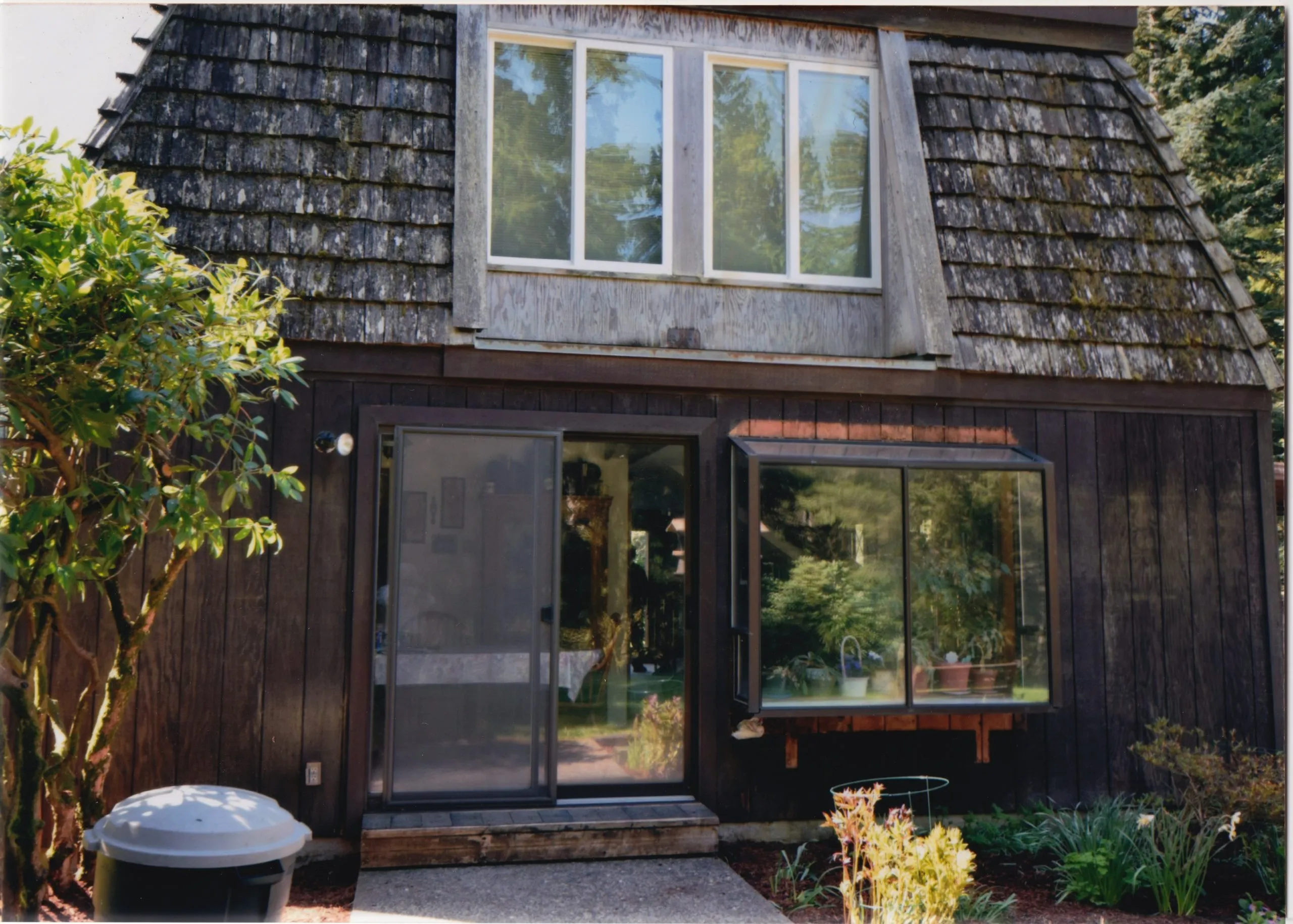
- 1950–79 homes. Expect cedar, T1-11 plywood panels or asbestos-cement shingles. Asbestos-cement shingles may contain asbestos and should be tested before removal. Lake Hills (median year built 1956, 485 homes), Newport Hills (1959) and the Eastgate (1954) and Vuecrest (1952) additions all belong to this group.
- 1980–99 homes. This was the era of composite and hardboard siding, including LP siding, which has a known history of moisture failure. Assessor records place 12% of single-family homes in the 1985–96 window most tied to LP.
- 2000 and later. Fiber cement or builder-grade vinyl that is now reaching its first repaint or replacement. Lochleven, with a median year built of 2001, is the newest of the neighborhoods in the county data.
Census data counts 66,021 housing units in the city: 46% detached houses, 11% attached homes such as townhouses and 42% apartments. Among single-family homes, assessor records rate 48% in good or very good condition.
Choosing siding for Bellevue’s conditions
Bellevue is in the Eastside climate region: moderate rain, no salt air, and a wildfire rating of Low, at the 45th percentile statewide. The decision here turns on moisture, house size and home value more than on fire or corrosion. The three siding types we usually recommend are vinyl, the Evergreen Shield Siding System and metal, with stone veneer for accents. Which one suits your house is something we work out at the free in-home consultation. None of the three is wood, so unlike aging cedar, none of them will rot or need repainting after a wet winter.
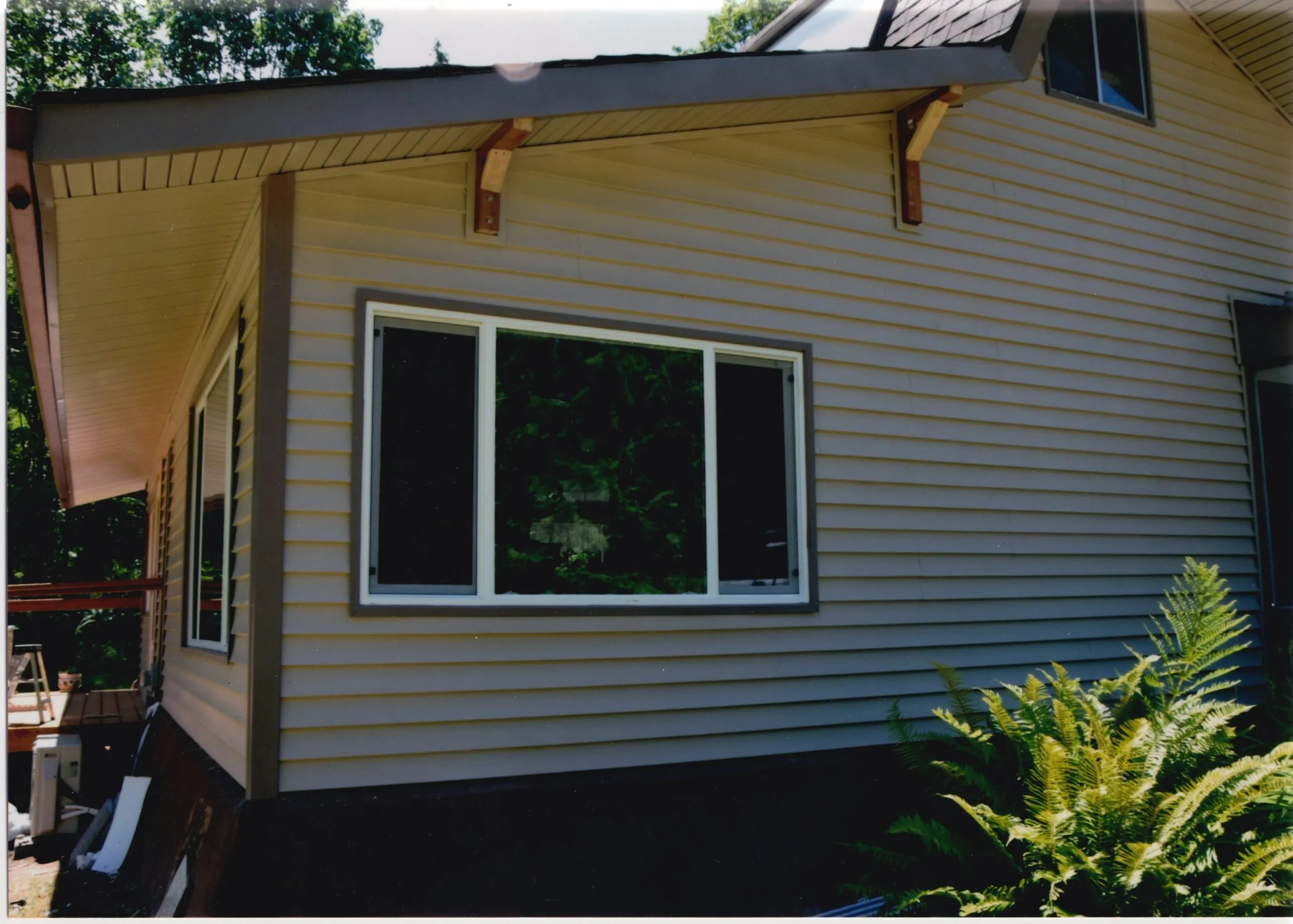
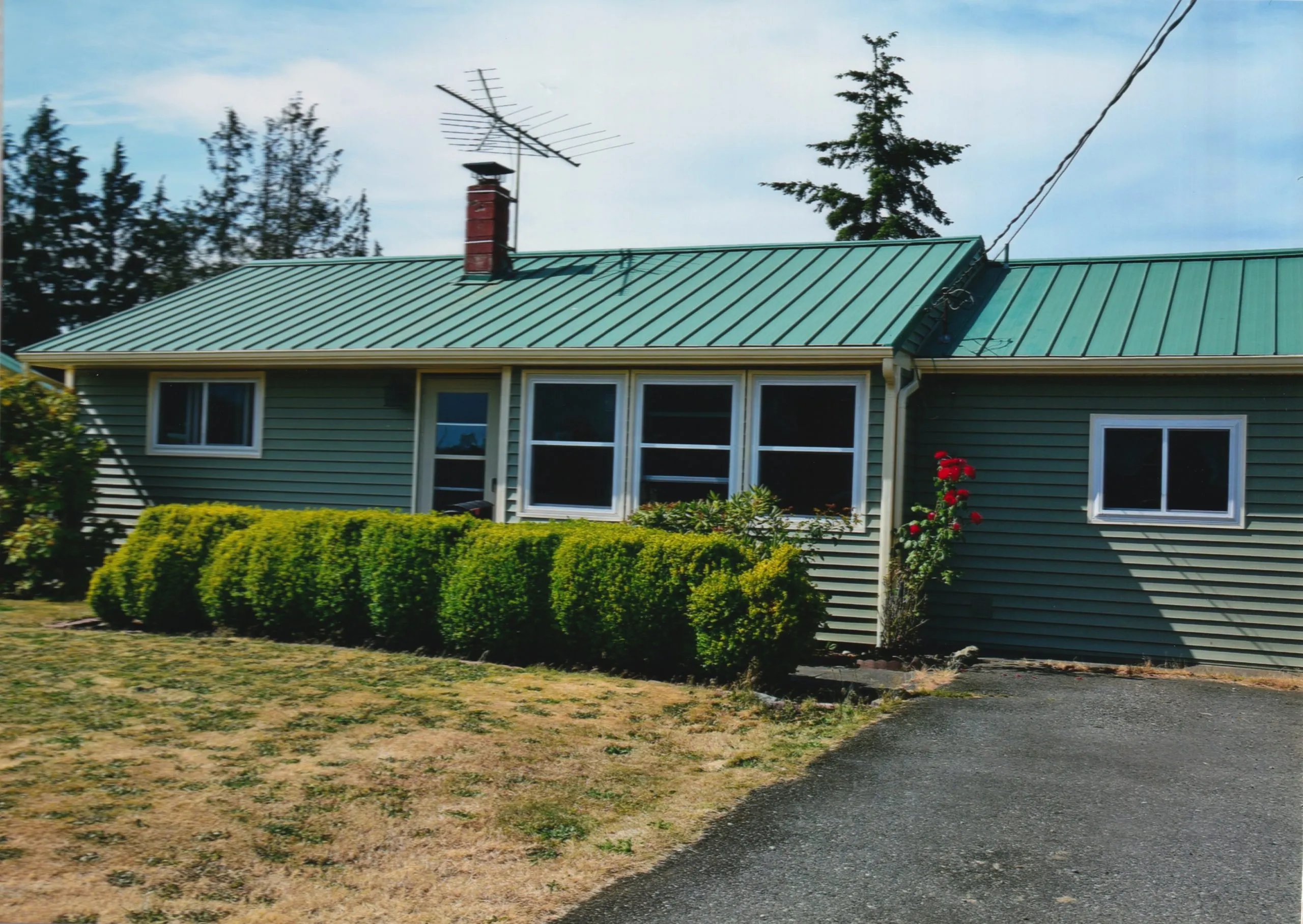
- Vinyl siding. The most versatile and lowest-cost option. The median single-family home here has 2,530 square feet of living space, and 40% have two or more stories, so a budget-friendly material helps on a big wall area. Current profiles include wood-grain finishes that never need paint.
- Evergreen Shield Siding System. Our exclusive insulated composite siding. Bellevue’s median home value is about $1,340,000, 46% above the King County median, and owners at that level more often pick a premium material like this one. Its 20 built-in, fade-resistant colors give you a defined set of choices to take to HOA design review, which is common in Bellevue neighborhoods.
- Metal siding. The other premium choice for higher-value houses. King County assessor records grade 40% of Bellevue single-family homes at 9 or higher.
- Stacked stone and stone veneer. An accent, not a whole-house siding: entries, chimney surrounds, columns and the lower part of the front wall. Only 6% of single-family homes have any brick or stone outside now. Veneer gives the look of stone without the weight of full masonry, and we flash and seal each transition where stone meets siding so water drains out instead of getting trapped.
Evergreen Shield Siding System in Bellevue
Two features of the Evergreen Shield Siding System match what Bellevue houses deal with. The composite is built for water resistance through long wet seasons, humidity, mold and mildew, the slow, wet-season damage that wears down old wood siding. And an insulating graphite membrane gives the panels a thermal resistance of R-2.0, compared with R-0.61 for standard vinyl siding.
The second point matters here because Census data shows 52% of Bellevue homes heat with electricity. Where heating costs more, insulated siding pays back more over the years you own the house. At the consultation we bring samples, look at your walls and heating, and tell you plainly whether the upgrade makes sense for your home or whether vinyl or metal is the better fit.
Signs your siding needs replacing
On older wood-sided houses, rain works on the siding every season. Look for these:
- Paint that won’t stay on cedar. Peeling within a year or two of repainting, gray split boards, and soft spots near the ground.
- T1-11 coming apart. Plywood panels delaminating along the bottom edge, where water sits on the trim.
- Swollen hardboard or LP lap siding. On 1980s and 1990s homes, look for boards that have swelled, flaked or gone soft at the drip edges and butt joints.
- Moss, mildew or rot on north walls that see little sun through the wet months.
- Cracked, warped or loose pieces and caulk joints that have opened, letting water behind the siding.
If you see two or more of these, patching usually just buys time.
Get a free siding consultation in Bellevue
Schedule a free in-home consultation or call our Seattle office at 206-430-1927. We inspect your current siding, go over the options and plan the layout before work starts. Ask about our lifetime warranty, financing and discounts for seniors, active military, veterans and first responders. For roofing, windows and decks, see our Bellevue home exterior services.
Bellevue siding FAQ
Which siding holds up best in Bellevue's climate?
Any of the three types we usually recommend will handle Bellevue's moderate Eastside rain, because none of them is wood. Vinyl keeps costs down on large houses. The Evergreen Shield Siding System adds water-resistant composite and insulation. Metal is a premium option many owners of higher-value homes choose. We match the type to your house, budget and heating during the free in-home consultation rather than picking one for every home.
Does my HOA need to approve new siding?
Often, yes. Many Bellevue neighborhoods have HOA design review, and it can cover siding color and profile. Check your covenants and get the committee's sign-off before you order material. The Evergreen Shield Siding System's 20 built-in colors make it easier to submit a specific choice, and we can help you gather the product details your HOA asks for. Call our Seattle office at 206-430-1927 with questions.
What should I expect when removing siding from a 1950s or 1960s house?
Expect cedar, T1-11 or asbestos-cement shingles, which are typical of houses from that era, such as those in Lake Hills, where the median home dates to 1956. Asbestos-cement shingles may contain asbestos and should be tested before removal. Once the old siding is off, we check the wall underneath for water damage and address it before the new siding goes on, so problems are fixed rather than covered.
My house was built in the late 1980s. Is the original siding a problem?
It may be. Homes from the 1980s and 1990s often have hardboard or LP siding, which has a known history of moisture failure, and assessor records place 12% of Bellevue single-family homes in the 1985–96 LP era. Look for swelling and flaking at the board edges. If you see it, replacing with vinyl, metal or the Evergreen Shield Siding System is usually the lasting fix.
Is insulated siding worth it if my home heats with electricity?
It is worth a close look. Census data shows 52% of Bellevue homes heat with electricity, and payback from insulated siding is larger where heating is costly. The Evergreen Shield Siding System has a thermal resistance of R-2.0, compared with R-0.61 for standard vinyl siding. We can review your heating setup during the free in-home consultation and help you weigh it against vinyl or metal.