Lakewood, WA
Deck Building in Lakewood, WA
Most single-family homes in Lakewood are mid-century houses. Pierce County assessor records put the median build year at 1960, and 63% were built between 1950 and 1979. That age matters for a deck. An older house may have a deck that has been through decades of South Sound winters, or a back door that has never had one. Whether you are planning a new deck in Lakewood or replacing a tired one, the choices come down to how the boards, framing and railings will handle years of wet weather.
Decks on Lakewood homes
The Pierce County assessor tracks 11,608 single-family homes in Lakewood, and 39% of them have a deck on record. A typical existing deck here is 300 square feet. If your house has no deck yet, you are in the majority, and you get to plan the size and shape around how you actually use the yard: a spot for a grill, a table for family dinners, or room for entertaining friends, family and guests.
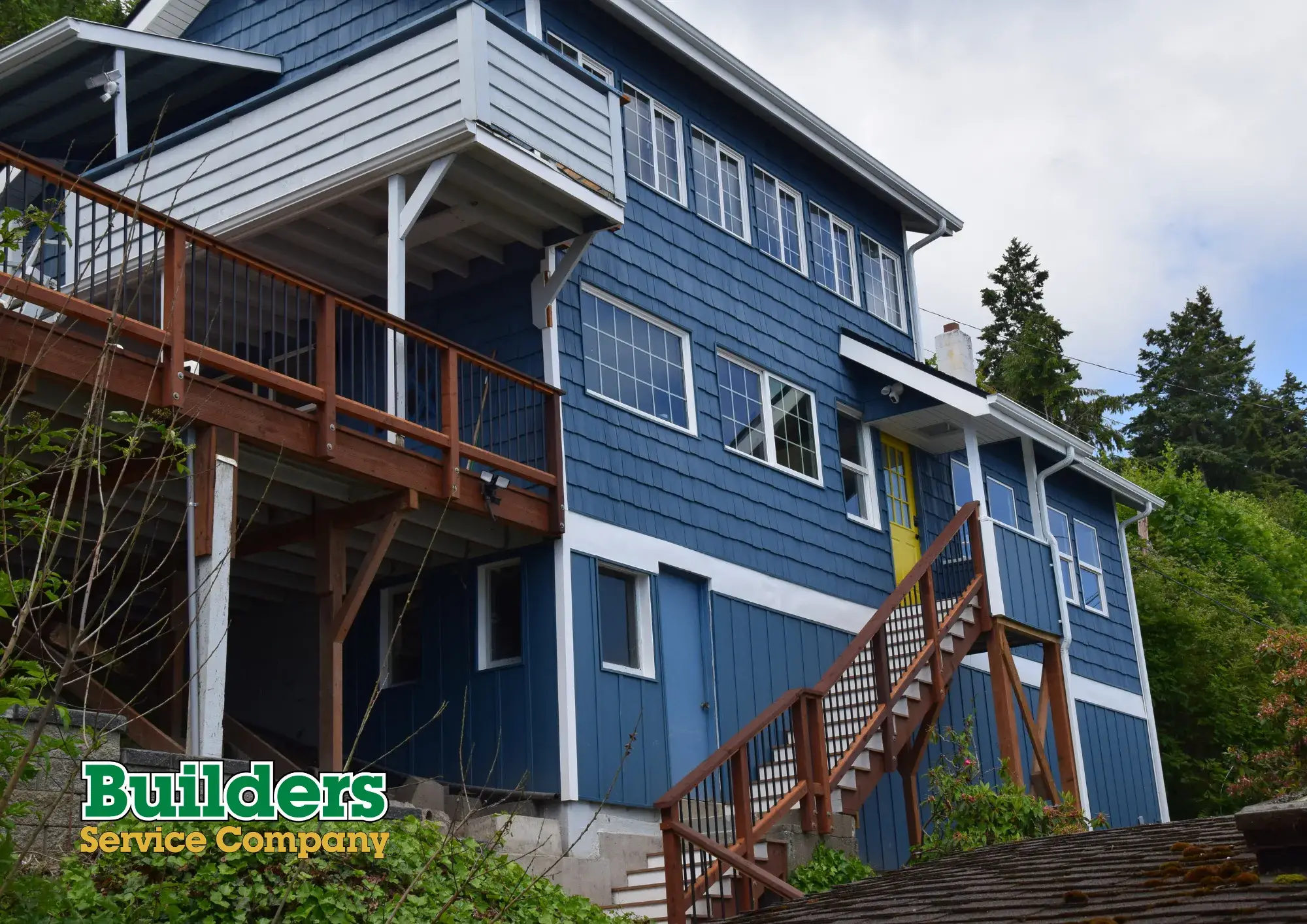
Height is the next question. Assessor records show 23% of single-family homes in Lakewood have two or more stories, so some decks start at an upper-floor door rather than near the ground. Those raised decks need taller posts, stairs and full railings, and they change how the space underneath can be used.
Waterfront homes make up about 8% of the city’s single-family housing. On those lots, the railing you pick decides how much of the water you see from the deck and from inside the house.
Building a deck for Lakewood’s weather
Lakewood sits in the South Sound, which gets heavier rain than the central Sound and plenty of moss. We plan every deck here around water first.
Pick decking that does not rot. Composite and vinyl boards are the practical fit for this climate. They do not soak up water, they do not rot, and they never need a stain. If you prefer real wood, it can work well here too, but it needs sealing on a regular schedule to keep moisture out of the grain.
Keep moss from taking hold. Moss grows where boards stay damp and shaded. We set the deck so it gets as much air and light as the site allows, leave gaps between boards so debris washes through, and slope the surface slightly away from the house. A deck that dries quickly after a storm stays cleaner and less slick.
Protect the house where the deck attaches. On an older home, the ledger board that ties the deck to the wall is a common place for water to get in. We flash that connection so rain runs past it instead of into the rim of the house, and we check the existing wall before we fasten anything to it.
Think about footing and posts. Wet ground is hard on wood posts that sit in contact with soil. We keep posts up on footings so the bottom of each one can dry out between rains.
Signs your deck needs replacing
On older Lakewood decks, the trouble usually starts where water sits.
- Soft spots underfoot. Press a screwdriver into a board near the house or at the stairs. If it sinks in, rot has started, and the joist below may be soft too.
- Green, slick boards that will not stay clean. Moss that keeps coming back means the surface is holding water, and wood under that film breaks down faster.
- A railing that moves. Push on the top rail. Any wobble at the posts points to loose fasteners or rotted wood at the base.
- Gaps at the house wall. A deck pulling away from the ledger, or dark stains on the siding behind it, means water is getting into the connection.
If you see more than one of these, a rebuild usually makes more sense than another round of patches.
Get a free deck consultation in Lakewood
Schedule a free in-home consultation and we will measure the space, look at the house and compare wood, vinyl and composite decking for your yard. Call our Tacoma office at 253-777-0866 or contact us online. Financing is available, and we offer discounts for seniors, active military, veterans and first responders. For siding, windows and roofing, see our Lakewood home exterior services.
Lakewood deck building FAQ
Which decking holds up best to Lakewood's rain?
Composite and vinyl decking hold up best for most Lakewood homes. The South Sound gets heavier rain than the central Sound, and neither material rots or needs staining. Wood decking is still a fair choice if you want a natural look or need to manage cost, but plan to seal it on a regular schedule. We build all three and will compare them on your house during the free in-home consultation.
Can you build a deck off a second-story door in Lakewood?
Yes, we build elevated decks, and they come up often here. Pierce County assessor records show 23% of single-family homes in Lakewood have two or more stories. A raised deck needs taller posts, solid bracing, stairs sized to the drop and railings along every open edge. We look at the door location, the yard below and how you want to get from the deck to the ground before drawing a layout.
What railing works best on a Lakewood waterfront deck?
A railing with slim balusters and an open design usually keeps the view clearest. About 8% of single-family homes in Lakewood sit on the waterfront, according to Pierce County assessor records, and on those lots the railing is often the first thing you see from the house. We bring railing options to the consultation and talk through how each one sits against the view from your main windows.
Should I repair or replace the deck on my 1960s Lakewood home?
If the framing is soft or the ledger is rotted, replacement is usually the better path. The median Lakewood single-family home was built in 1960, so many decks here are old or have been patched more than once. Surface boards alone can sometimes be swapped, but we check the posts, joists and ledger first. You get a straight answer on repair versus a new deck during the free in-home consultation.