Belfair, WA
Siding Replacement in Belfair, WA
Nearly half of Belfair’s homes were built between 1980 and 1999. Census data puts that share at 46%, and the median home here dates to 1994. Those decades were the era of composite and hardboard siding, including LP siding, which has a known history of moisture failure. Pair that siding with Hood Canal rainfall, shade and heavy tree cover, and the wear shows up first along the lowest boards. This page covers what is on local homes today, which siding fits Belfair’s conditions and how to tell when it is time to replace.
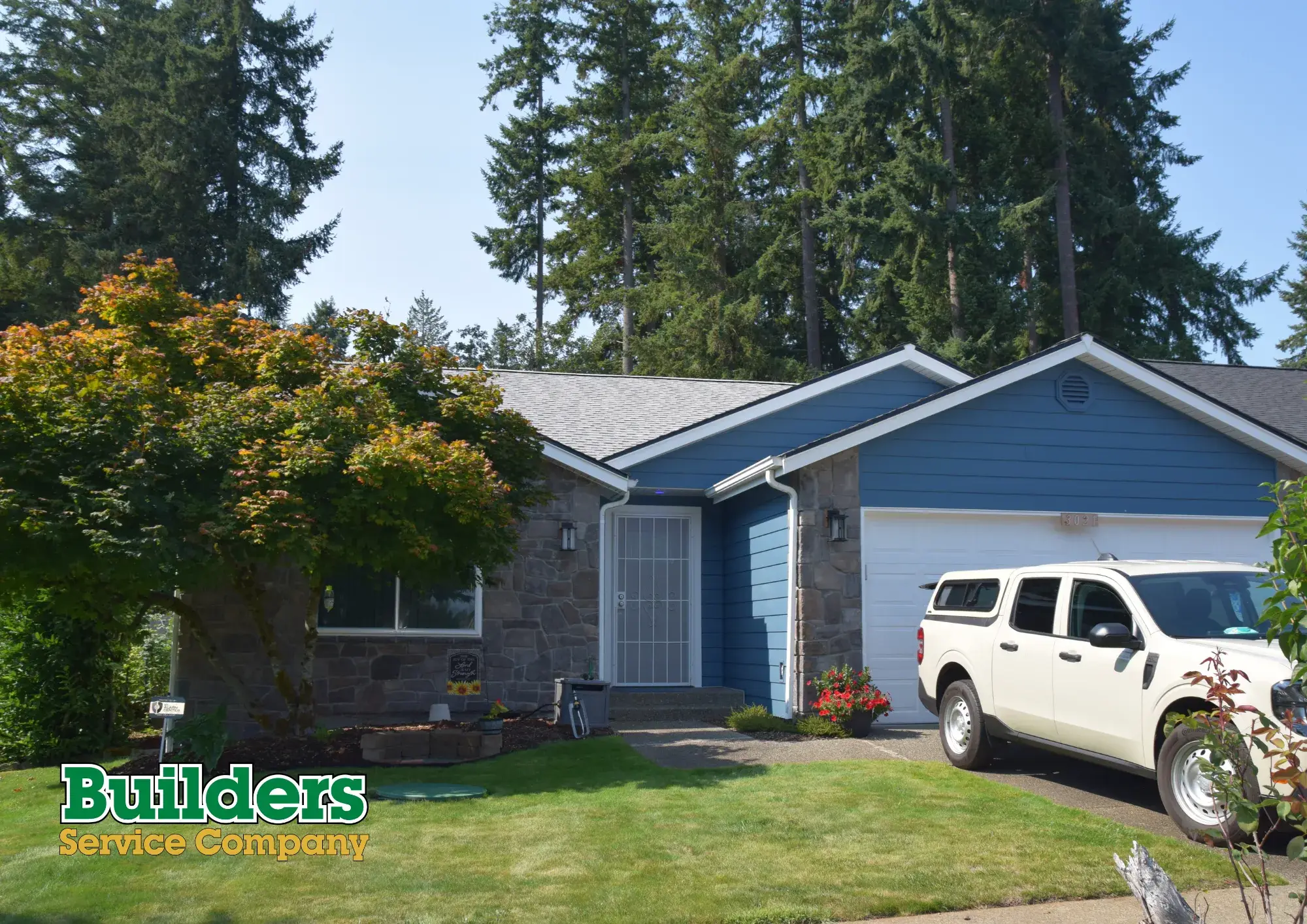
What’s on Belfair homes now
Census figures for Belfair’s 1,702 housing units break down by age like this, and each era tends to have its own siding:
- 1980–99 (46%): composite and hardboard lap siding, including LP, are typical of these houses.
- 2000 or later (29%): fiber cement or builder-grade vinyl, now reaching a first repaint or replacement.
- 1950–79 (20%): cedar, T1-11 plywood panels or asbestos-cement shingles. Asbestos-cement shingles may contain asbestos and should be tested before removal.
- Before 1950 (4%): likely original wood lap siding, possibly with lead paint under later coats.
Detached houses make up 70% of Belfair’s homes, mobile homes 18%, and attached homes and apartments 6% each. Whatever the house type, we start the consultation by looking at what is on the walls now and how it has held up.
Owner-occupancy stands at 77%, a high share that usually means long-term owners investing in their exteriors rather than patching them year to year.
Choosing siding for Belfair’s conditions
Very high rainfall, heavy tree cover and long stretches of shade keep Belfair walls damp and give moss a foothold. Vinyl, metal and the Evergreen Shield Siding System are the three types we usually recommend for these conditions, and we settle the best fit for your house during the free in-home consultation. In our experience cedar doesn’t hold up well in Washington’s wet climate, and none of these three is a wood product.
- Electric heat: 73% of Belfair homes heat with electricity from Mason County PUD 3, another 6% use propane and 3% use oil. Where heating is costly, the payback from insulated siding is larger, which points toward the Evergreen Shield Siding System.
- Waterfront cabins and homes: along Hood Canal, salt air favors vinyl or the Evergreen Shield Siding System, installed with corrosion-resistant fasteners and flashing and finishes rated for marine exposure.
- Budget and wall area: vinyl is the most versatile and least expensive of the three. It ends the cycle of caulking, sealing and repainting a painted exterior, comes in a wide range of colors, styles and textures, and a damaged panel can be replaced on its own.
- Home value: Belfair’s median home value of about $380,000 sits roughly 1% above the Mason County median, right at the county level. That leaves room for both paths: vinyl for a cost-effective project, or the Evergreen Shield Siding System or metal as the premium long-term upgrade.
- Stone accents: stacked stone or stone veneer gives a durable base course on walls that stay wet near the ground, and it adds curb appeal at an entry, column or chimney. It pairs with any of the three siding types.
Belfair’s wildfire risk is rated low, at the 35th percentile in Washington, so moisture and heating weigh more in the choice here than fire rating does.
Evergreen Shield Siding System in Belfair
The Evergreen Shield Siding System is our exclusive insulated composite siding, designed for the Pacific Northwest climate. Two of its features fit Belfair best.
Its composite panels are built for water resistance against long wet seasons, humidity, mold and mildew. That is the job a wall has on a shaded lot that rarely dries out between Hood Canal storms.
Behind the panels, an insulating graphite membrane gives a thermal resistance of R-2.0, compared with R-0.61 for standard vinyl siding. If your home heats with electricity, propane or oil, that added layer is a practical reason to choose it over uninsulated siding. We’ll show you the panels and colors at your consultation so you can compare them side by side with vinyl and metal.
Signs your siding needs replacing
On a 1980s or 1990s house with hardboard or LP lap siding, start at the bottom edges of the boards. Swelling, flaking or soft spots near the drip edge and along the lowest courses mean water is getting into the board. Under Belfair’s tree cover, check north-facing and shaded walls for moss and rot that keeps coming back after cleaning, and look at gutters and roof edges that spill onto the siding below. On older cedar or T1-11, watch for panels that are cracked, delaminating or soft at the seams. Loose panels, open gaps and poorly installed siding also give insects and small pests a way into the house. If your home has cement shingles from before 1980, have them tested for asbestos before anyone removes them.
Get a free siding consultation in Belfair
Schedule a free in-home consultation through our contact page or call 253-777-0866. Belfair is unincorporated, so permitting runs through Mason County, and we’ll go over it at the visit. Our siding work carries a lifetime warranty, with discounts for seniors, active military, veterans and first responders and financing available. For roofing, windows and decks as well, see our Belfair home exterior services.
Belfair siding FAQ
What should I expect when replacing 1980s or 1990s siding in Belfair?
Expect to replace hardboard or composite boards rather than patch them. Belfair's median home was built in 1994, in the era of composite and hardboard siding, including LP siding with its known history of moisture failure. Heavy rain is what makes the details matter: the new siding goes on with rainscreen detailing, and we look at the gutters and roof edges above it. We'll walk the house with you during the free in-home consultation.
Is vinyl siding a good choice for a Belfair home?
Yes, for many Belfair homes vinyl is a practical choice. It is the most versatile and least expensive of the siding types we usually recommend, and it ends the repainting cycle. With Belfair's median home value about 1% above the Mason County median, vinyl keeps a large wall area cost-effective, and it is one of the two types we usually recommend for waterfront homes facing salt air. We'll compare it with the other options at your consultation.
Does insulated siding make sense if I heat with electricity?
It can, because the payback from insulated siding is larger where heating is costly, and 73% of Belfair homes heat with electricity. The Evergreen Shield Siding System uses an insulating graphite membrane with a thermal resistance of R-2.0, compared with R-0.61 for standard vinyl siding. We don't quote energy savings, but we'll talk through how it compares with vinyl and metal for your home during a free in-home consultation.
What siding works for a waterfront cabin on Hood Canal?
Vinyl or the Evergreen Shield Siding System are the two types we usually recommend for waterfront cabins and homes exposed to salt air. On the water, the installation matters as much as the panels: we use corrosion-resistant fasteners and flashing and finishes rated for marine exposure. Stacked stone or stone veneer can add a durable base course near the ground. Call 253-777-0866 to schedule a free in-home consultation.