University Place, WA
Siding Replacement in University Place, WA
Pierce County assessor records put the median single-family home in University Place at 1971, and 59% of the city’s 6,739 single-family houses went up between 1950 and 1979. That makes siding replacement in University Place mostly a mid-century job: original wood boards or plywood panels that have spent decades in the rain. Below you will find what typically covers those walls today, which replacement siding fits local conditions, and the signs that tell you it is time to replace siding instead of patching it again.
What’s on University Place homes now
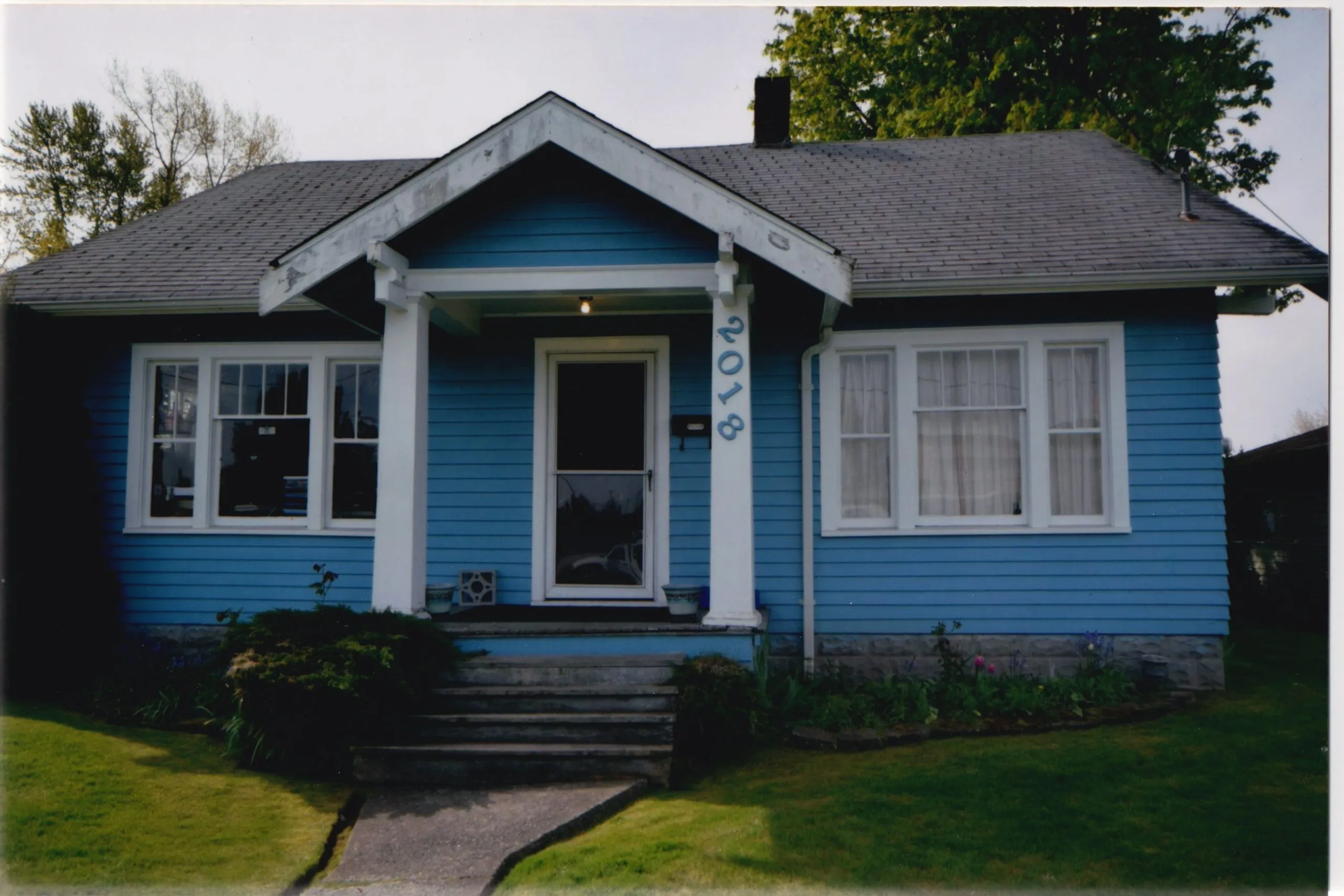
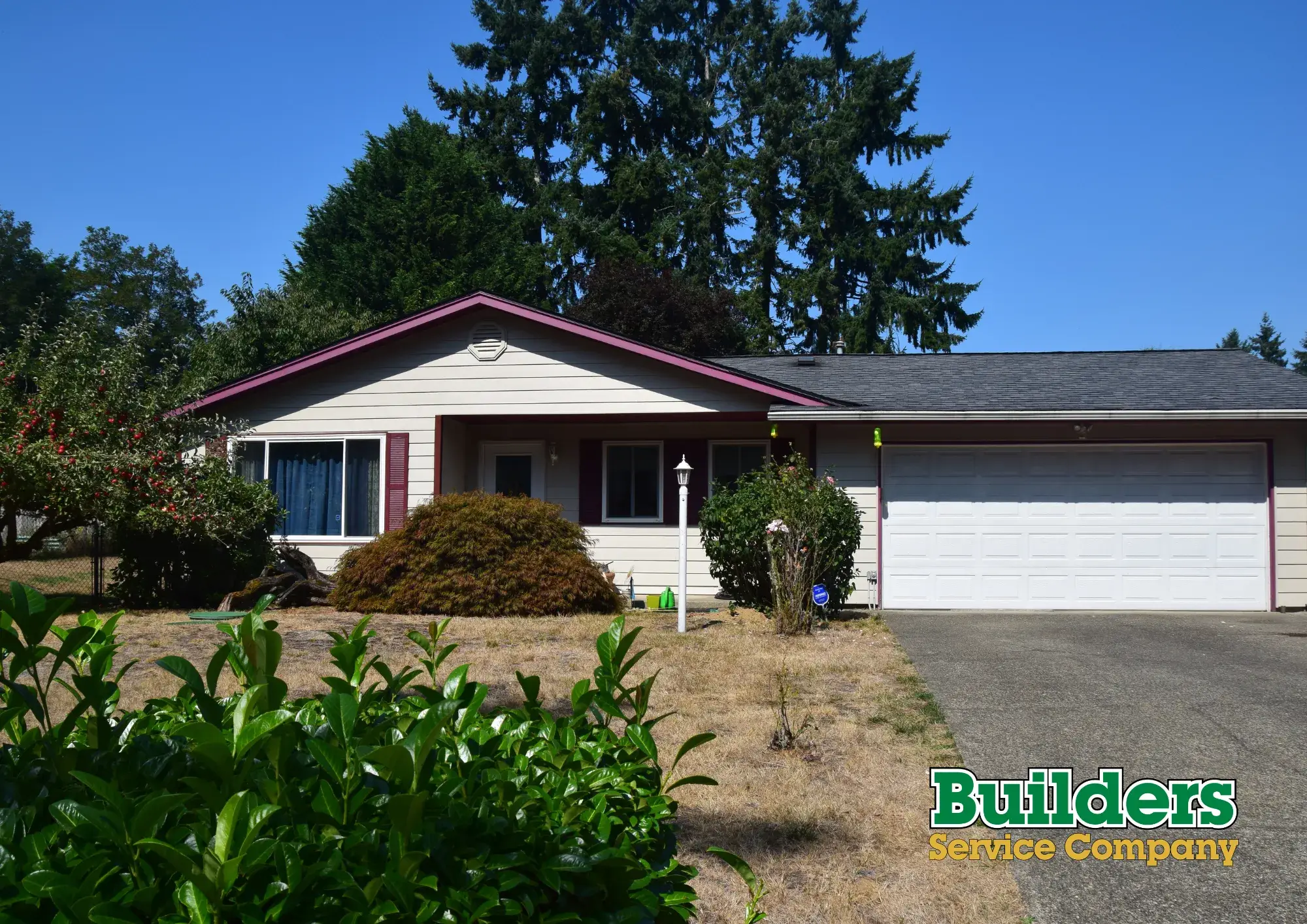
Houses from the 1950–79 building era were typically sided with cedar, T1-11 plywood panels or asbestos-cement shingles. If your home has shingle siding from that period, it may contain asbestos and should be tested before removal.
Another 22% of single-family homes date from 1980 to 1999, the era of composite and hardboard siding. Assessor records show 14% were built between 1985 and 1996, the years of LP siding, a product with a known history of moisture failure. About 10% predate 1950 and likely still have original wood lap siding, which may carry lead paint. The newest 10%, built in 2000 or later, often have fiber cement or builder-grade vinyl reaching its first repaint or replacement.
Other wall materials are uncommon. Assessor records list vinyl on 5% of single-family homes, brick or masonry on 3% and stucco on 1%, so the siding types from each era above cover the large majority of houses. Only 1% of homes are rated in fair or worse condition.
Census data counts 14,216 housing units in the city. 54% are detached houses and 18% are attached homes such as townhouses, so siding work here covers both freestanding houses and shared-wall buildings.
Choosing siding for University Place’s conditions
We usually recommend three siding types, plus stone accents. The best option for your house is something we work out together during the free in-home consultation. Here is how each lines up with local conditions.
Heavy rain and moss. The South Sound gets more rain than the central Sound, and moss settles on shaded surfaces. Vinyl, the Evergreen Shield Siding System and metal all suit that climate, and none of them is wood. Unlike the cedar on many mid-century houses here, Evergreen Shield Siding System panels never need repainting after a wet winter.
Large walls on a budget. Of the three, vinyl is the most versatile and costs the least. The median single-family home here has 1,876 square feet, and on a two-story house the wall area adds up, which is where vinyl’s lower cost matters most.
Long-term upgrades. The median home value in University Place is about $625,000, roughly 18% above the Pierce County median. At that level, owners more often pick the Evergreen Shield Siding System or metal siding when they plan to stay in the house.
Waterfront lots. Assessor records flag 2% of single-family homes as waterfront. Salt air on those lots points to vinyl or the Evergreen Shield Siding System. We pair either one with fasteners and flashing that resist corrosion, and finishes rated for marine exposure.
Entries and base courses. Stacked stone or stone veneer works as a wainscot along the bottom of the walls, or around entries, columns and chimneys. It is an accent used with any of the three sidings, not a whole-house cladding, and it gives a low, wide mid-century house a durable base where rain splashes back onto the walls.
Evergreen Shield Siding System in University Place
The Evergreen Shield Siding System is our exclusive siding: insulated composite panels designed for Pacific Northwest weather. Two of its features match University Place homes closely.
Census data shows 62% of households here heat with electricity, supplied by Tacoma Power, and 36% with gas. Where electric heat is this common, insulation on the outside of the wall carries more weight. The system’s graphite membrane gives it a thermal resistance of R-2.0, against R-0.61 for standard vinyl siding.
The composite is also built to resist water, along with the humidity, mold and mildew of long wet seasons. On a house whose original siding has absorbed decades of rain, that is the property to compare first.
Signs your siding needs replacing
What to look for depends on when your house was built.
- 1950–79 cedar and T1-11: soft or rotted boards along the bottom courses, plywood panels separating at the seams, and paint that peels within a few seasons.
- 1985–96 hardboard and LP siding: swelling at the drip edges and lower panel edges, mushroomed board ends, and flaking where water has soaked through the surface.
- Rain on shaded walls: moss and dark staining on north-facing walls that stay damp longest, and rot below gutters that overflow.
- Pre-1950 wood lap siding: split or cupped boards under many layers of old paint.
During the consultation we check these spots and tell you plainly whether repairs will do or replacement is the better call.
Get a free siding consultation in University Place
Schedule a free in-home consultation through our contact page or call our Tacoma office at 253-777-0866. We give you a quote before any work starts. Our siding comes with a lifetime warranty, financing is available, and we offer discounts for seniors, active military, veterans and first responders. You can also browse our University Place home exterior services.
University Place siding FAQ
What should I expect when removing siding from a 1950s to 1970s house here?
Expect us to identify what is on the walls before any of it comes off. Houses from the 1950–79 era in University Place often have cedar, T1-11 panels or asbestos-cement shingles. Shingle siding from that period may contain asbestos and should be tested before removal. Once the old siding is off, we can see the condition of the wall behind it and plan the new siding around what we find.
Is vinyl or the Evergreen Shield Siding System better for a two-story house in University Place?
Both work on a two-story house, and the choice usually comes down to budget versus insulation. Assessor records show 44% of single-family homes here have two or more stories, which means more wall area to cover. Vinyl is the least expensive of the siding types we usually recommend. The Evergreen Shield Siding System costs more but adds an insulating membrane rated R-2.0, compared with R-0.61 for standard vinyl siding.
Does wildfire risk affect siding choices in University Place?
Not much. The city's wildfire risk is rated low, at the 54th percentile statewide. We steer homeowners toward Class A rated siding for fire protection mainly in high-risk areas, and University Place is not one of them. In University Place, rain, heating and budget usually decide the choice between vinyl, the Evergreen Shield Siding System and metal. Stone veneer accents near the ground are noncombustible either way, so they suit any of the three.
Why do so many University Place homes from the 1980s and 1990s need new siding?
Many were built with composite or hardboard siding, which does not hold up well once water gets in. Assessor records show 22% of single-family homes here date from 1980 to 1999, and LP siding from those years has a known history of moisture failure. Look for swollen lower edges and soft board ends. We replace these products with vinyl, the Evergreen Shield Siding System or metal.