Bremerton, WA
Siding Replacement in Bremerton, WA
Most of Bremerton’s homes were built before 1980. Census data shows 33% of the city’s housing dates from before 1950 and another 32% from 1950 to 1979, so a lot of the siding in town has stood through decades of wet winters and marine wind. Siding replacement in Bremerton usually starts with what that older wall is hiding: original wood boards, many coats of paint and, on some houses, materials that need testing before they come off. Below is what’s on local homes now, which siding fits, and how to tell when yours is done.
What’s on Bremerton homes now
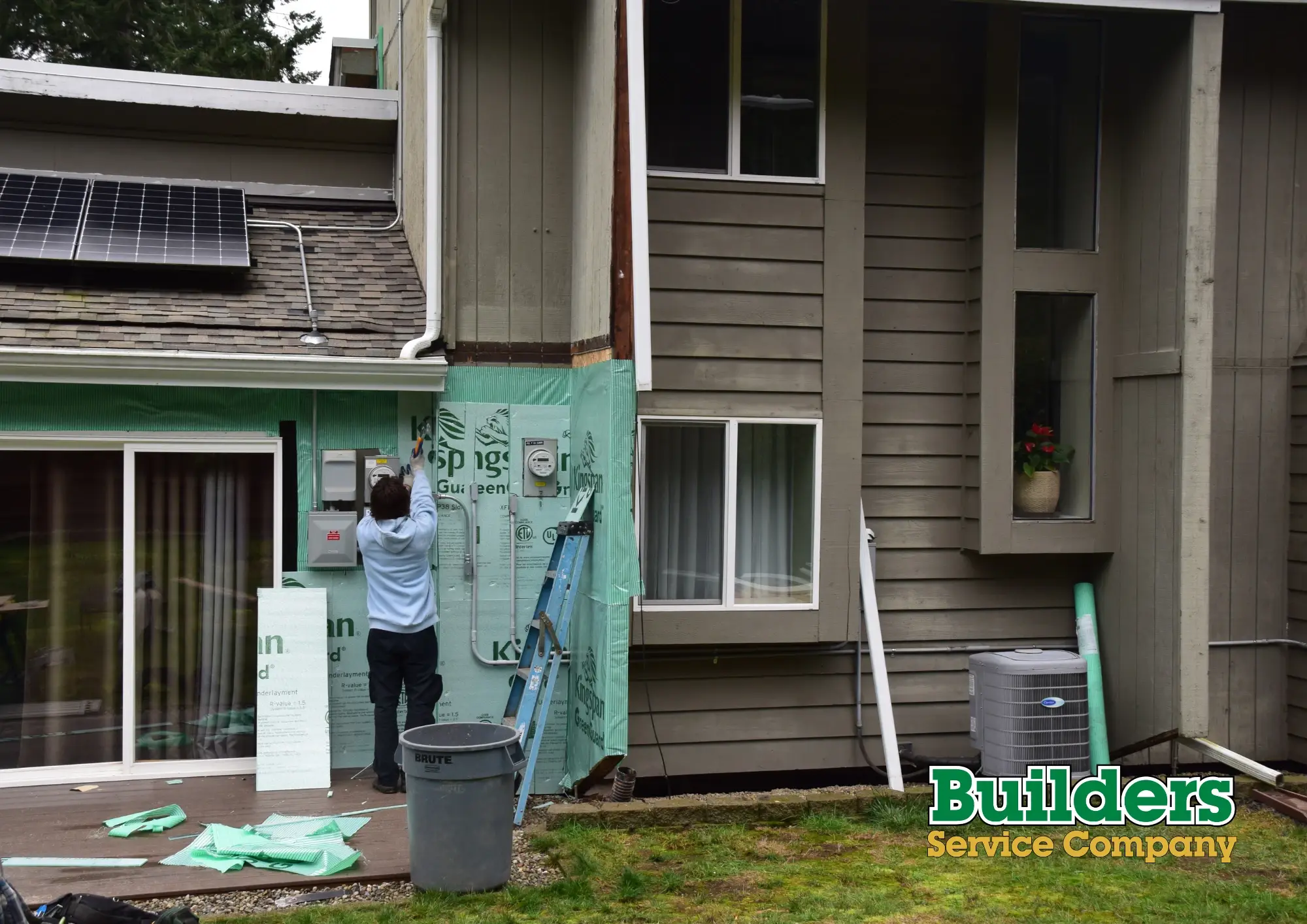
The median Bremerton home was built in 1969, but the largest single group is older: before-1950 houses, much of it shipyard-era housing. Those homes most likely still have their original wood lap siding under the paint, and the paint itself may contain lead. That changes how old boards are taken down and hauled away, so we plan for it from the first visit.
Houses from 1950 to 1979 tend to have cedar, T1-11 plywood panels or asbestos-cement shingles. Asbestos-cement may contain asbestos and should be tested before removal.
Later homes fall into two groups. The 17% built from 1980 to 1999 come from the era of composite and hardboard siding, including LP siding, which has a known history of moisture failure. The 18% built in 2000 or later usually carry fiber cement or builder-grade vinyl that is now due for its first repaint or replacement.
Building type matters for the scope of a job. Of Bremerton’s 19,735 housing units, Census data shows 52% are detached houses, 22% are attached homes and 2% are mobile homes. A detached house means four full elevations to measure and plan; on an attached home, the project covers the walls that belong to your unit.
Choosing siding for Bremerton’s conditions
Three local conditions do most of the deciding here: salt air off the water, constant damp under heavy tree cover, and the cost of heating the house. We usually recommend vinyl, the Evergreen Shield Siding System or metal siding, and we match them to your home this way.
Near the water, pick vinyl or the Evergreen Shield Siding System. Salt spray and marine wind wear on exposed metal and painted finishes. On waterfront and ferry-side homes we pair either siding with corrosion-resistant fasteners and flashing, and with trim finishes rated for marine exposure.
Under the trees, skip wood entirely. Shaded walls stay wet for months, and moss and rot follow. Vinyl, the Evergreen Shield Siding System and metal are all non-wood, so none of them rots the way painted boards do in our experience. We also detail the wall with a rainscreen gap where it fits and check the gutters and roof edge that feed water onto it.
For budget and big walls, vinyl. Bremerton’s median home value is about $440,000, around 25% below the Kitsap County median. Vinyl is the most versatile and least expensive of the three, so it is the practical pick for many homes here, especially those with a lot of wall to cover.
For electric or oil heat, consider insulated siding. Census data shows 58% of Bremerton homes heat with electricity and 5% with oil. Where heat is costly, the insulated panels of the Evergreen Shield Siding System have more room to pay back than on a home with cheaper heat.
Metal siding is the third option, and Bremerton’s wildfire risk is rated low, at the 59th percentile statewide, so fire rating rarely drives the choice. For entries, columns, chimneys or a wainscot along the base of the wall, stacked stone or stone veneer accents work alongside any of the three. Which mix suits your house is something we sort out together at the free in-home consultation.
Evergreen Shield Siding System in Bremerton
The Evergreen Shield Siding System is our insulated composite siding, designed for the Pacific Northwest. Two of its features line up with what Bremerton homes deal with.
First, wet seasons. The composite panels are built for water resistance through long rainy stretches, humidity, mold and mildew, which is what shaded and waterfront walls here face most of the year. Unlike cedar, the panels won’t rot.
Second, heat loss. An insulating graphite membrane gives the panels a thermal resistance of R-2.0, compared with R-0.61 for standard vinyl siding. On a house with costly heat, that extra layer on the outside of the wall is worth weighing against the price difference from vinyl.
Signs your siding needs replacing
On Bremerton’s before-1950 homes, start at the bottom courses of the original wood siding. Boards that split, cup or feel soft near the ground, and paint that peels again within a year of being applied, usually mean water is getting behind the wall.
Then walk the shaded side of the house. Moss and green staining on north walls under heavy tree cover point to siding that never dries out. Press a screwdriver into the corners, the window trim and the area below any gutter that overflows; rot shows up there first.
On homes from 1980 to 1999, look for hardboard or LP panels swelling at the drip edge and around nail heads, or edges that have started to flake apart. Once that swelling starts, repainting won’t stop it.
Get a free siding consultation in Bremerton
Schedule a free in-home consultation through our contact page or call our Tacoma office at 253-777-0866. Our siding work carries a lifetime warranty, financing is available, and we offer discounts for seniors, active military, veterans and first responders. For roofing, windows and decks as well, see our Bremerton home exterior services.
Bremerton siding FAQ
Which siding holds up best to Bremerton's salt air and rain?
For homes exposed to salt air, we usually recommend vinyl or the Evergreen Shield Siding System, installed with corrosion-resistant fasteners and flashing. Both are non-wood, so they don't rot in a wet winter. The Evergreen Shield Siding System's composite panels are also built for water resistance against long wet seasons, mold and mildew. We confirm which one fits your house during the free in-home consultation.
What should I expect when removing siding from a pre-1950 Bremerton home?
Expect original wood lap siding and paint that may contain lead. Before-1950 houses are the largest group of homes in Bremerton, and many are older shipyard-era housing. We plan the tear-off around possible lead paint, check the sheathing and framing once the old boards are off, and repair what we find before the new siding goes on.
Is vinyl siding a good fit for Bremerton homes?
Yes, for many homes it is. With Bremerton's typical home valued around $440,000, roughly 25% under the Kitsap County median, many owners want a cost-effective wall. Vinyl is the most versatile and least expensive of the siding types we usually recommend. It is a practical choice for homes with a lot of wall area, and it does not rot under heavy tree cover.
Does insulated siding make sense if I heat with electricity?
It can. Census data shows 58% of Bremerton homes heat with electricity, and where heating is costly, insulated siding has more room to pay back. The Evergreen Shield Siding System has an insulating graphite membrane rated R-2.0, compared with R-0.61 for standard vinyl siding. We look at your walls and your heating setup together at the consultation.
Do I need fire-resistant siding in Bremerton?
It isn't usually the deciding factor here. Bremerton's wildfire risk is rated low, at the 59th percentile statewide. If you still want the extra margin, the Evergreen Shield Siding System carries a Class A fire rating, the highest fire-resistance rating for construction materials, and metal siding is another non-wood option. Most local homeowners choose based on rain, salt air and heating costs instead.