Bainbridge Island, WA
Siding Replacement in Bainbridge Island, WA
Census data puts the median year built for Bainbridge Island homes at 1989. That single number shapes most siding decisions on the island: what is on the walls today, what may be behind it, and how much wear rain, marine wind and shade have added since. Builders Service Company installs vinyl siding on Bainbridge Island, along with insulated composite siding, metal siding and stacked stone accents. Below is what is typical on island homes, how each option handles local conditions, and the signs that point to replacement over repair.
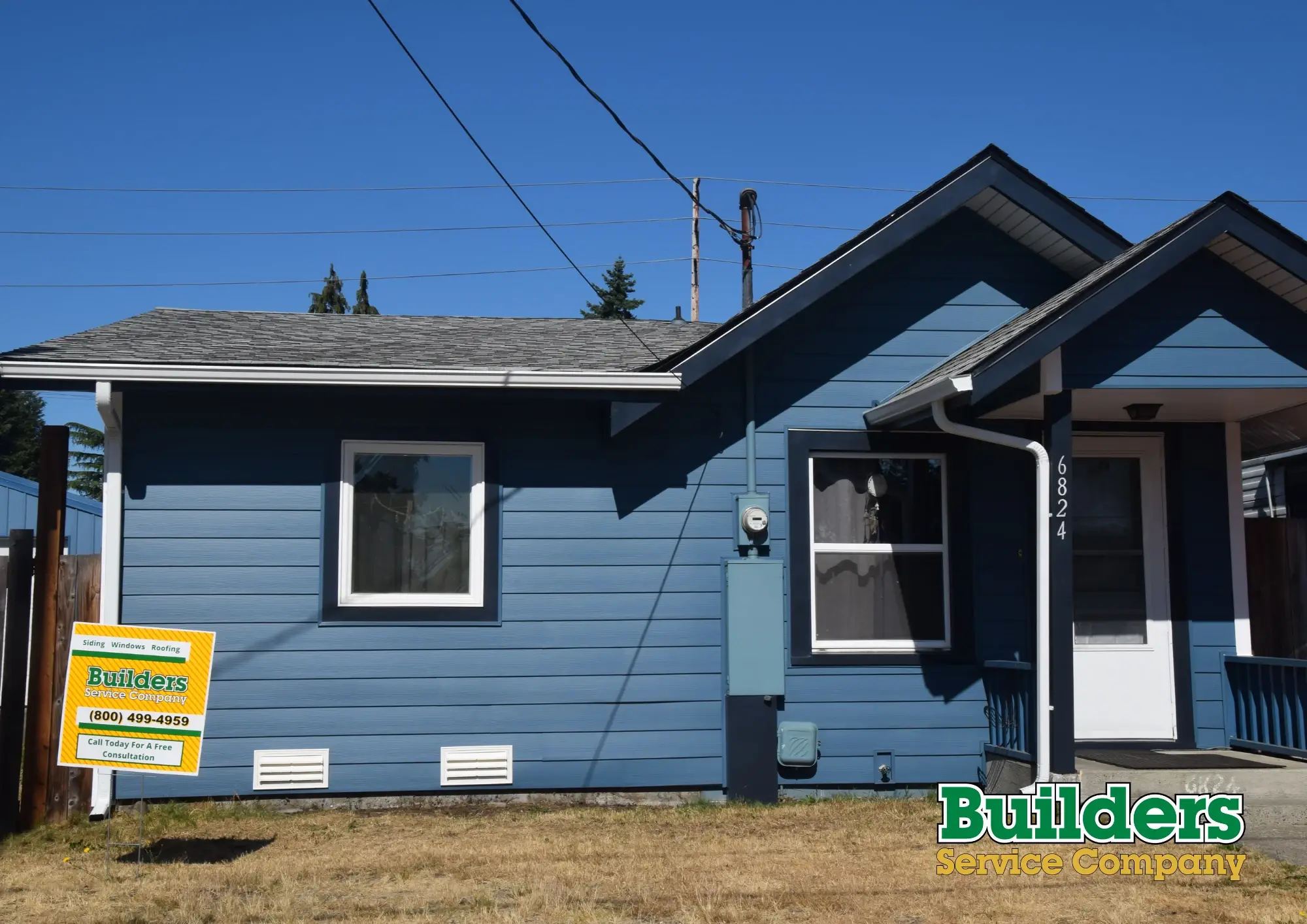
What’s on Bainbridge Island homes now
Census data counts about 10,900 housing units on Bainbridge Island, and 77% of them are detached houses. Another 10% are attached homes, 11% are apartments and 1% are mobile homes. Census data also shows 81% of island homes are owner-occupied, so most siding projects here are long-term investments by the people who live in the house.
The age mix tells you what is likely under the paint. Homes built from 1980 to 1999 are the largest group at 36%. That was the era of composite and hardboard siding, including LP siding, which has a known history of moisture failure. Another 29% went up in 2000 or later, and many of those carry fiber cement or builder-grade vinyl that is now reaching its first repaint or replacement.
Older houses are a smaller share but need more care during tear-off. About 25% were built between 1950 and 1979, when cedar, T1-11 and asbestos-cement shingles were common. Asbestos-cement siding may contain asbestos and should be tested before removal. The 11% built before 1950 likely still have original wood lap siding, and possible lead paint changes how that siding comes off.
Choosing siding for Bainbridge Island’s conditions
Three local conditions drive the choice: salt air off the island waterfront, heavy tree cover that keeps walls damp and mossy, and home values well above the county norm. These are the siding types we usually recommend, and the right one for your house gets settled during the free in-home consultation, where we compare colors, patterns, styles and price with you.
Vinyl siding. Of the types we install, vinyl is the most versatile and the least expensive. It handles salt air well when it goes on with corrosion-resistant fasteners and flashing. On a detached house with a large wall area, vinyl keeps the project within budget.
Evergreen Shield Siding System. Our exclusive insulated composite siding is the other strong fit for salt air. It comes in 20 built-in, fade-resistant colors that resist chipping, peeling and fading, so there is no repainting cycle to keep up with on a shaded, damp lot. Unlike cedar, it won’t rot or need fresh paint after a wet winter.
Metal siding. Census figures put the median Bainbridge Island home value at about $1,155,000, which is 97% higher than the Kitsap County median. At that level, owners more often pick a premium material, and metal siding or the Evergreen Shield Siding System is the usual choice. On waterfront lots, ask about finishes rated for marine exposure.
Stacked stone and stone veneer accents. Stone is an accent, not a whole-house siding. On an entry, columns, a chimney or a wainscot, it adds curb appeal and a durable base course near grade.
None of the three siding types is wood, so none of them will rot under the island’s moss and tree cover. Where walls stay wet, we add rainscreen detailing behind the new siding.
Evergreen Shield Siding System in Bainbridge Island
Heating cost is the main reason island homeowners ask about the Evergreen Shield Siding System. Electricity from PSE heats 78% of Bainbridge Island homes, according to Census data, with propane at 12% and oil at 4%. With heat that costly, insulated siding has more room to earn back its cost. An insulating graphite membrane gives the system a thermal resistance of R-2.0; standard vinyl siding rates R-0.61.
Moisture is the second reason. The composite panels are built for water resistance against long wet seasons, humidity, mold and mildew. That suits a wooded island lot where walls stay damp through the rainy months.
Signs your siding needs replacing
On a house from the 1980s or 1990s, start at the bottom edge of each lap board. Hardboard and composite panels from that era swell and soften where water sits at the drip edge, and paint won’t hold on a swollen edge. Spots you can dent with a thumb, or boards pulling away from the nail line, point to moisture behind the siding.
The island’s tree cover adds its own warnings. Moss that returns every year on north and shaded walls, and rot at corner trims, mean the wall isn’t drying out between storms. On exposed sides, boards that lift or rattle in marine wind have lost their hold. When several of these show up together, new siding is usually a better use of your budget than repairs.
Get a free siding consultation in Bainbridge Island
Schedule a free in-home consultation or call 253-777-0866. We back our work with a lifetime warranty, offer financing, and give discounts to seniors, active military, veterans and first responders. Washington contractor license BUILDSC027JN. For roofing, windows and decks as well, see our Bainbridge Island home exterior services.
Bainbridge Island siding FAQ
What siding works best near the water on Bainbridge Island?
Vinyl siding and the Evergreen Shield Siding System are the two types we usually recommend for salt air on the island waterfront. Either one goes on with corrosion-resistant fasteners and flashing, so the attachment holds up as well as the panels do. Vinyl is the least expensive option, while the Evergreen Shield Siding System adds insulation and fade-resistant color. We confirm the best fit for your lot during the free in-home consultation.
How much should wildfire risk shape my siding choice on Bainbridge Island?
Wildfire is not the main factor here, since the island is rated Low, at the 53rd percentile statewide. Fire resistance can still be part of the decision. The Evergreen Shield Siding System carries a Class A fire rating, the highest fire-resistance rating for construction materials, and stacked stone or stone veneer accents are noncombustible. For most island homes, though, salt air, moisture and heating costs weigh more in the choice.
Is insulated siding worth considering for an all-electric Bainbridge Island home?
Yes, it is worth pricing out, because electricity heats 78% of homes on the island, and insulation earns back more when every heating dollar goes to electric heat. The Evergreen Shield Siding System includes an insulating graphite membrane rated R-2.0, against R-0.61 for standard vinyl siding. We don't quote a savings figure. During the free in-home consultation we compare it side by side with vinyl and metal for your house.
Can I add stone veneer to my Bainbridge Island home?
Yes. Stacked stone and stone veneer work as accents on an entry, columns, a chimney or a wainscot, paired with vinyl, metal or the Evergreen Shield Siding System rather than covering the whole house. With a median home value of about $1,155,000 on the island, owners more often choose premium finishes like these. Stone along the base of a wall also gives a durable course near the ground.