Ocean Shores, WA
Roof Replacement in Ocean Shores, WA
Census data shows that 45% of homes in Ocean Shores were built in 2000 or later, and the median home dates to 1997. That makes this a town of fairly young houses, many of them still under the roof they were built with. When that first roof starts to fail, salt spray and wind-driven rain decide what should go back on. As a roofer serving Ocean Shores, we plan each new roof installation around those two coastal conditions first, then around your preferences, budget and the style of your house.
Roofs on Ocean Shores homes
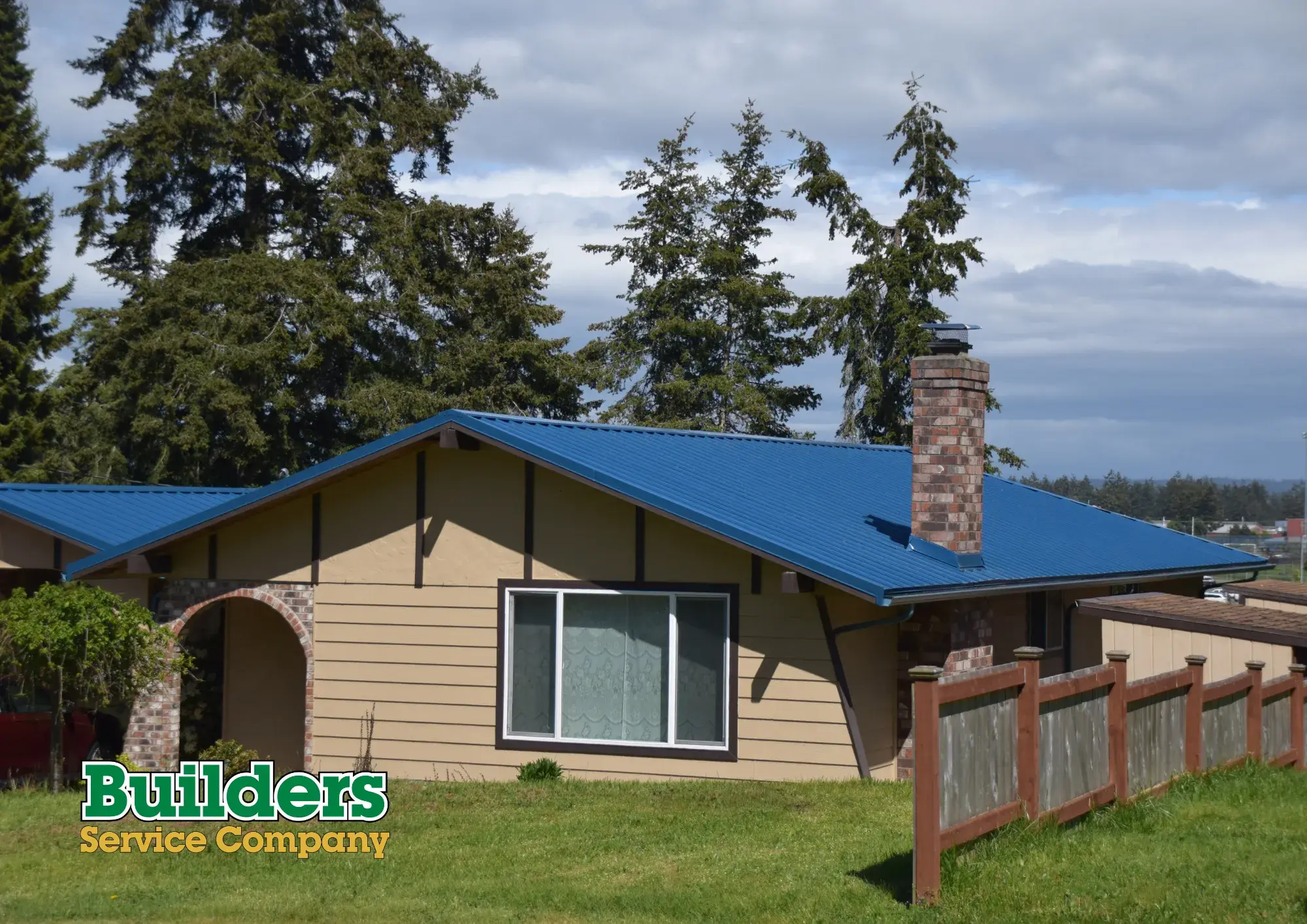
Ocean Shores has 5,798 housing units, and their ages fall into three main groups. Close to half are the newest, built since 2000; if your house is one of them, the roof replacement you are planning is likely the first one it has needed, and the deck underneath usually has not been opened up before. About 29% of homes went up between 1980 and 1999. Those houses have had more time to see a reroof, so we check how many layers are already on the deck before planning the tear-off. Another 23% were built from 1950 to 1979, and only 3% predate 1950. On the older houses, we expect to find earlier repairs and patched flashing that need sorting out.
Most housing here is detached: 81% of units are single-family houses, 6% are attached homes such as townhouses and 9% are apartments. Mobile homes account for 4%, and their low-slope roofs are planned and installed differently from a pitched house roof. Census data also shows 83% of homes are owner-occupied, so most of the roofs we look at belong to people who will live with the result for a long time.
Ocean Shores’s weather and your roof
Ocean Shores sits in the Pacific coast climate region, with very high rainfall, winter storms and salt spray coming in off the water. Each of those puts a different kind of wear on a roof, and the details we use answer them one by one:
- Fasteners and flashing that resist corrosion. Salt spray attacks exposed metal. Nails, drip edge, valley metal and wall flashing are where coastal roofs often fail first, so we specify corrosion-resistant fasteners and flashing on both asphalt and metal roofs.
- Underlayment and sealed edges for wind-driven rain. Storm winds push water sideways and up under laps. A full underlayment, sealed rakes and eaves, and careful flashing at vents and walls keep that water out of the deck.
- Ventilation that dries the attic. With rain arriving for long stretches, an attic that cannot breathe holds moisture against the underside of the deck. Balanced intake and exhaust venting is part of every roof we plan.
- Chimney and penetration flashing. Wood is the heating fuel in 5% of local homes. If your house has a chimney or stove pipe, we inspect its flashing and rebuild it as part of the replacement.
Wildfire risk is lower here than in much of the state: the U.S. Forest Service puts Ocean Shores at the 23rd percentile in Washington, rated Low. Material choice in this town is driven by moisture, wind and salt rather than embers.
Many houses here are vacation homes. When nobody is home through the storm season, the roof has to do its job without anyone watching, which is one more reason to get the edge and flashing details right at installation.
Asphalt shingle or metal in Ocean Shores
We install both and give them equal weight, because each fits a different owner.
Asphalt shingle roofing is the familiar choice for pitched roofs and is often the simpler swap when your current roof is already shingles. On this coast, its performance depends on the installation: shingles fastened for high wind, a full underlayment and corrosion-resistant metal at the edges and valleys.
EDCO metal roofing suits a salt-air location when it is ordered with corrosion-resistant finishes and fasteners. Metal sheds heavy rain quickly and does not give moss the same foothold as a shingle surface, which matters where the rain is this constant.
The median home value in Ocean Shores is about $385,000, 4% above the Grays Harbor County median. With values close to the county figure and most homes owner-occupied, both materials are common choices here; it comes down to the look you want, your budget and how long you plan to own the house. If cedar shakes are on your roof today, moss and rot are the usual reasons owners switch to shingles or EDCO metal. We bring samples of both to the free in-home consultation so you can compare them against your house.
Signs your roof needs replacing
On the coast, roof trouble tends to show up in ways tied to wind, rain and salt:
- Lifted or missing shingles after a storm. Wind-driven rain gets under any tab that has lost its seal.
- Moss along the laps. In very high rainfall, moss holds water against the roof and pushes shingle edges up.
- Rust on flashing, vents or nail heads. Salt spray corrodes exposed metal, and failing flashing is a common leak point.
- Stains on ceilings or in the attic. Check after the winter storms, since a slow leak can sit for a while before anyone sees it.
- Soft spots underfoot or sagging lines. These point to water that has already reached the roof deck.
Get a free roofing consultation in Ocean Shores
Schedule a free in-home consultation by calling our Tacoma office at 253-777-0866 or through our contact page. Every roof comes with our lifetime warranty, financing is available, and we offer discounts for seniors, active military, veterans and first responders. For siding, windows and decks, see our Ocean Shores home exterior services.
Ocean Shores roofing FAQ
Is metal roofing a good fit for salt air in Ocean Shores?
Yes, when it is specified for the coast. Ocean Shores gets salt spray along with very high rainfall, so we order EDCO metal roofing with corrosion-resistant finishes and fasteners. Metal sheds rain quickly and gives moss less to hold onto than shingles. Asphalt shingles remain an equally good choice when they are installed with corrosion-resistant flashing and edge metal. We compare both on your house during a free in-home consultation.
My house was built after 2000. Does it need a new roof yet?
It depends on condition, not just age. 45% of Ocean Shores homes were built in 2000 or later, so many are on their original roof. Look for lifted shingles after storms, moss along the laps and rust on flashing or nail heads, since wind-driven rain and corrosion wear coastal roofs in those places first. During a free in-home consultation we inspect the roof and tell you whether repair or replacement makes more sense.
How do you protect a roof from wind-driven rain?
The protection comes from the layers under the surface and the details at the edges. Ocean Shores sees winter storms that push rain sideways, so we install a full underlayment, seal the rakes and eaves, and flash every wall, vent and chimney carefully. Balanced attic ventilation lets the deck dry between storms. These steps apply whether you choose asphalt shingles or EDCO metal roofing.
Does wildfire risk affect which roof I should choose here?
Not much. The U.S. Forest Service rates Ocean Shores Low for wildfire, at the 23rd percentile in Washington. Here the choice between asphalt shingles and EDCO metal roofing turns on wind, rain and moss rather than ember exposure. We walk you through how each material handles those coastal conditions during a free in-home consultation, so you can pick the one that suits your house and budget.
Can you check my vacation home's roof while I'm away?
We can schedule an inspection at a time that works for you. Vacation homes are common in Ocean Shores, and when a house sits empty through the winter storms, a small leak can go unnoticed. We look for lifted shingles, moss, corroded flashing and attic staining, then explain what we found. Call our Tacoma office at 253-777-0866 to schedule a free in-home consultation.