Oak Harbor, WA
Siding Replacement in Oak Harbor, WA
More Oak Harbor homes were built in the 1980s and 1990s than in any other period. Census data puts the median year built at 1990, and 35% of the city’s homes date from 1980 to 1999. That was the era of hardboard and composite lap siding, including LP siding, which has a known history of moisture failure. Those boards are now the walls most often due for siding replacement in Oak Harbor. Below is what tends to be on homes here, which siding types fit local conditions, and how to tell when yours is ready to come off.
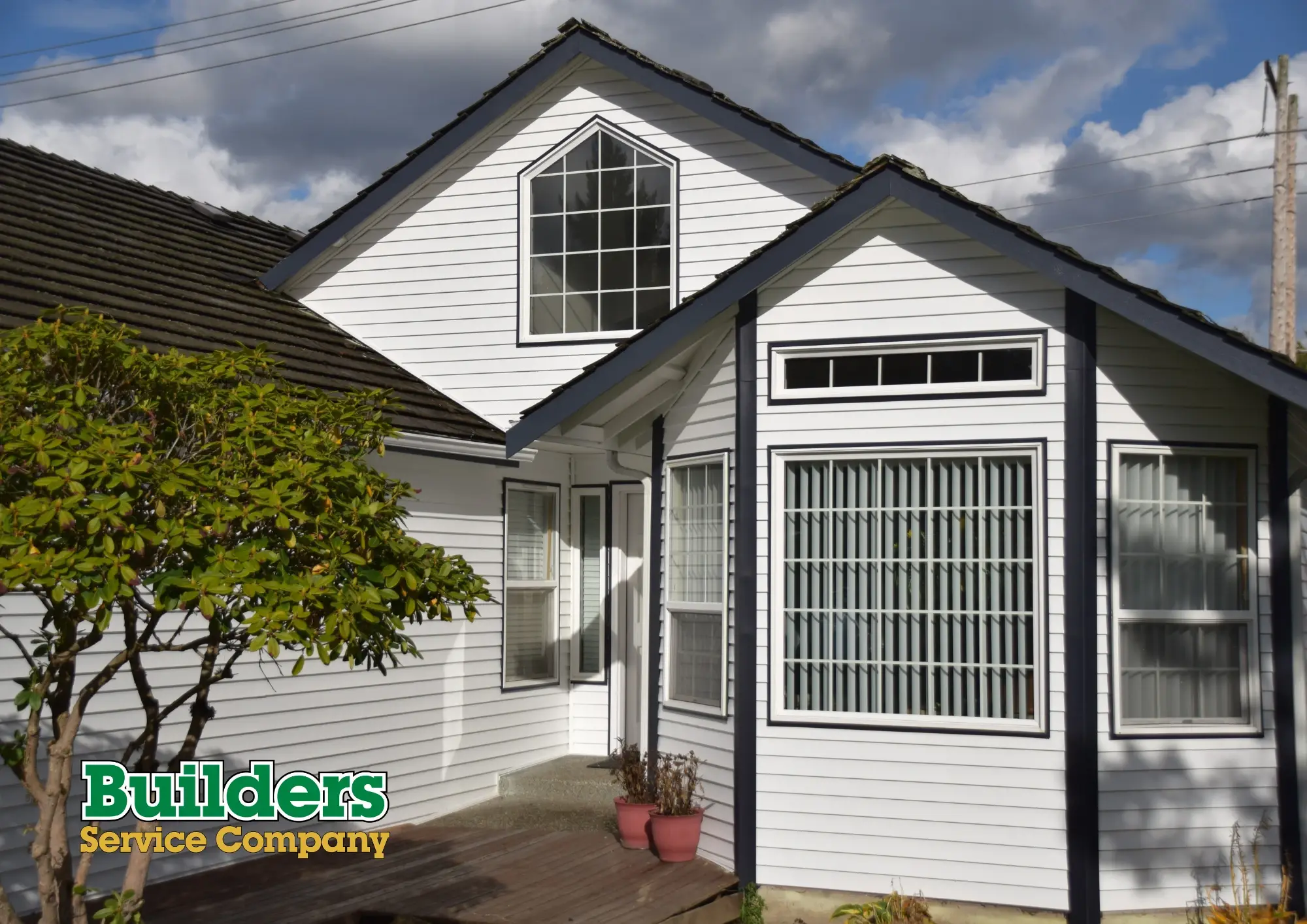
What’s on Oak Harbor homes now
Census data counts 10,693 housing units in Oak Harbor, and they split into three eras of similar size, with very little older stock:
- 1980 to 1999 (35%): hardboard and composite lap siding, LP included. As these boards age, edges swell, paint flakes and soft spots appear.
- 1950 to 1979 (32%): cedar, T1-11 plywood panels or asbestos-cement shingles. Asbestos-cement siding may contain asbestos and should be tested before removal.
- 2000 or later (31%): fiber cement or builder-grade vinyl, now reaching its first repaint or replacement.
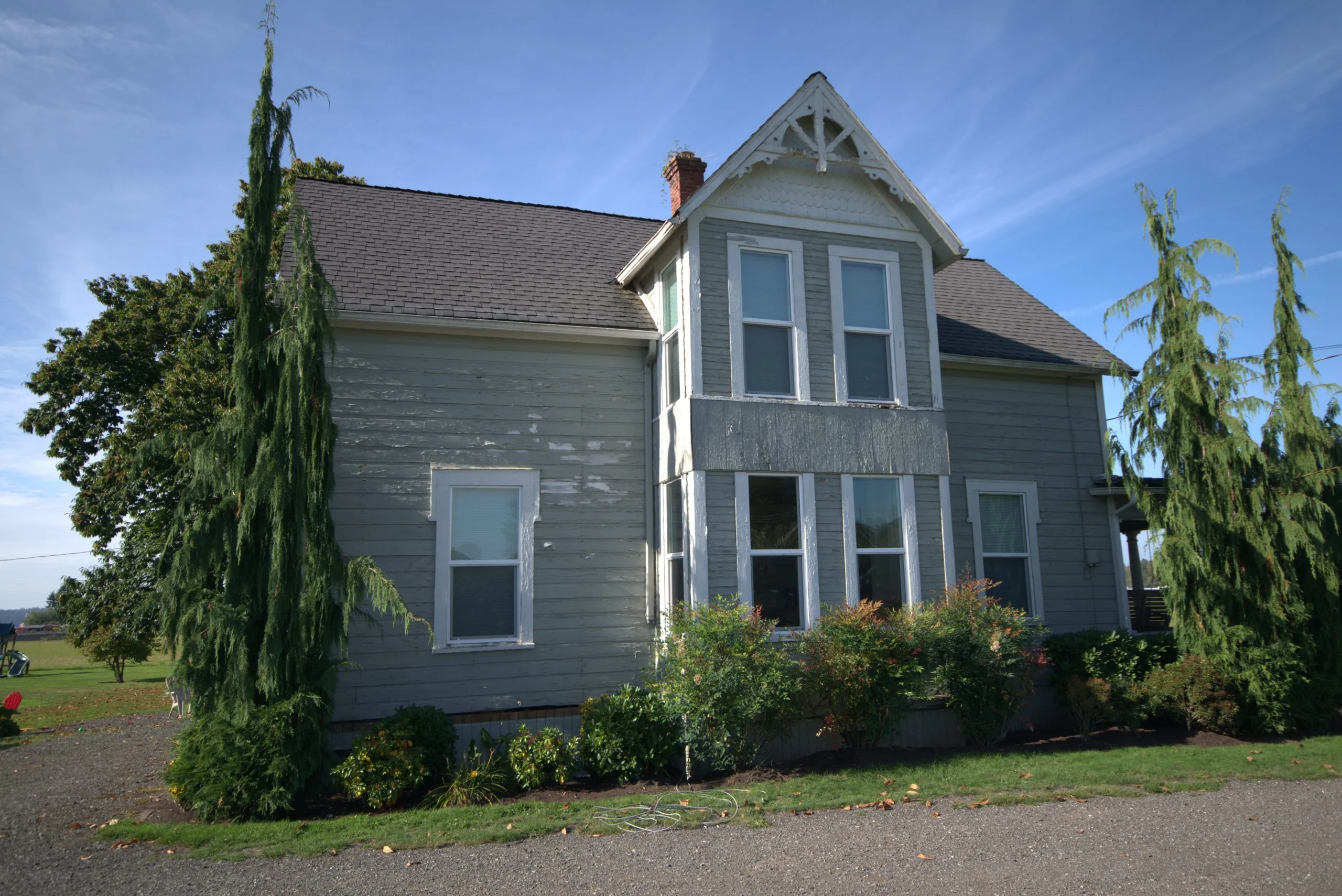
- Before 1950 (2%): original wood lap siding, sometimes with lead paint under later coats.
The type of building matters too. About 51% of homes are detached houses, 24% are attached homes such as townhouses and duplexes, and 5% are mobile homes. Each needs a different plan for wall area, access and where the new siding meets trim and neighboring units.
Census data also shows 47% of homes are owner-occupied. Those owners are the ones deciding how their exterior should hold up for the next few decades. Whatever is on your walls now, we remove it, check the sheathing underneath for moisture damage, and repair what we find before the new siding goes on.
Choosing siding for Oak Harbor’s conditions
Oak Harbor sits in the rain shadow, so it gets less rain than much of western Washington. What it does get is marine wind and salt air. That changes the priorities: corrosion is a bigger concern here than moss. On every wall we specify corrosion-resistant fasteners, flashing rated for marine exposure, and siding whose finish can take the salt. We usually recommend three types, and we settle on the right one for your home during the free in-home consultation.
Vinyl siding
Vinyl stands up well to salt air, and it is the most versatile and least expensive option we install. Census data puts home values in Oak Harbor about 18% under the Island County median. At that level a durable, cost-effective material is a sound choice, and vinyl is also the practical pick for a large wall area or a tight budget.
Evergreen Shield Siding System
The Evergreen Shield Siding System is our insulated composite siding. It is the other type we usually suggest for a salt-air setting. It suits owners who plan to stay and want a premium, long-term upgrade. The next section explains where it pays off most.
Metal siding
Metal siding rounds out the three. Oak Harbor’s wildfire risk is rated low, at the 37th percentile statewide, so a fire rating does not have to drive your choice. Metal comes down to the look you want and how it fits your budget, which we walk through on site.
Stone accents
Stacked stone and stone veneer go with any of the three. Use them for a wainscot, an entry or porch columns. They add a durable base course and curb appeal, but they are accents, not whole-house siding.
None of the three main types is wood, so none of them needs the scraping and repainting that cedar does.
Evergreen Shield Siding System in Oak Harbor
Electric heat is the most common fuel in Oak Harbor. Census data shows 52% of homes use it, compared with 44% on gas. Where heating costs more, insulation in the walls earns its keep faster, and that is the main case for the Evergreen Shield Siding System here. Its insulating graphite membrane gives a thermal resistance of R-2.0. Standard vinyl siding is rated at R-0.61.
The panels are composite, built for water resistance against humidity, mold and mildew. That makes them a fit for a house you plan to keep for the long run, where a premium upgrade has years to pay you back. During the consultation we compare it side by side with vinyl for your wall area and budget, so you can see what the upgrade involves before you decide.
Signs your siding needs replacing
On the hardboard and LP lap siding common in this city, look for:
- Swollen bottom edges. Boards that flare or mushroom at the drip edge and near grade have taken on water.
- Soft spots and flaking. Press on the lower courses. If the board gives, or paint lifts to show raw fiber, the core is breaking down.
- Rust streaks. Stains running down from nail heads, and corroded flashing on the walls that face the water, mean the fasteners are failing.
- Wind damage on vinyl. Builder-grade vinyl on newer homes can crack, warp or work loose after years of wind and sun.
- Rot at the base of cedar or T1-11. Older panels that are soft or delaminating along the bottom edge are past repair.
If you see two or more of these, have someone check the sheathing before the damage spreads.
Get a free siding consultation in Oak Harbor
Schedule a free in-home consultation or call our Seattle office at 206-430-1927. We look at your walls, talk through your options and explain what the work involves. Financing is available, along with discounts for seniors, active military, veterans and first responders. For roofing, windows and decks, see our Oak Harbor home exterior services.
Oak Harbor siding FAQ
Which siding type holds up best to Oak Harbor's salt air?
Vinyl and the Evergreen Shield Siding System are the two types we usually recommend for salt air, with metal as a third option. Oak Harbor gets less rain than much of western Washington, but marine wind and salt air reach most homes, so corrosion is the concern. We pair either siding with corrosion-resistant fasteners and flashing. The right choice for your house comes out of the free in-home consultation.
My house was built around 1990. What do you find when the old siding comes off?
Often hardboard or composite lap siding, sometimes LP, which has a known history of moisture failure. The median Oak Harbor home was built in 1990, so this is the siding we remove most. Once it is off, we check the sheathing for water damage, especially along the bottom courses and around windows, and repair it before the new siding goes on.
Is insulated siding worth it if my home has electric heat?
It is worth a close look. Census data shows 52% of Oak Harbor homes heat with electricity, and insulated siding pays off more where heating costs more. The Evergreen Shield Siding System has an insulating graphite membrane rated at R-2.0, compared with R-0.61 for standard vinyl siding. Whether the upgrade makes sense for your house is something we work through at the consultation.
My 1970s house has shingle siding. Can you replace it?
Yes, but test it first. Census data shows 32% of Oak Harbor homes were built between 1950 and 1979, and siding from that era includes asbestos-cement shingles. Those shingles may contain asbestos and should be tested before removal. Once testing is done, we can replace them with vinyl, the Evergreen Shield Siding System or metal.
Do I need fire-rated siding in Oak Harbor?
Not as a rule. Oak Harbor's wildfire risk is rated low, at the 37th percentile statewide, so salt air, heating costs and budget tend to matter more. If you want the added protection, the Evergreen Shield Siding System carries a Class A fire rating, the highest fire-resistance rating for construction materials, and metal siding is another option.