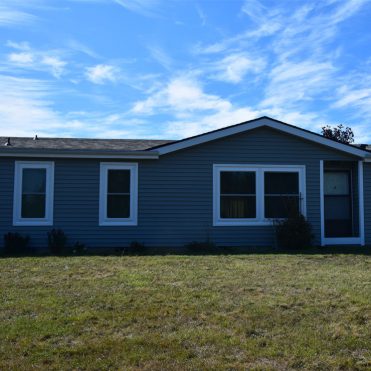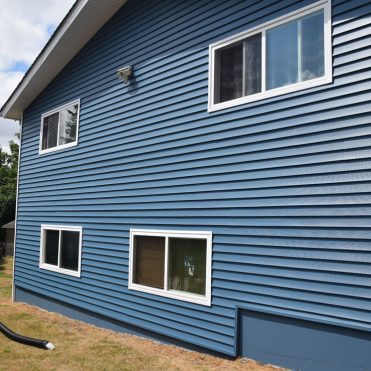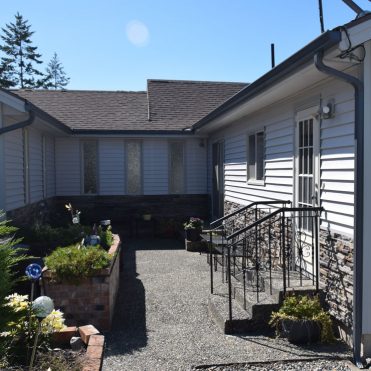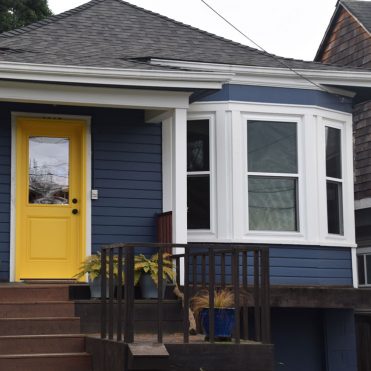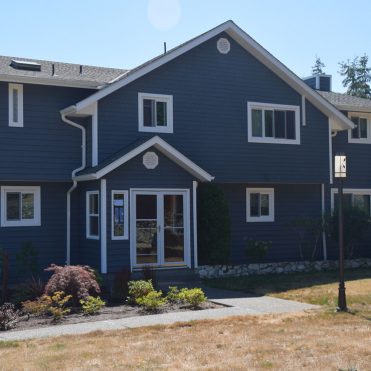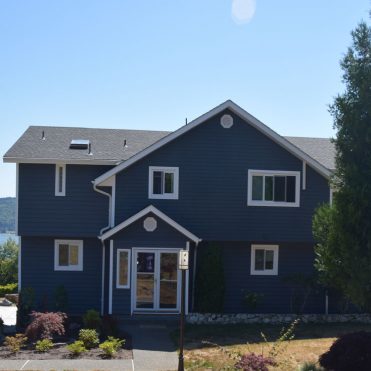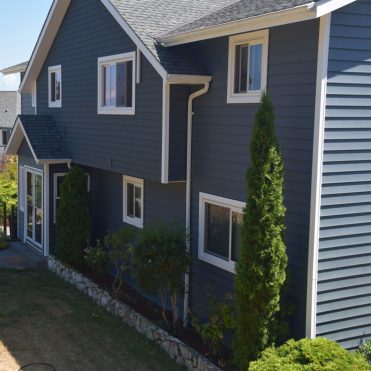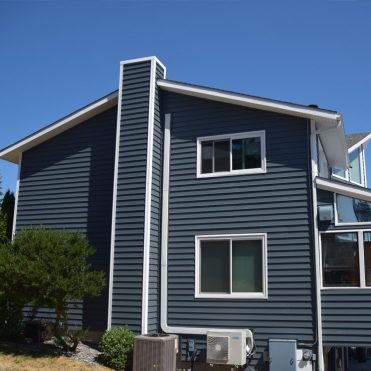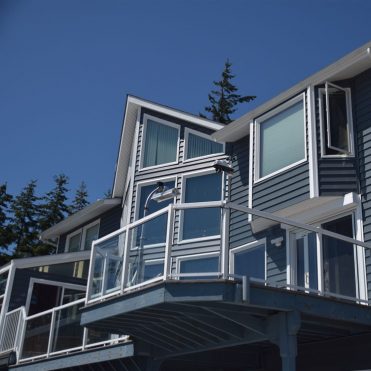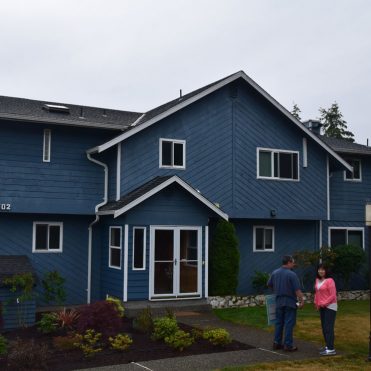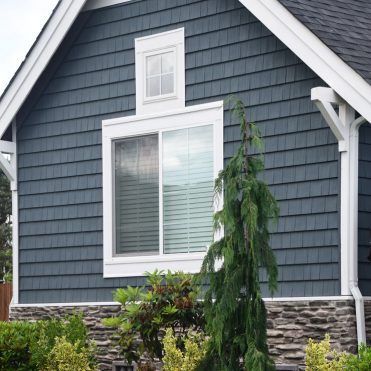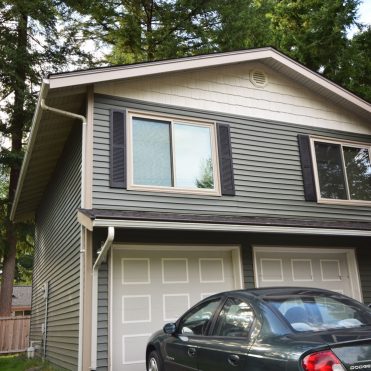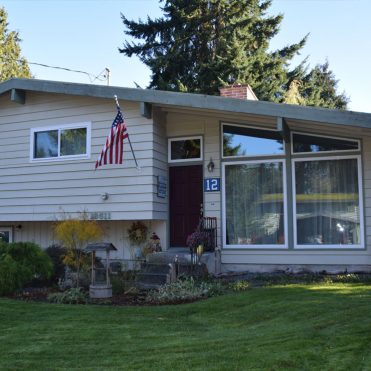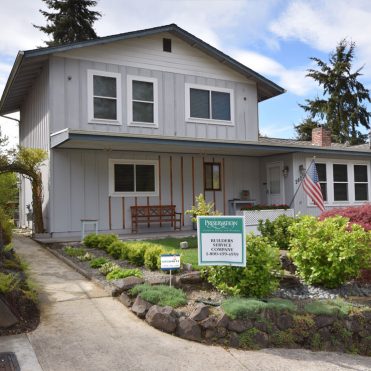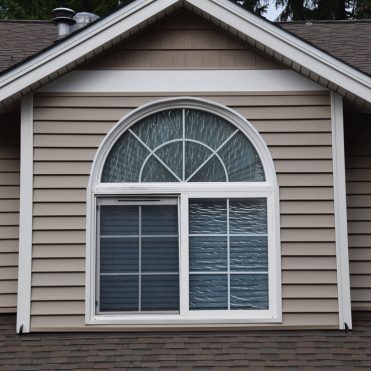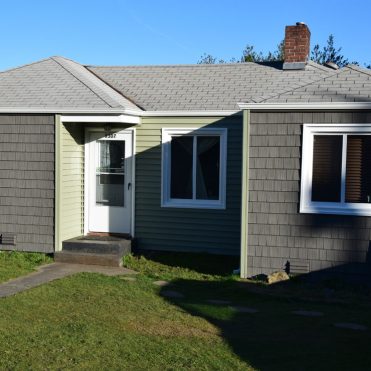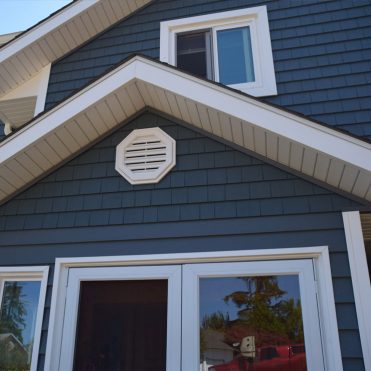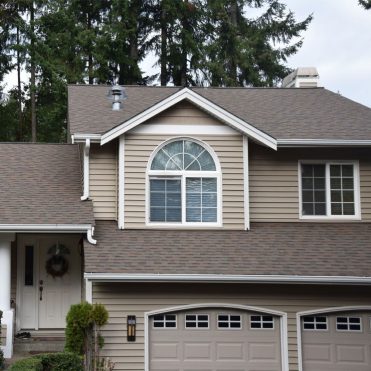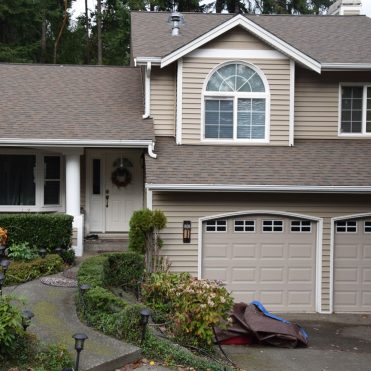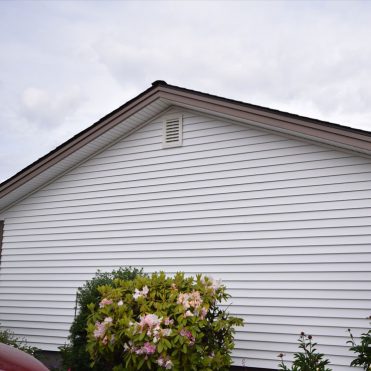


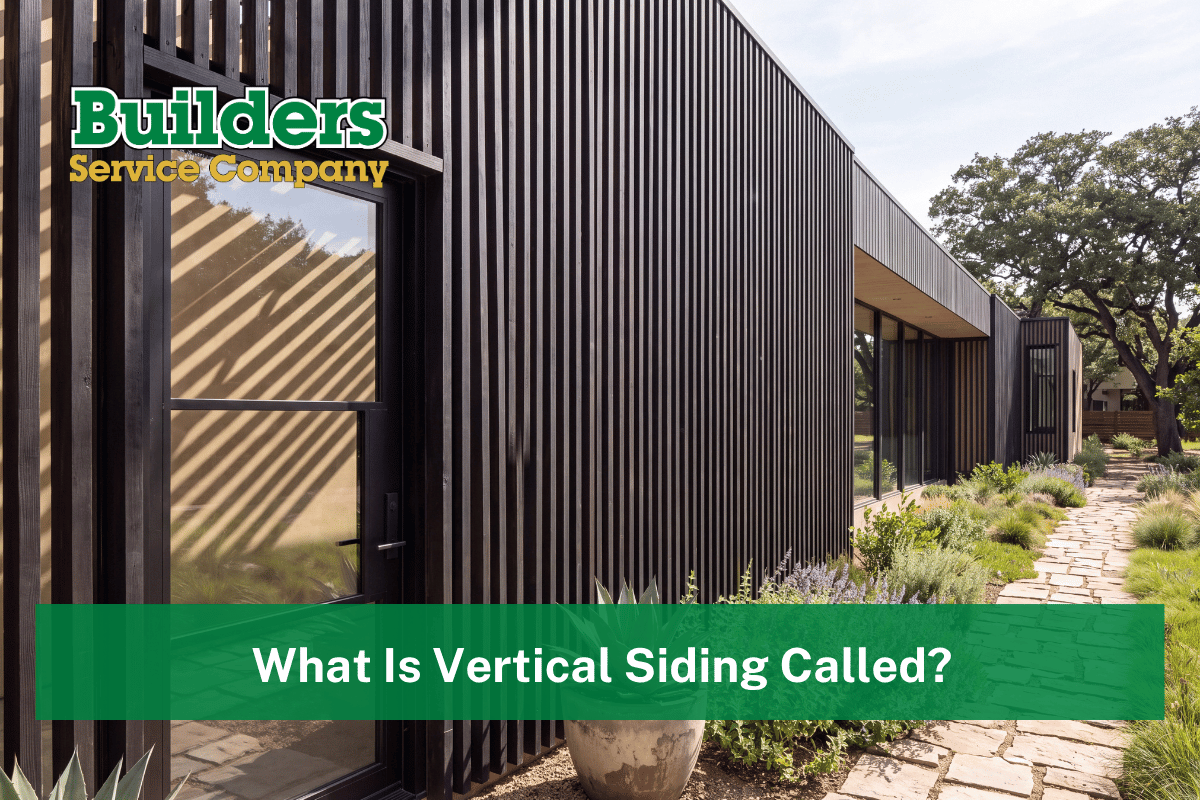
If you have been asking, “what is vertical siding called,” the broad answer is simply vertical siding. The most recognizable style is board and batten siding, which creates distinct upright lines using wide boards or panels and narrower strips called battens. But board and batten is only one type of vertical exterior siding, and knowing the difference matters when choosing a look and planning installation.
Vertical siding can cover an entire house, frame windows and entryways, highlight a gable, or create contrast with traditional horizontal siding. The right choice depends on the architecture, siding material, exposure to water and wind, maintenance expectations, and the details behind the finished surface.
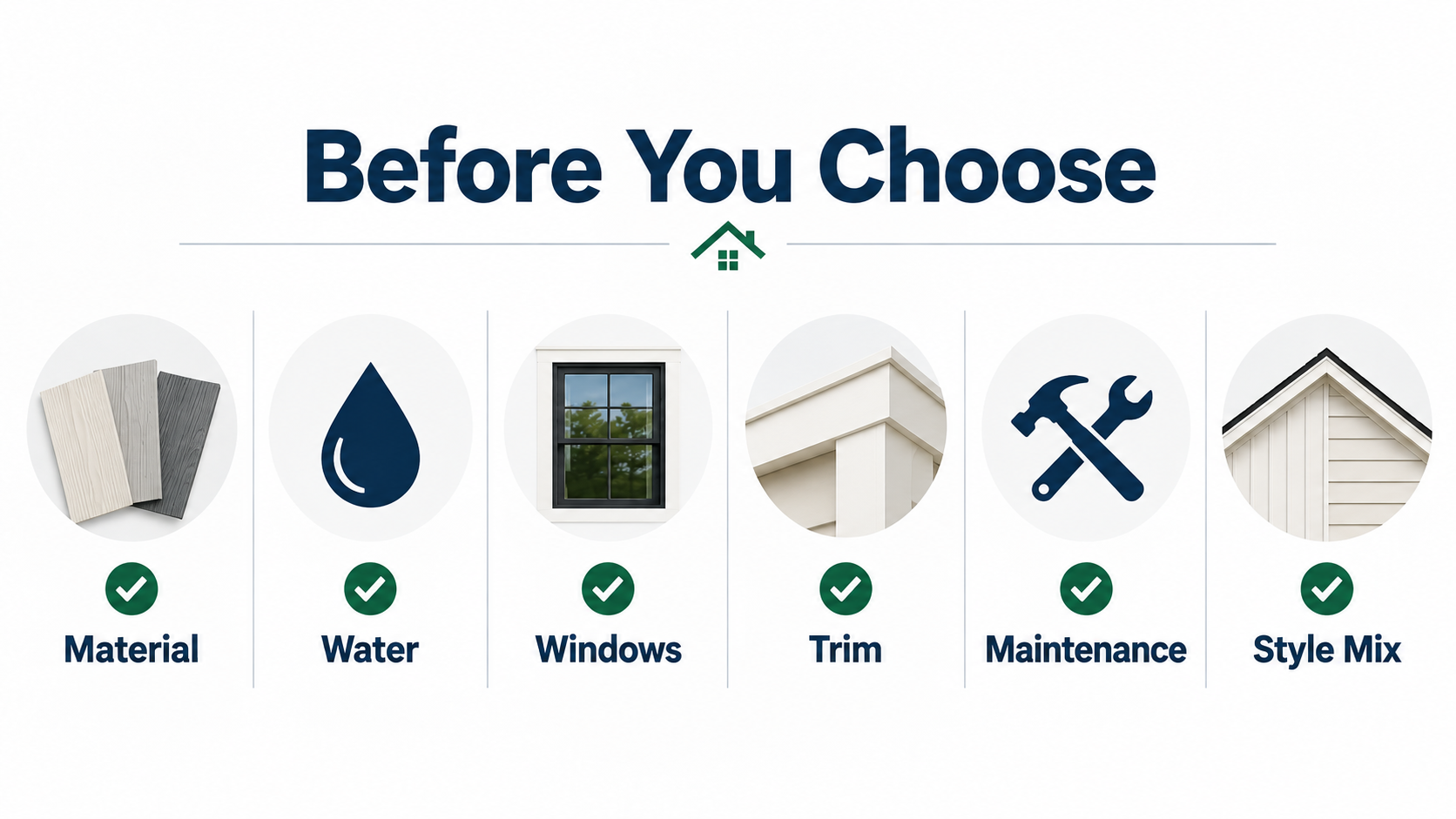
A Quick Look Before You Choose
- Vertical siding describes siding installed from top to bottom rather than side to side.
- Board and batten is the best-known vertical siding style, but the terms are not completely interchangeable.
- Vinyl siding and other siding panels can be manufactured specifically for vertical installation.
- Vertical and horizontal siding can be combined to give different sections of a home more definition.
- Trim, windows, flashing, and water management deserve as much attention as the visible siding.
- In Washington, material choice and careful installation are particularly important because exterior walls face long periods of rain and moisture.
What Is Vertical Siding Called?
The general name is vertical siding. When the surface has repeating wide sections divided by narrow raised strips, it is usually called board and batten.
Traditional board and batten construction used wide vertical boards with a narrower batten covering the joint where two boards met. Modern products can reproduce the same appearance using larger siding panels, molded profiles, or other manufactured siding components.
The Vinyl Siding Institute’s design guide identifies vertical siding as a siding category and board and batten as one of its recognizable profiles. That distinction is useful when discussing a project because a homeowner may want the vertical appearance without necessarily choosing a traditional board-and-batten construction method.
Vertical Siding Names At A Glance
| Term | What It Usually Means | Typical Appearance |
|---|---|---|
| Vertical siding | General category for siding running upward and downward | Long vertical lines |
| Board and batten | Wide boards or panels separated by narrow battens | Raised, repeating lines |
| Vertical panel siding | Larger panels installed vertically | Cleaner, broader sections |
| Vertical vinyl siding | Vinyl panels manufactured for upright installation | Defined vertical profile |
| Horizontal lap siding | Siding installed from side to side with overlapping courses | Traditional horizontal lines |
The Vinyl Siding Institute installation manual also distinguishes vertical siding profiles from horizontal options and soffit products, which is important because products designed for one exterior application should not simply be treated as interchangeable.
Why Is Board And Batten So Closely Associated With Vertical Siding?
Board and batten has become the style many homeowners picture immediately when they hear “vertical siding.” Its strong lines work on traditional farm-inspired homes, Craftsman properties, modern construction, and mixed-material exteriors.
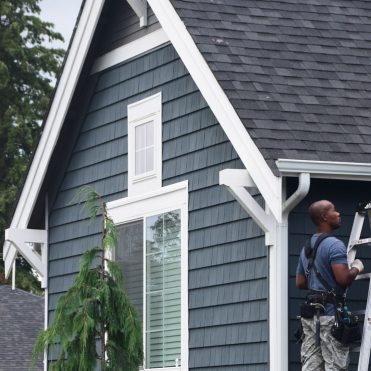
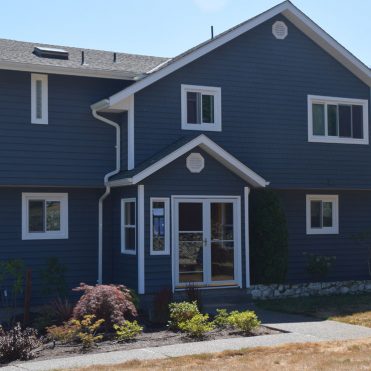
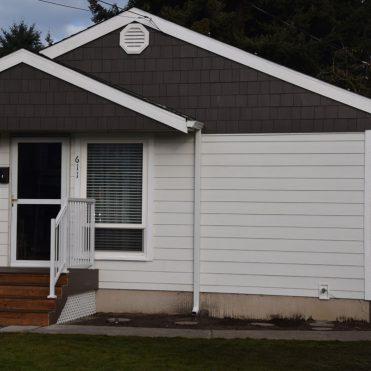
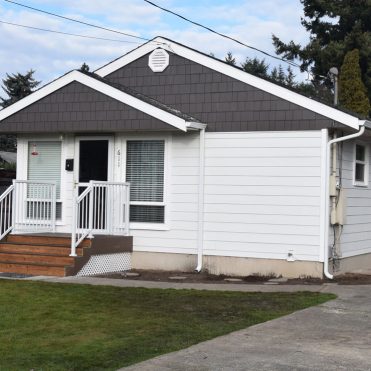
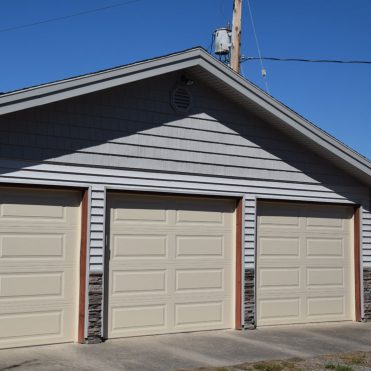
It can also be used strategically rather than covering every wall. For example, a house may have horizontal siding across the main level and board and batten siding on a front-facing gable. Another design may use vertical siding around an entry to visually separate it from the rest of the exterior.
The important point is that the siding style and siding material are two different decisions. Board and batten describes an appearance and construction pattern. The material creating that appearance could be vinyl, composite material, wood, metal, fiber cement, or another approved exterior cladding system.
Does Vertical Siding Perform Differently From Horizontal Siding?
The direction changes the appearance, but long-term performance depends heavily on what happens behind and around the siding.
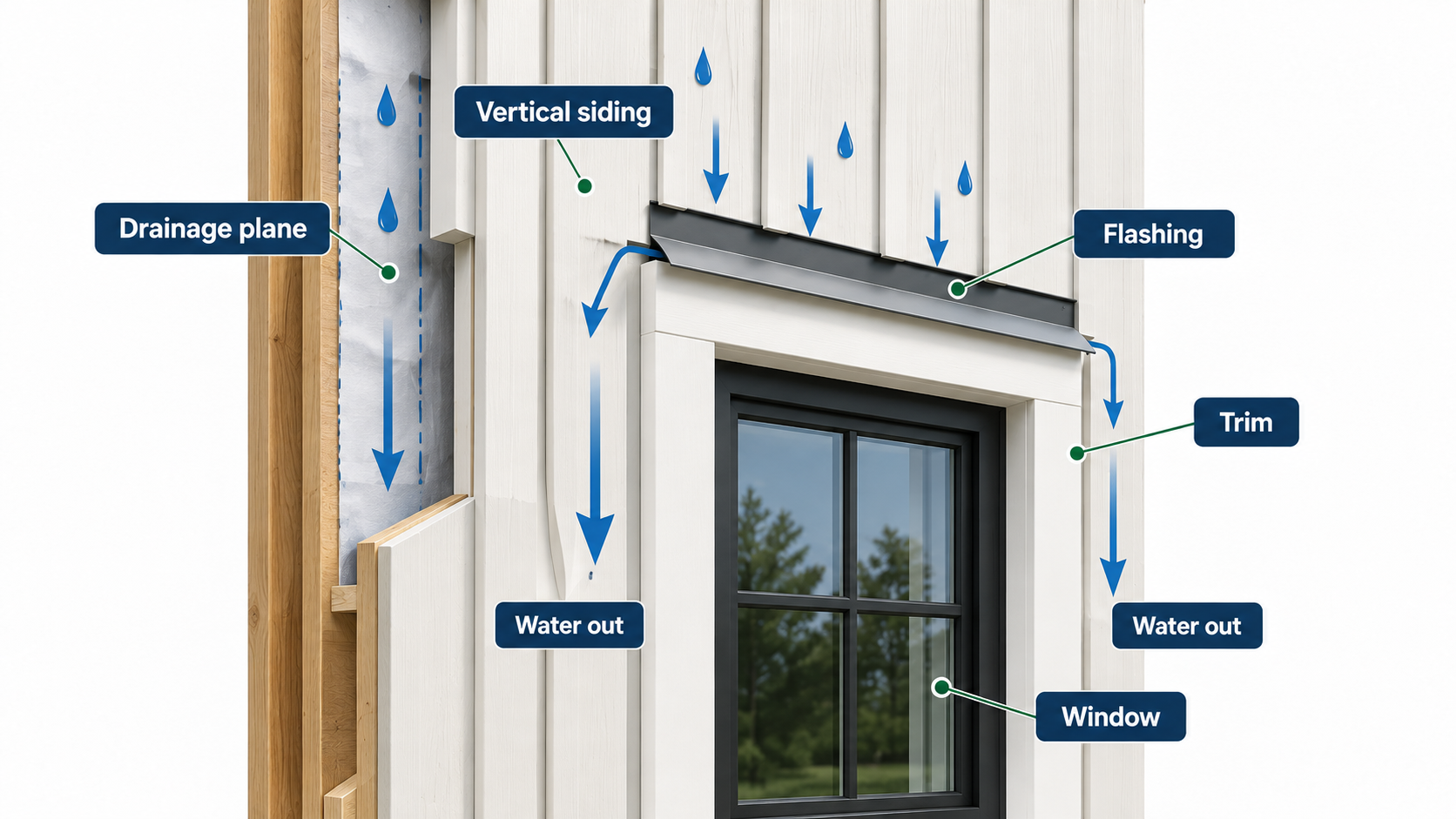
Exterior cladding is not expected to be the building’s only defense against water. The U.S. Department of Energy’s building enclosure guidance on drainage planes explains that a continuous water-resistant layer behind exterior cladding provides a path for moisture that gets behind the siding to drain safely away.
This becomes especially important around windows, doors, roof intersections, corners, and other openings.
For vertical siding installation, contractors also need to follow the fastening, substrate, trim, clearance, and drainage requirements of the specific product being installed. Simply turning a product vertically does not automatically create a correct vertical siding system.
Worth Knowing
Even small amounts of water that pass the siding need a clear path outward. Good siding installation manages both the visible exterior and the hidden drainage system behind it.
Pay Special Attention Around Windows And Trim
Windows interrupt the exterior wall’s drainage path, so this is one area where workmanship becomes particularly easy to judge.
The Department of Energy’s window flashing guidance explains that properly integrated flashing directs water outward rather than allowing it to enter the wall cavity.
With vertical siding, the layout also affects how trim meets the siding panels around windows. Installers may need to plan panel width, batten placement, corner trim, flashing, and transitions before the first visible piece goes up.
The same thinking applies where siding approaches the roof, soffit, fascia, decks, utility penetrations, and other exterior construction details.
Poor planning can leave awkward narrow sections or unnecessary seams. Careful layout produces a cleaner appearance while helping the wall system function as intended.
What Materials Can Create A Vertical Siding Look?
Vertical siding is available in several materials, each with different maintenance and performance characteristics.
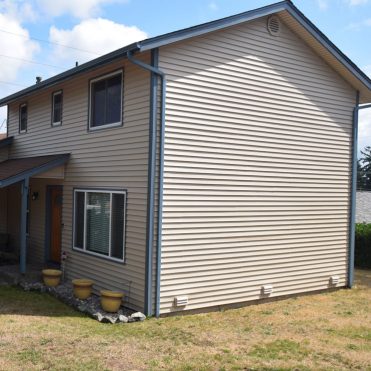
Vinyl siding is popular because it requires relatively little routine maintenance and is available in profiles designed specifically for vertical use. Wood offers a traditional board and batten appearance but normally requires more ongoing care against weathering and moisture.
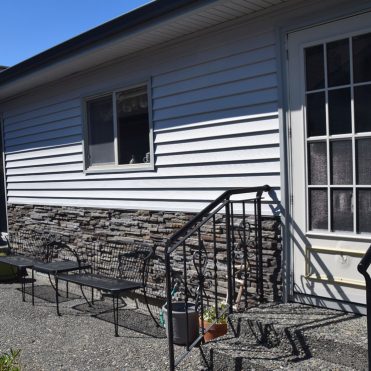
Metal can create a particularly sharp vertical profile and works well with certain contemporary designs. Fiber cement can also be installed in vertical exterior configurations, although the material, water management, cutting, fastening, and maintenance requirements differ.
Composite siding systems add another choice for homeowners who want durability and lower maintenance without relying only on conventional siding materials.
Practical Tip
Do not choose vertical siding from appearance alone. Ask how the complete wall system handles water, flashing, insulation, impact, fading, and long-term maintenance.
Vertical Siding In Washington Requires More Than A Good-Looking Panel
Washington’s wet climate puts exterior materials and installation details under regular stress. Water management therefore deserves special attention when siding is replaced.
Building Science Corporation explains in its guidance on drainage planes and water-resistive barriers that exterior cladding works together with drainage and flashing details behind it. Effective drainage can occur in spaces as small as roughly 1/16 to 1/8 inch in some wall assemblies, although the proper configuration depends on the cladding and wall design.
That is why an attractive siding panel is only part of the project. A contractor should also evaluate the existing exterior, areas around windows, trim conditions, water pathways, and transitions to roofing and soffit components before new siding covers the wall.
Helping Washington Homeowners Choose The Right Siding System
For homeowners comparing vertical siding, horizontal siding, or a combination of the two, Builders Service Company brings more than 50 years of Washington exterior remodeling experience to the conversation. The family-owned company has served homeowners since 1974, and founder Mason Ruppel continues to oversee projects and meet homeowners during in-home consultations.
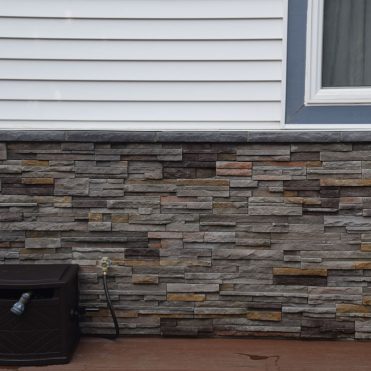
The company works with siding, windows, roofing, and other exterior improvements, which is useful when a siding project involves window trim, roof-to-wall transitions, soffit areas, or a broader exterior remodel. Builders Service Company offers vinyl, metal, stone and brick veneer options, along with its Evergreen Shield Siding System. Evergreen Shield uses specialized composite siding along with weather-protection and insulation-focused components designed for Pacific Northwest conditions.
A professional evaluation is especially worthwhile when existing siding shows deterioration, water concerns are present around windows or trim, or you are changing from one siding style to another and need the new installation integrated correctly with the rest of the building.
Why Choose Builders Service Company?
- Serving Washington homeowners since 1974
- More than 50 years of exterior remodeling experience
- Licensed and insured with Washington contractor license BUILDSC027JN
- Better Business Bureau A+ accredited business
- Two-time Golden Hammer Contractor Award recipient
- Dealer of Distinction for Preservation Windows and Siding
Explore Your Siding Options At Home
Whether you are considering board and batten, another vertical siding style, horizontal siding, or a combination of profiles, the best choice should fit both your home’s architecture and Washington’s demanding exterior conditions.
Builders Service Company serves homeowners across Washington, including Seattle, Tacoma, Bellevue, Everett, Olympia, Renton, Kent, Puyallup, Bremerton, and surrounding communities.
When you are ready to compare siding materials, colors, layouts, and exterior details in person, get in touch and schedule a free in-home consultation.
Frequently Asked Questions About Vertical Siding
Can Vertical Siding Be Used Only On Gables?
No. Vertical siding can cover a small architectural accent or an entire exterior.
The right approach depends on the home’s design, the siding product, and how transitions between different exterior materials are detailed.
Can You Mix Vertical And Horizontal Siding?
Yes. Mixing the two orientations is a common way to separate architectural sections of a house.
For example, horizontal siding may cover the main walls while vertical siding highlights an upper story, entry, or gable.
Does Vertical Siding Make A House Look Taller?
It can create that visual impression. Long upright lines naturally draw the eye upward.
The effect depends on the home’s proportions, windows, roofline, trim, siding width, and overall exterior design.
Is Vertical Vinyl Siding Difficult To Maintain?
Not usually. Maintenance depends more on the material and installation than on whether the siding runs vertically or horizontally.
Regular cleaning and occasional inspection around joints, trim, windows, and penetrations are sensible for any siding system.
Can Vertical Siding Be Installed Around Existing Windows?
Yes, but window flashing and trim must be integrated correctly with the new exterior.
This is also a good time to inspect aging windows or damaged surrounding materials before they are covered by new siding.
Does Vertical Siding Work On Commercial Buildings?
Yes. Vertical siding and panel systems can be used on both residential and commercial construction.
The appropriate material, attachment method, fire requirements, wind resistance, and other installation requirements depend on the building and local code.