

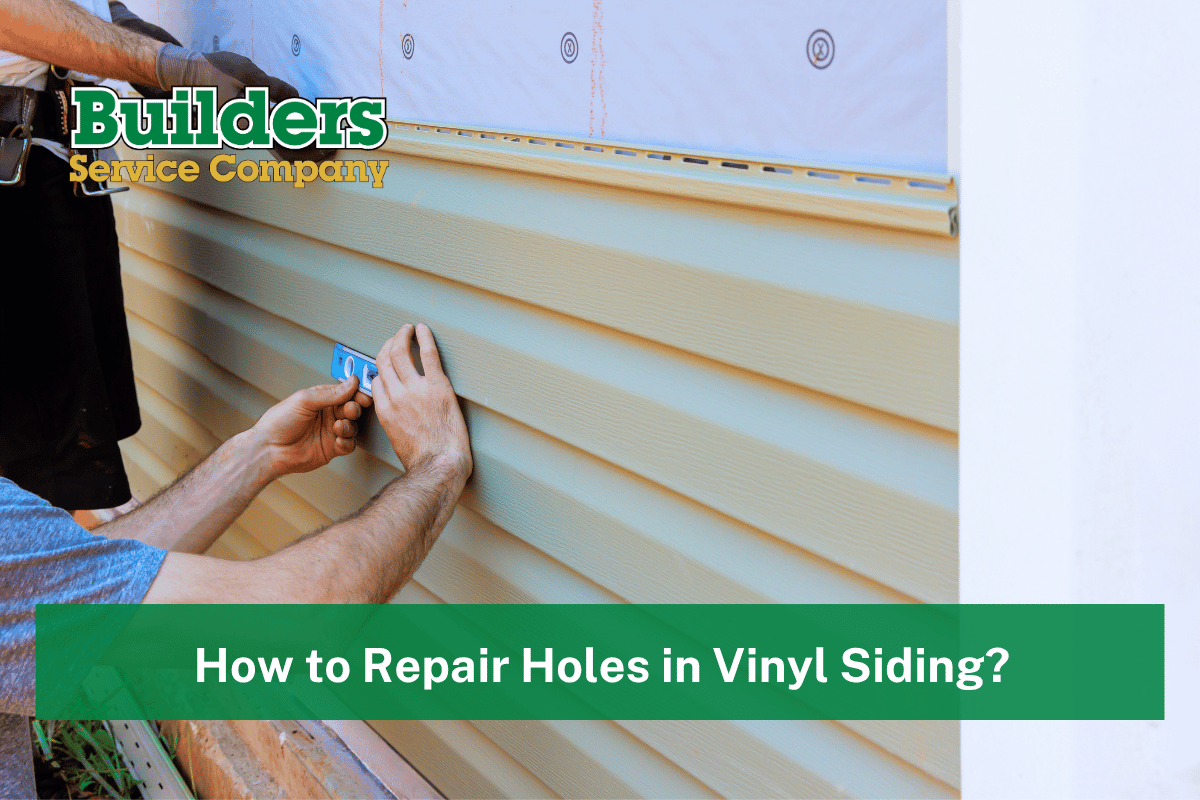
How to Repair Holes in Vinyl Siding?
Vinyl siding is one of the most popular exterior materials used on homes because it is durable, affordable, and relatively easy to maintain. However, even the strongest exterior surfaces can suffer damage over time. Hailstorms, lawn equipment, flying debris, outdoor furniture, and accidental impacts can all create holes or cracks in the material. When this happens, homeowners often wonder how to repair holes in vinyl siding without replacing the entire exterior.
The good news is that many types of damage can be fixed quickly and effectively. Whether you are dealing with small holes or a larger damaged area, taking action early can prevent moisture intrusion and help preserve your home’s appearance. At Builders Service Company, we help homeowners understand the best solutions for maintaining and repairing exterior materials so they can protect their investment for years to come.
How to Repair Holes in Vinyl Siding With Simple Repair Methods
The first step is determining the size and severity of the damage. Small holes often require a different repair method than larger openings. For minor damage, homeowners can usually complete a repair without replacing an entire section.
Many people use a vinyl-compatible spackling material or specialized patch material designed for exterior surfaces. These products can fill small openings and restore a smoother appearance.
Basic Repair Process:
- Clean the affected area thoroughly.
- Remove any loose debris around the hole.
- Apply the spackling material according to manufacturer instructions.
- Allow the material to dry completely.
- Sand lightly if necessary.
- Apply matching paint to blend the repaired area.
This type of repair is often an easy solution for small cosmetic damage. It helps prevent water from entering the opening while improving the overall look of the exterior.
Common Causes of Holes in Vinyl Siding
Understanding what caused the damage can help prevent future issues. Vinyl siding is durable, but it can still be affected by external forces.
Common Causes Include:
- Hail and severe weather
- Lawn mowers throwing rocks
- Weed trimmers striking the exterior
- Falling tree branches
- Sports equipment impacts
- Construction accidents
- Outdoor furniture collisions
Once damage occurs, it is important to repair the affected area promptly. Even a small opening can allow moisture to reach the wall structure behind the exterior surface.
Patching a Damaged Panel
When the opening is larger than a simple puncture, patching may be the most practical option. A damaged panel can often be repaired without replacing a full section of the home’s exterior.
In many cases, homeowners use a matching piece of vinyl siding from leftover materials. The patch is carefully cut to fit the damaged area and secured with an exterior-grade adhesive.
Benefits of Patching:
- Lower cost than full replacement
- Faster installation
- Preserves surrounding materials
- Reduces waste
- Improves appearance
When performing patching work, accuracy is important. The patch should fit tightly and blend naturally with the surrounding siding. Taking time to properly align the material can make the repair far less noticeable.
When a Replacement Panel Is the Better Option
Sometimes damage extends beyond what patching can reasonably fix. Large cracks, missing sections, or significant impact damage may require a replacement panel.
A replacement panel provides a more permanent solution when the existing material can no longer maintain its structural integrity. Installing a new section also ensures that moisture cannot penetrate behind the exterior surface.
A siding removal tool is typically used to unlock the damaged section from neighboring pieces.
Steps for Installing a Replacement Panel:
- Use the tool to separate the damaged section.
- Remove the affected piece carefully.
- Inspect the area underneath for moisture or damage.
- Position the replacement panel.
- Secure it with siding nails.
- Lock the panel into the surrounding sections.
A properly installed replacement panel can restore both function and appearance while protecting the home from future problems.
Using Foam Sealant or Spray Foam for Hidden Gaps
Sometimes holes extend beyond the visible surface and expose gaps behind the exterior. In these situations, foam sealant or spray foam may be useful before completing the final repair.
These products can help fill empty spaces and provide additional insulation. They may also help prevent drafts and moisture movement around the damaged area.
Potential Uses for Foam Products:
- Filling hidden cavities
- Sealing small gaps
- Improving insulation
- Reducing air infiltration
While foam products can be helpful, they should not be considered a substitute for proper siding repair. The exterior surface itself should still be repaired or replaced as needed.
Tools Needed for Vinyl Siding Repairs
Having the proper tool for the job can make repairs much easier and more effective.
Common Tools Include:
- Siding removal tool
- Utility knife
- Measuring tape
- Sandpaper
- Caulking gun
- Safety gloves
- Ladder
- Putty knife
Using quality tools helps ensure clean cuts and professional-looking results.
Matching Color and Finish
One of the biggest challenges during repair work is matching the existing appearance of the home. Older vinyl siding may have faded slightly due to years of sun exposure.
If you have leftover siding panels from the original installation, they can provide the best color match. If not, you may need to contact the manufacturer or compare samples at a local supplier.
Applying matching paint to repaired areas may also improve visual consistency. However, always verify that the paint is compatible with vinyl surfaces.
Tips for Replacing Vinyl Siding Successfully
Replacing damaged vinyl siding requires attention to detail. Even a small installation mistake can affect the appearance and performance of the exterior.
Helpful Tips:
- Measure carefully before cutting materials.
- Match the style and profile of existing siding panels.
- Inspect nearby trim for additional concerns.
- Avoid overdriving siding nails.
- Ensure proper panel alignment.
- Check for secure locking connections.
These simple practices can improve the quality and durability of the completed repair.
When to Call a Professional
Some repairs are straightforward, while others may require professional assistance. If damage affects multiple sections, extends behind the wall, or involves structural concerns, professional evaluation may be the best choice.
A qualified contractor can identify hidden issues and recommend the most effective solution. This is especially important when moisture infiltration has already occurred.
Professional repairs may also be beneficial when matching materials are difficult to find or when large sections require replacement.
Final Thoughts
Learning how to repair holes in vinyl siding can help homeowners maintain their property’s appearance and prevent more expensive problems in the future. Whether you are addressing small holes with spackling material, completing patching work on a damaged panel, or installing a replacement panel, prompt action is always the best approach.
By using the proper tool, selecting quality materials, and following proven repair techniques, you can extend the life of your exterior and protect your home from moisture damage. If you need expert assistance, Builders Service Company can help evaluate the condition of your siding and recommend the right repair solution for your specific needs.