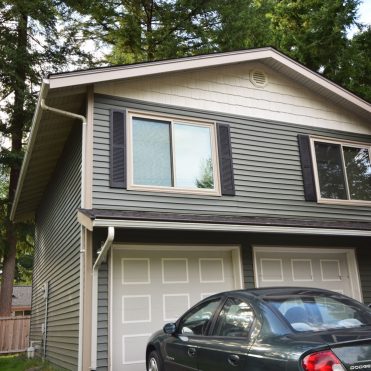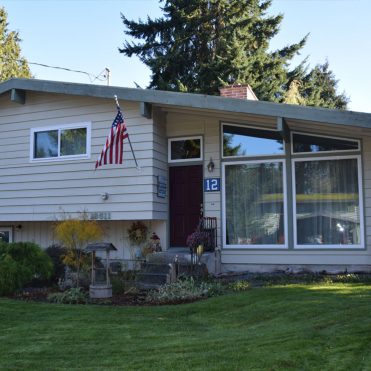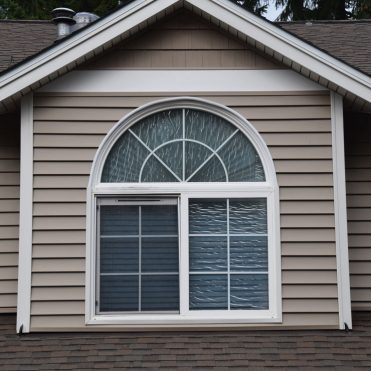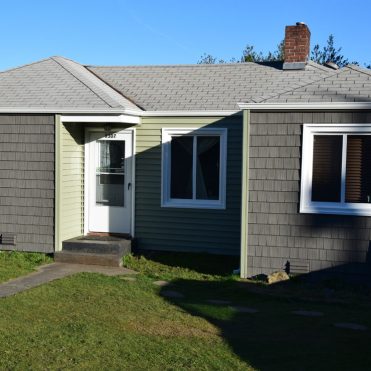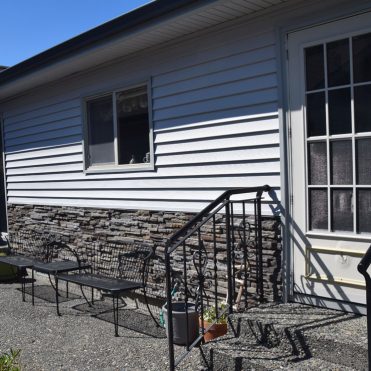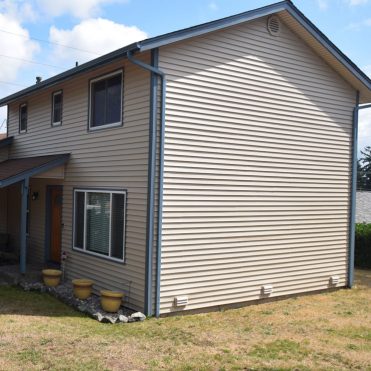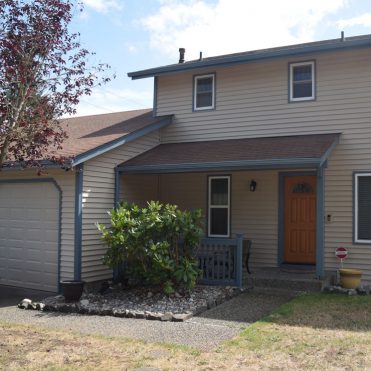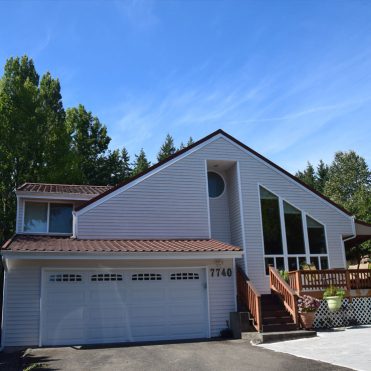


If you are wondering how to clean vinyl siding without a pressure washer, the good news is that you usually do not need powerful equipment at all. A garden hose, a soft-bristle brush, the right cleaning solution, and a little patience can remove ordinary dirt, pollen, algae, and surface grime while giving you more control around seams, windows, and trim.
For Washington homeowners, gentle cleaning can be especially useful after months of rain, wind, tree debris, and damp weather. The key is not simply scrubbing harder. It is using the right cleaner, working in manageable sections, and keeping water from being driven behind the siding.
A Simple Plan for Cleaner Vinyl Siding
Before you start, keep these points in mind:
- Use a garden hose instead of high-pressure equipment.
- Choose a soft-bristle brush or soft cloth, never an abrasive scrubber.
- Test any siding cleaner on a small hidden section first.
- Apply cleaning solution from the bottom and work your way upward to help reduce streaking.
- Rinse thoroughly from the top downward before the cleaner dries.
- Inspect the siding while you work for cracks, loose panels, gaps, or other damage.
Manufacturer guidance also recommends avoiding prolonged or high-pressure rinsing because it can contribute to moisture intrusion or damage.
What Do You Need to Clean Vinyl Siding by Hand?
You do not need an extensive tool kit for cleaning vinyl siding. For most homes, gather:
- A garden hose with a gentle spray nozzle
- A bucket
- A soft-bristle brush
- A telescoping brush for higher sections
- Mild soap or a cleaner approved for vinyl
- Clean water
- Gloves and eye protection when required by the cleaner manufacturer
For ordinary dirt, mild soap and water may be enough. Certain commercial products such as Simple Green are also approved for vinyl when properly diluted according to their manufacturer’s directions.
Avoid metal brushes, steel wool, abrasive pads, paint removers, strong solvents, or cleaners that are not suitable for vinyl. Aggressive products can leave scratches, discoloration, or permanent surface changes.
How to Clean Vinyl Siding Without a Pressure Washer Step by Step
The safest approach is controlled cleaning rather than trying to wash an entire house at once.
1. Inspect the House Before Washing
Walk around the home first. Look for loose siding, cracks, damaged panels, open seams, failing caulk around windows, and areas where water could enter.
Cleaning can reveal problems that were difficult to see beneath dirt or organic growth. If a panel is already damaged, forcing water around it may make the underlying moisture problem worse.
2. Protect the Area Around the Siding
Close windows and doors. Move outdoor furniture and decorations away from the wall.
If you are using anything stronger than mild soap, follow the cleaner manufacturer’s instructions for protecting plants, painted surfaces, fixtures, and other nearby materials.
3. Rinse Away Loose Debris
Use your garden hose to remove cobwebs, pollen, dust, and loose dirt.
Keep the spray directed across or downward against the siding rather than upward into the horizontal overlaps. Vinyl siding is designed to shed water, but spraying directly underneath panels can send water where it does not belong.
4. Apply Your Cleaning Solution
Work in relatively small sections so the cleaning solution does not dry before you rinse it.
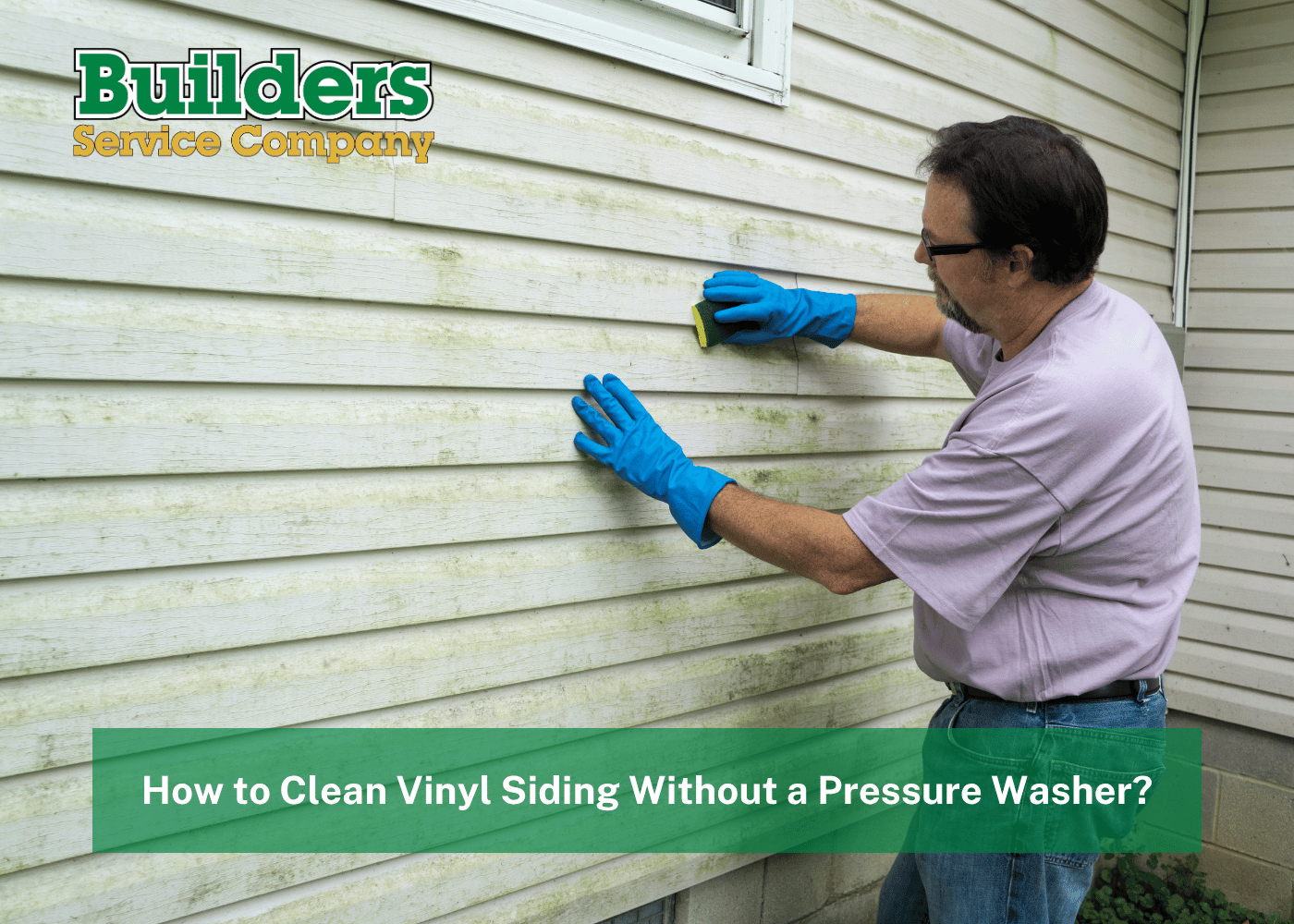
One detail homeowners often miss when learning how to clean vinyl siding without a pressure washer is the direction of cleaning. When applying and scrubbing the solution, start near the bottom and work your way upward. This helps reduce streaks caused by dirty solution running down dry siding.
Use gentle pressure with your soft brush. Give extra attention to textured surfaces, shaded walls, and areas beneath eaves where grime can collect.
5. Rinse From the Top Down
Once a section is clean, rinse it thoroughly with fresh water, beginning at the top and moving downward.
This carries soap and loosened debris toward the ground instead of allowing residue to settle on areas you have already finished.
| What You See | First Cleaning Approach |
|---|---|
| Light dust or pollen | Garden hose and water |
| General grime | Mild soap and soft brush |
| Green organic buildup | Vinyl-safe exterior cleaner |
| Persistent mildew staining | Manufacturer-approved mildew treatment |
| Cracks or loose panels | Inspect before further washing |
What About Mold, Mildew, and Green Siding?
Green or dark patches do not always mean the vinyl itself is failing. Organic material can accumulate on dirt sitting on the exterior, particularly in damp, shaded areas.
Start with the mildest cleaning solutions that will do the job. If ordinary washing does not remove the staining, use a product specifically approved for vinyl and follow its dilution and dwell-time directions.
Bleach is sometimes recommended for mildew, but stronger is not better. Incorrect concentrations can affect finishes and surrounding landscaping. Never mix bleach with ammonia or other household chemicals.
For many homeowners, a vinyl-safe hose-end cleaning product is easier to control than creating a strong homemade chemical mixture.
When Is the Best Time to Wash Vinyl Siding?
A cool, overcast day is usually better than a hot, sunny afternoon.
Direct sun can cause cleaning solution to dry too quickly, leaving residue or streaking before you have time to rinse it. Some siding care guidance recommends temperatures around 55°F to 75°F and working in small sections, allowing roughly three minutes of contact before rinsing rather than letting the cleaner dry.
For many homes, cleaning once a year is enough. Heavily shaded areas or homes surrounded by trees may need occasional spot cleaning between full washes.
Can Hand Washing Be Better Than Using a Pressure Washer?
For routine cleaning, yes.
Learning how to clean vinyl siding without a pressure washer gives you better control over where the water travels. High-pressure equipment can damage vinyl when used incorrectly and may force moisture behind panels, particularly around seams, openings, vents, windows, and doors. CertainTeed specifically advises against power washing its vinyl and polymer siding for these reasons.
Hand washing takes longer, but it also gives you an opportunity to inspect the exterior closely.
When Cleaning Is No Longer Enough
Sometimes the problem is not dirt.
If your siding remains badly faded, warped, cracked, loose, brittle, or repeatedly develops moisture-related problems, another round of washing may only improve its appearance temporarily.
That is where Builders Service Company can help Washington homeowners look beyond surface cleaning and determine whether an aging exterior needs professional siding replacement.
Builders Service Company has served homeowners since 1974. Founder Mason Ruppel continues to oversee company projects, and the company specializes in exterior improvements suited to Pacific Northwest conditions. Its exclusive Evergreen Shield Siding System is designed as a durable, low-maintenance alternative for homeowners who want better resistance to Washington’s moisture, weather, and changing seasons.
Why Washington Homeowners Choose Builders Service Company
- Serving homeowners since 1974
- More than 50 years of exterior remodeling experience
- Locally owned Washington company
- BBB A+ accredited business
- Licensed and insured contractor
- Owner Mason Ruppel continues to oversee company projects
- Specialized experience with siding, roofing, windows, and decking
Talk With Builders Service Company About Your Siding
If cleaning your siding reveals damage, aging panels, recurring moisture concerns, or an exterior that is simply reaching the end of its useful life, Builders Service Company can help you consider the next step.
Phone: 888-980-8580
Service Area: Seattle, Tacoma, Bellevue, and communities throughout Western Washington
Schedule a free in-home consultation to discuss your siding personally with an experienced professional.
Frequently Asked Questions
Can I clean vinyl siding with just a garden hose?
Yes. A garden hose may be enough for light dust, pollen, cobwebs, and loose surface dirt.
For heavier buildup, combine the hose with a vinyl-safe cleaning solution and soft-bristle brush.
Can vinegar be used on vinyl siding?
Diluted white vinegar is commonly used for cleaning vinyl, but always test a small hidden area first and follow the siding manufacturer’s care instructions.
Avoid assuming every homemade mixture is suitable for every siding finish.
Should I clean vinyl siding from the top or bottom?
Apply and scrub cleaning solution from the bottom upward to help prevent streaks, then rinse with clean water from the top downward.
This gives you better control over runoff.
How often should vinyl siding be washed?
Most vinyl siding can be washed about once a year, with additional spot cleaning when pollen, mildew, algae, or grime becomes noticeable.
Homes in damp or heavily wooded areas may need attention more frequently.
Why does my vinyl siding keep turning green?
Green buildup is commonly associated with algae or other organic growth encouraged by moisture, shade, dirt, and limited airflow.
Recurring growth can be more noticeable on damp sides of a house or near dense vegetation.
When should vinyl siding be replaced instead of cleaned?
Consider replacement when cleaning cannot correct extensive fading, cracking, brittleness, warping, loose panels, recurring water problems, or widespread deterioration.
At that point, the issue is the condition of the siding rather than surface dirt.