

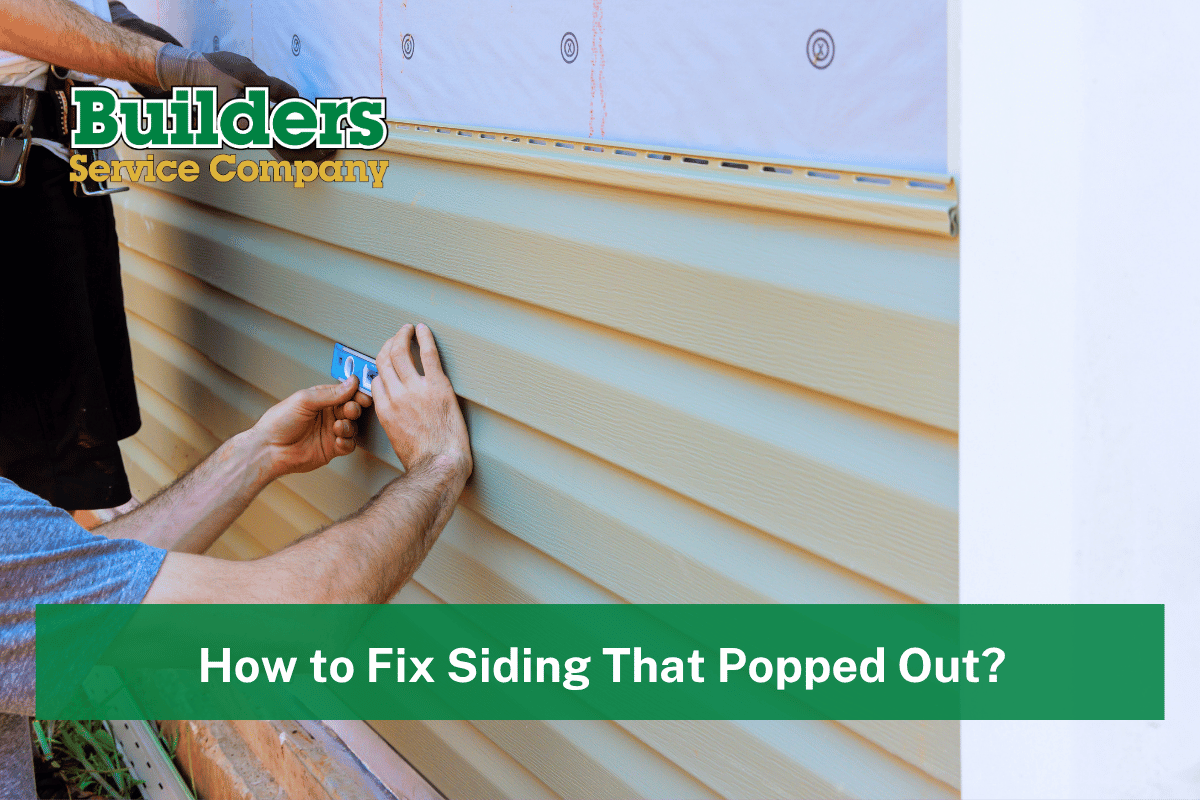
How to Fix Siding That Popped Out Without Causing More Damage?
Seeing an exterior panel hanging loose from your house can be alarming, especially after a windstorm. Fortunately, learning how to fix siding that popped out may help you reconnect a panel when the locking edge is still intact. The key is understanding why it came loose before simply pushing it back into place.
A panel that separates once may need a basic adjustment. A section that repeatedly comes loose could point to broken locking edges, incorrect fastening, moisture damage, or installation problems beneath the exterior.
What Homeowners Should Know
- A loose vinyl panel can often be reconnected with a siding zip tool.
- Work during mild weather because cold vinyl can become brittle.
- Start at one end and reconnect the lower locking edge gradually.
- Never drive nails tightly against vinyl panels.
- Repeated separation usually indicates a deeper installation problem.
- Cracked, warped, or broken panels may require replacement rather than reconnection.
- Avoid working from an unstable ladder or near electrical equipment.
Why Exterior Panels Pop Loose
Understanding the cause helps determine whether you can fix siding yourself or need professional help.
Strong wind can unlock the lower edge
Wind can travel beneath a panel that was not completely locked during installation. Once air gets behind it, pressure may pull the bottom edge away from the panel below.
This is common on exposed walls, upper stories, roofline areas, and corners where wind pressure is strongest. One loose section can also place added stress on nearby panels.
The locking edge may be damaged
Vinyl panels connect through a narrow interlocking lip. If this lip is cracked, stretched, or broken, it may appear to snap back into position but come loose again during the next storm.
A damaged lock generally cannot provide a dependable long-term hold.
Fasteners may be too tight or incorrectly placed
Vinyl expands and contracts as outdoor temperatures change. It should be secured in a way that allows controlled horizontal movement.
When nails are driven too tightly, the material cannot move naturally. This can cause buckling, distortion, and pressure that separates the panel locks. Nails placed outside the center of the fastening slots can create similar problems.
The wall may not be flat
Uneven sheathing, deteriorated materials, or poorly installed house wrap can keep panels from sitting correctly. Reattaching the visible section may hide the symptom without correcting the condition underneath.
This is one reason repeated problems deserve a closer inspection.
Impact damage can loosen a panel
Tree branches, ladders, outdoor equipment, and objects thrown by lawn tools can damage the locking edge without leaving a large visible hole. Check the full length of the loose section for cracks, dents, and stretched areas before reconnecting it.
How to Fix Siding That Has Come Unlocked
A single loose panel at ground level may be manageable when it is undamaged and easy to reach. Stop if the panel is cracked, located high above the ground, or surrounded by several distorted sections.
Gather the right tools
For a basic siding repair, you may need:
- A siding zip tool
- Work gloves
- Safety glasses
- A stable ladder for low, safely accessible areas
- A flashlight for checking beneath the panel
- Matching replacement material if the locking edge is broken
A zip tool is designed to reach beneath the lower lip and engage the locking edge. Using a screwdriver, pry bar, or sharp metal object can puncture or deform the material.
Inspect the panel before reconnecting it
Look closely along the entire loose edge.
Check for:
- Cracks around the locking lip
- Warped or stretched material
- Missing fasteners
- Water staining
- Soft wall areas
- Insect activity
- Torn house wrap
- Multiple adjoining panels that have shifted
A clean separation with no visible damage may only need to be relocked. Broken material should usually be replaced.
Reattach siding with a zip tool
Position the curved end of the zip tool beneath the lower edge of the loose panel. Hook the tool onto the locking lip, then pull slightly downward and toward you.
Guide the lip over the upper edge of the panel below it. Press the two sections together until they connect. Continue moving horizontally along the wall, locking a few inches at a time.
Do not force the tool deeply behind the material. Its job is to guide the edge, not pry the panel away from the house.
Check the full connection
After you reattach siding, press gently along the repaired seam. The edge should sit evenly without sagging, bulging, or immediately separating.
Stand back and look across the wall from an angle. Uneven shadows may reveal sections that have not fully locked.
You can also apply gentle downward pressure by hand. The panel should remain connected while still allowing the normal side-to-side movement required for temperature changes.
Mistakes That Can Turn a Small Problem Into a Bigger One
The most common errors happen when homeowners focus only on making the panel look closed.
Do not screw through the visible face
Driving a screw through the front may hold the panel temporarily, but it creates a hole and prevents normal movement. The surrounding material may crack or buckle as temperatures change.
Visible screws can also reduce curb appeal and create paths for moisture.
Do not seal the locking seam with household adhesive
Glue, general-purpose caulk, and construction adhesive can restrict movement and make future work more difficult. They may also fail when exposed to moisture and temperature changes.
The panels are designed to connect mechanically through their locking edges.
Do not hammer the panel upward
Repeated impact can crack the lower lip, particularly during cold weather. A panel that seems flexible during summer may become much easier to damage in winter.
Use controlled pressure and the proper tool instead.
Do not ignore the reason it became loose
If the same section has popped out more than once, reconnecting it again is not a complete repair. The locking edge, fastening pattern, wall surface, or surrounding installation should be examined.
When a Loose Panel Needs Professional Repair
Some problems should not be treated as a quick DIY project.
The problem is above a safe working height
Upper-story work involves fall risks and is harder than it appears from the ground. Reaching sideways from a ladder is especially dangerous because reconnecting a long panel requires horizontal movement.
Professional crews have the equipment and positioning needed to work safely.
Several panels are loose or buckled
One separated edge may be isolated. Several loose or wavy sections usually indicate a wider installation or fastening problem.
A contractor can carefully unlock the affected area, inspect the fasteners and underlying wall, and determine whether the existing material can be reinstalled.
The panel will not stay connected
If the edge releases immediately after being pressed into place, its locking lip may be damaged. Replacing the affected section is normally more reliable than repeatedly trying to secure siding that can no longer lock properly.
There are signs of moisture behind the exterior
Staining, softness, mold-like growth, musty odors, or deteriorated sheathing require attention. The visible panel may be only the first sign of a water-management problem.
Covering moisture damage without correcting its source can allow the condition to spread unseen.
Repair or Replacement: How to Make the Right Decision
A small, isolated issue may be repairable when the panels remain flexible, undamaged, and properly installed. Replacement becomes more practical when the exterior is brittle, faded, warped, repeatedly separating, or failing across several walls.
Consider more than the appearance of one loose piece. Ask:
- Is this the first time the section has separated?
- Is the locking edge intact?
- Are nearby panels also moving?
- Is the wall beneath it dry and solid?
- Can matching material still be found?
- Is the existing installation protecting the house effectively?
For an older exterior, repeated small repairs may cost time without solving the broader problem. A professional assessment can help you compare targeted work with a more dependable long-term solution.
How to Reduce the Risk of Future Problems
Walk around your home after major windstorms and inspect it from several angles. Look for lifted edges, unusual shadows, rattling sections, cracks around openings, and movement near corners.
Keep tree branches trimmed away from exterior walls. Secure patio furniture and other objects before high winds. Maintain gutters and downspouts so water does not repeatedly run behind trim or across vulnerable sections.
Most importantly, do not delay when a panel comes loose. The longer it remains open, the greater the chance that wind, moisture, or debris will affect the materials beneath it.
Guidance From Builders Service Company
Builders Service Company has served Washington homeowners since 1974, helping protect and improve homes through professional exterior remodeling. Its team understands how wind, rain, changing temperatures, and installation quality affect exterior performance across the Pacific Northwest.
Contact us to schedule a free in-home consultation.
Frequently Asked Questions
Can you push loose vinyl back into place?
Sometimes. An undamaged panel may reconnect when its lower locking edge is guided over the panel beneath it. A zip tool provides better control than pushing randomly with your hands.
If it does not stay connected, the edge may be broken or distorted.
What tool is used to fix loose siding?
A siding zip tool, sometimes called an unlocking tool, is commonly used. Its curved edge reaches beneath a panel and helps release or reconnect the locking lip without puncturing the visible surface.
Why does my siding keep popping out?
Repeated separation may result from a damaged locking edge, strong wind exposure, overly tight fasteners, uneven wall surfaces, or incorrect installation.
When the same area fails repeatedly, the underlying cause should be inspected rather than continually relocked.
Can wind pull siding off a house?
Yes. Strong wind can enter beneath an incompletely secured edge and create enough pressure to unlock or damage panels. Corners, rooflines, and exposed upper walls may experience particularly strong wind pressure.
Can I repair siding during cold weather?
Minor work may be possible, but vinyl becomes less flexible as temperatures fall. Applying too much pressure in cold conditions can crack the material.
Unless the opening requires urgent protection, mild weather generally offers safer working conditions.
Should loose siding be repaired immediately?
It should be addressed promptly. An open section can allow wind-driven rain, insects, and debris to reach the materials underneath. It can also catch more wind and place stress on neighboring panels.
Protect Your Home Before a Loose Panel Becomes a Larger Problem
A panel that has popped loose may seem like a small cosmetic issue, but it can also reveal damaged material or improper installation. Builders Service Company can examine the affected area, explain the available options in person, and help you choose a dependable solution for your Washington home.
Call 888-980-8580 today to schedule your free in-home consultation.