Des Moines, WA
Siding Replacement in Des Moines, WA
King County assessor records put the median Des Moines single-family home at 1965, and 63% of the city’s 7,310 single-family homes were built between 1950 and 1979. Only 5% show a recorded renovation. That means most house siding in Des Moines is still the cladding these homes went up with. If you are replacing yours, the real questions are what is coming off, how the new siding will handle wet winters and salt air near the water, and which of the three types we usually recommend fits your house.
What’s on Des Moines homes now
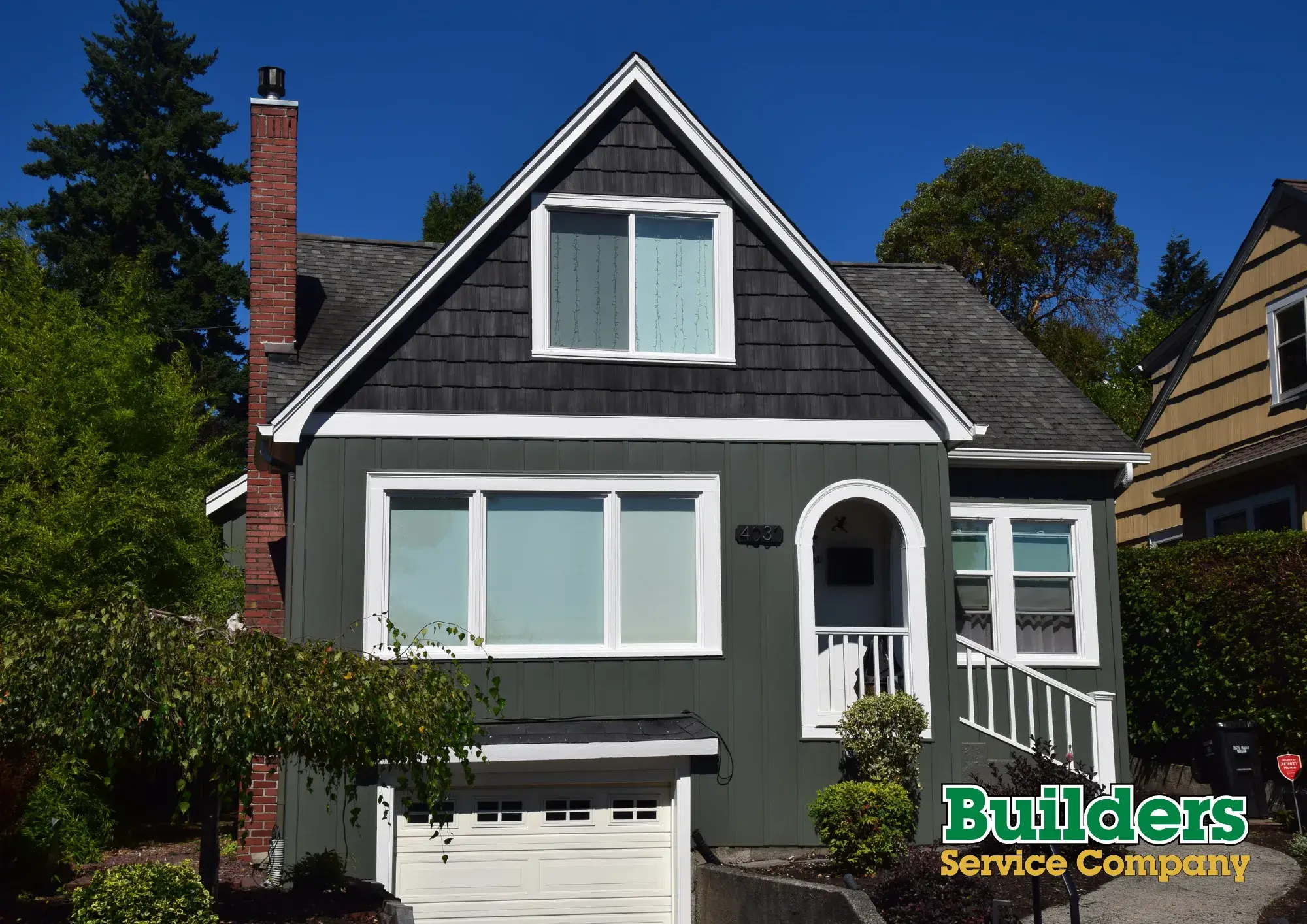
Census data puts the median year built across all Des Moines housing at 1974, and the single-family stock runs older. Houses from 1950 to 1979 were typically clad in cedar, T1-11 plywood panels or asbestos-cement shingles. Asbestos-cement shingle may contain asbestos and should be tested before removal, so we identify it before any tear-off is planned.
The largest platted areas in the assessor’s records follow that pattern:
- Southern Pacific Ld Co To Des Moines: 478 homes, median year built 1959
- Southern Pacific Ld Co 2nd Des Moines: 399 homes, 1960
- Woodmont Beach: 257 homes, 1963
- Des Moines Two-Acre Trs: 233 homes, 1962
- First Railroad Add To Des Moines: 234 homes, 1968
- Des Moines Water Front Add: 239 homes, 1976
Another 17% of single-family homes date from 1980 to 1999, the era of composite and hardboard siding. The 12% built in 2000 or later likely have fiber cement or builder-grade vinyl that is reaching its first repaint or replacement. The 8% built before 1950 most likely still carry original wood lap siding, with possible lead paint under it.
Census data shows 56% of housing units are detached houses, 10% are attached homes such as townhouses and 2% are mobile homes. The assessor rates 34% of single-family homes in good or very good condition.
Choosing siding for Des Moines’s conditions
Des Moines falls in the Puget Sound urban climate: moderate rain, with moss and rot appearing first on north-facing walls. Homes near the water also deal with salt exposure. The assessor counts 2% of single-family homes as waterfront and 18% with a view. All three siding types we usually recommend suit wet winters because none of them is wood. Unlike the cedar many of these houses were built with, they will not rot or need repainting after a soggy season.
Vinyl siding is the most versatile and least expensive option, and it is where many Des Moines projects land. Home values here run 35% below the King County median, with a median around $595,000, and in that range homeowners usually want durable, cost-effective materials. Vinyl also handles salt air. Only 23% of single-family homes have two or more stories, so most re-siding jobs here involve modest wall heights and ladder work.
The Evergreen Shield Siding System is the upgrade for owners planning to stay. Census data shows 61% of Des Moines homes are owner-occupied, and 54% are heated with electricity and 6% with oil. Where heating costs more, the payback from insulated siding is larger. It is also a good match for salt-air lots near the water.
Metal siding is the third option, for homeowners who want a look other than lap siding.
Stacked stone and stone veneer are accents rather than whole-house siding. Just 7% of single-family homes show any brick or stone, so a stone wainscot, a veneered entry or clad columns set a house apart, and a stone base course is a durable choice along the bottom of the walls.
Which of these fits your home is something we work out together during the free in-home consultation.
Evergreen Shield Siding System in Des Moines
Our exclusive insulated composite siding was designed for the Pacific Northwest climate, and two of its features line up with conditions in Des Moines.
- Built for wet seasons. The composite panels are made for water resistance against long wet seasons, humidity, mold and mildew.
- An insulating layer on the walls. A graphite membrane gives the panels a thermal resistance of R-2.0, compared with R-0.61 for standard vinyl siding. Where heating costs run high, that added resistance is worth weighing.
At the consultation we compare it with vinyl and metal for your specific walls, so you can weigh the cost against what it adds. You can read the full product details on the Evergreen Shield Siding System page.
Signs your siding needs replacing
On a 1950s or 1960s Des Moines house, the warning signs mostly come down to age and moisture:
- Green moss, soft spots or rot on north-facing walls, where rain dries slowest.
- Cedar boards that split, cup or will no longer hold paint for more than a season or two.
- T1-11 panels delaminating or rotting along the bottom edge.
- Shingles that are cracked, loose or missing.
- On homes built from 1985 to 1996, about 11% of the single-family stock, hardboard or LP siding swelling at the drip edge or around nail heads.
If you see more than one of these, it is worth having the walls looked at before water reaches the sheathing.
Get a free siding consultation in Des Moines
Schedule a free in-home consultation or call 206-430-1927. We will look at what is on your walls now and walk through vinyl, the Evergreen Shield Siding System and metal for your house. Financing is available, along with discounts for seniors, active military, veterans and first responders. For roofing, windows and decks, see our Des Moines home exterior services.
Des Moines siding FAQ
Which siding type holds up best in Des Moines's wet winters?
Any of the three we usually recommend will handle Des Moines rain, because vinyl, the Evergreen Shield Siding System and metal are not wood and have nothing to rot. That matters in a climate with moderate rain through the long wet season. Vinyl fits most budgets, while the Evergreen Shield Siding System adds composite panels built for water resistance and an insulating layer. We match the choice to your house at the consultation.
What should I expect when removing siding from a 1950s or 1960s Des Moines house?
Expect to find the original cladding: King County assessor records show 63% of single-family homes here were built between 1950 and 1979. On houses from that era it is usually cedar, T1-11 panels or asbestos-cement shingles. Asbestos-cement shingle may contain asbestos and should be tested before removal, so we identify the material during the in-home consultation before any tear-off is planned.
Is insulated siding worth it for a Des Moines home heated with electricity?
It often is, because the payback from insulated siding is larger where heating is costly, and Census data shows 54% of Des Moines homes heat with electricity and 6% with oil. The Evergreen Shield Siding System has an insulating graphite membrane rated R-2.0, compared with R-0.61 for standard vinyl siding. We can compare it with standard vinyl for your walls at the free in-home consultation.
What siding should I choose for a waterfront or view lot in Des Moines?
For salt air, we usually point homeowners to vinyl or the Evergreen Shield Siding System. King County assessor records count 2% of single-family homes in Des Moines as waterfront and 18% with a view, and those lots take salt exposure off the water. We also use corrosion-resistant fasteners and flashing on these houses, since that hardware is what salt air wears on first.
Will I have to repaint new siding on my Des Moines house?
No, not with the Evergreen Shield Siding System. It comes in 20 built-in, fade-resistant colors that resist chipping, peeling and fading, so the color is part of the panel and there is no repainting. That is a change for the many Des Moines homes from 1950 to 1979 that were built with painted wood siding. You can look at color choices during your free in-home consultation.