Mount Vernon, WA
Siding Replacement in Mount Vernon, WA
Mount Vernon’s median home was built in 1989. That one year says a lot about the siding we find here. It falls at the tail end of the years when hardboard and LP lap siding went up on new houses, and just ahead of the builder-grade siding that covered the city’s newer construction. Each of those products wears out in its own way. Knowing which one is on your walls is the first step in choosing what replaces it, and it is where every siding job we take on as a siding contractor in Mount Vernon starts.
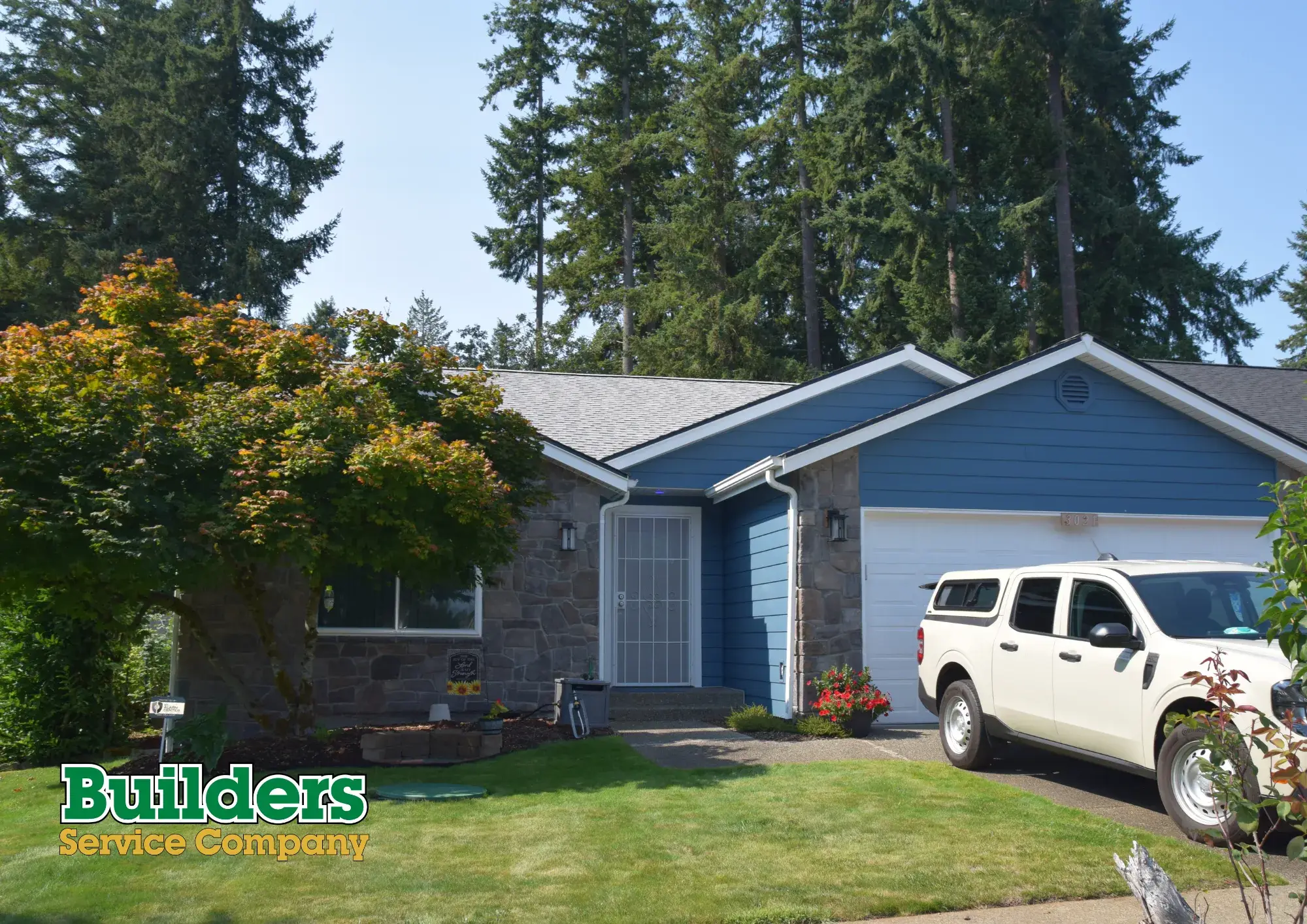
What’s on Mount Vernon homes now
Census figures sort the city’s 13,623 housing units into four building eras, and each tends to carry its own kind of siding:
- Before 1950 (12%): likely original wood lap siding. Paint on houses this old may contain lead, which changes how the old boards are handled when they come off.
- 1950 to 1979 (27%): cedar, T1-11 plywood panels or asbestos-cement shingles. Asbestos-cement shingles may contain asbestos and should be tested before removal.
- 1980 to 1999 (30%): composite and hardboard lap siding, including LP siding, a product with a known history of moisture failure.
- 2000 or later (32%): builder-grade vinyl or fiber cement, now coming due for a first repaint or replacement. This is the largest group in the city, a sign of how fast newer construction has grown here.
The type of home matters as well. Detached houses make up 61% of Mount Vernon’s housing, attached homes 13%, apartments 20% and mobile homes 6%. Most of the siding we replace in town is on those detached houses, where every wall is part of the job. With 60% of homes owner-occupied, many of the people we meet are long-term owners putting money into an exterior they plan to live with for years.
Choosing siding for Mount Vernon’s conditions
We usually recommend one of three siding types here, plus stone accents. The right one for your house is something we settle with you during the free in-home consultation, but each answers a different Mount Vernon condition.
Wind and rain on the valley floor. Mount Vernon sits in the Skagit Valley, where wind and flood plains shape the local climate. Windy, rainy weather makes it crucial for siding to be durable, and wind-driven rain finds any gap in old lap siding. Vinyl, the Evergreen Shield Siding System and metal share one advantage over much of what comes off houses here: none of them is wood, so none of them will rot. Unlike cedar, none of them needs repainting after a wet winter. Installation still decides how well they perform. Vinyl expands and contracts with temperature changes, so it must be fastened loosely enough to move, with flashing and a moisture barrier behind it to carry water out of the wall.
Electric heat. Census data shows 46% of Mount Vernon homes heat with electricity, close to the 51% that use gas. Where electric heat is the bill you pay all winter, the Evergreen Shield Siding System is the one we point to first. Its panels carry an insulating graphite membrane rated R-2.0; standard vinyl siding rates R-0.61.
Budget and wall area. Vinyl is the most versatile and least expensive of the three. On a large detached house where the wall area adds up, it keeps a full residing project within reach.
A modern look. Metal siding gives a crisp, contemporary line, either across the whole house or on one wing, gable or addition.
Stone accents. Stacked stone or stone veneer is accent cladding, not whole-house siding. We pair it with any of the three as a wainscot along the base of the wall, around an entry, or on columns and chimneys, where it adds curb appeal and a durable base course.
Evergreen Shield Siding System in Mount Vernon
The Evergreen Shield Siding System is our exclusive insulated composite siding, designed for the Pacific Northwest climate. Two of its traits line up with what Mount Vernon homes face.
First, the composite is built for water resistance against long wet seasons, humidity, mold and mildew. That is the test a Skagit Valley wall takes every year, and it is where the hardboard on many 1980s and 1990s houses here has given out.
Second, it comes in 20 built-in, fade-resistant colors that resist chipping, peeling and fading, so the walls never need repainting. For the 60% of Mount Vernon households who own their home, that means the color you choose at installation is the one you keep, with no paint cycle to budget for.
Signs your siding needs replacing
What fails first depends on when your house was built and how much weather its walls take.
- 1980s and 1990s hardboard or LP lap siding: swelling, flaking or soft spots along the bottom edges of boards and around nail heads, where water has reached the core. Once boards swell, new paint will not save them.
- Builder-grade vinyl from 2000 or later: panels that have loosened, cracked or blown off in valley windstorms, or that look wavy because they were nailed too tight to move with temperature changes.
- Painted boards from 2000 or later: finish worn through to bare material and caulked joints that have opened, the point where a first repaint comes due.
- Older wood siding: rot, moss and mildew on walls that stay damp, and paint that will no longer hold.
Any of these is worth a look before water reaches the sheathing.
Get a free siding consultation in Mount Vernon
Schedule a free in-home consultation through our contact page or call 206-430-1927. Our work comes with a lifetime warranty, we offer discounts for seniors, active military, veterans and first responders, and financing is available. For roofing, windows and decks, see our Mount Vernon home exterior services.
Mount Vernon siding FAQ
Which siding makes sense for a Mount Vernon home with electric heat?
The Evergreen Shield Siding System is usually our first suggestion, because its insulating graphite membrane is rated R-2.0, against R-0.61 for standard vinyl siding. Census data shows 46% of Mount Vernon homes heat with electricity, and the payback from insulated siding is larger where heating is costly. Vinyl and metal are still options, and we compare all three for your house during the free in-home consultation.
My Mount Vernon house was built in the 1990s. What siding is probably on it?
Most likely composite or hardboard lap siding, possibly LP siding, which has a known history of moisture failure. Census data shows 30% of Mount Vernon homes were built between 1980 and 1999, and the city's median home dates to 1989, so this is one of the most common replacements we do here. Swollen bottom edges and soft spots around nails are the usual signs it is time.
Does old siding on a 1960s or 1970s Mount Vernon home need testing before removal?
It depends on what is on the house. Census data shows 27% of Mount Vernon homes were built from 1950 to 1979, an era of cedar, T1-11 and asbestos-cement shingle siding. Asbestos-cement shingles may contain asbestos and should be tested before removal. We identify which material is on your walls during the free in-home consultation, so any testing happens before removal is planned.
What should I expect when replacing siding on a newer Mount Vernon home?
Homes built in 2000 or later are the largest group in Mount Vernon, 32% of the housing, and their builder-grade vinyl or painted boards are now reaching first repaint or replacement. Signs include loose or wavy vinyl panels and worn finish at open joints. We check the sheathing and flashing once the old siding is off, then install vinyl, Evergreen Shield Siding System or metal siding.