Sammamish, WA
Siding Replacement in Sammamish, WA
King County assessor records count 19,266 single-family homes in Sammamish, and only 2% of them show a renovation on record. Most were built between 1980 and 1999, so much of the city still has its original siding. On houses that size and age, siding replacement in Sammamish starts with three questions: what is on your walls today, how well it has held up, and which of the siding types we usually recommend fits your house and your subdivision.
What’s on Sammamish homes now
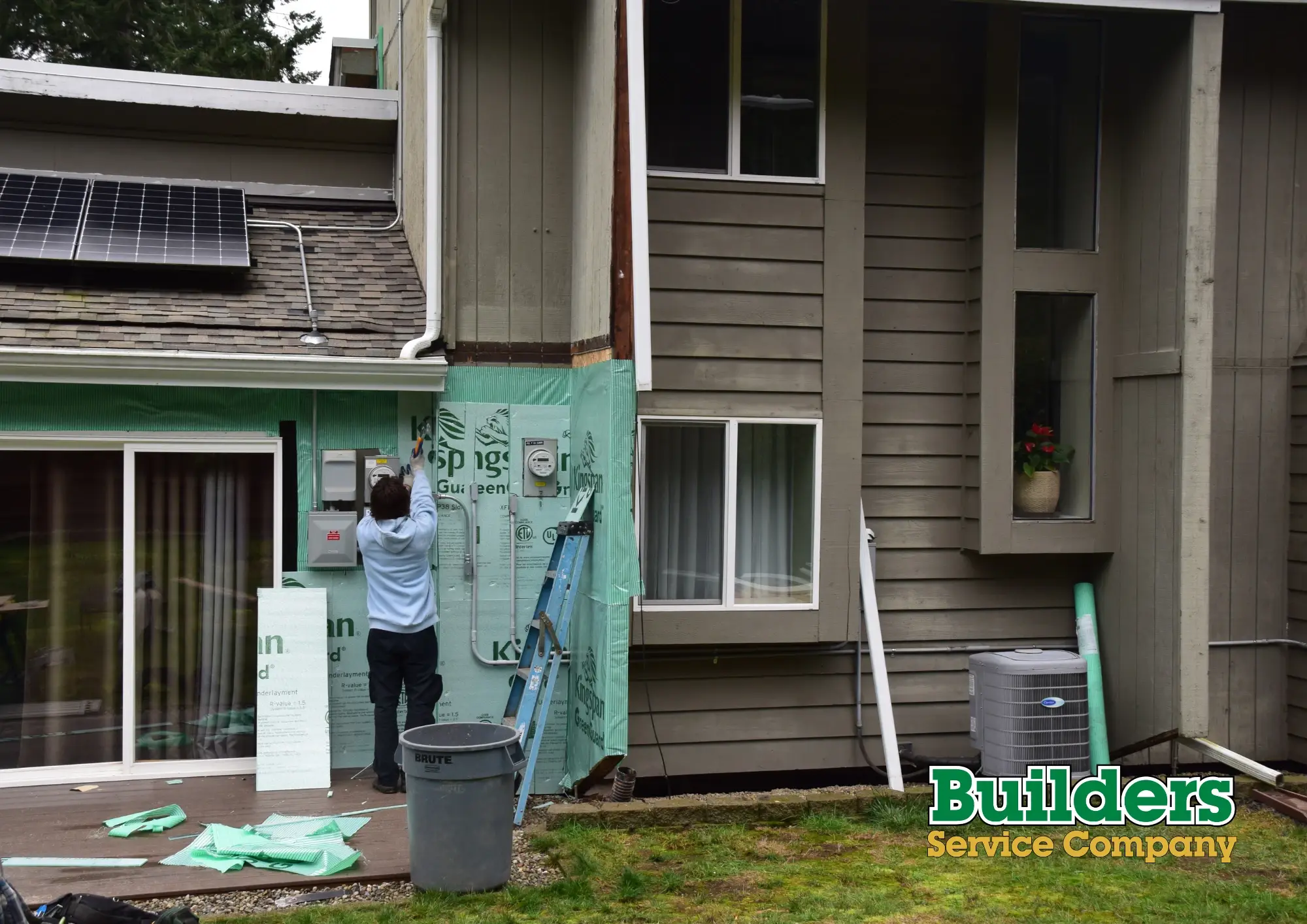
Assessor records place 54% of single-family homes in the 1980–99 era, with a median build year of 1992. That was the era of composite and hardboard siding, including LP siding, which has a known history of moisture failure. Klahanie (median build year 1985, 453 homes) and Inglewood Glen (1983, 178 homes) sit squarely in that window. Renaissance and Timberline Ridge, both with a median build year of 1999 and 202 and 200 homes, came at its tail end.
Another 32% of homes date from 2000 or later. Those houses usually went up with fiber cement or builder-grade vinyl that is now due for its first repaint or replacement.
The 13% built from 1950 to 1979 more often have cedar, T1-11 or asbestos-cement shingle siding. Inglewood Add, with a median build year of 1979 and 467 homes, is the largest neighborhood group from that period. Asbestos-cement shingles may contain asbestos and should be tested before removal.
Census data shows 81% of housing units here are detached houses and 8% are attached. The assessor rates 80% of homes at two or more stories, which means tall walls, staging or lift work and a lot of siding per house. Only 21% are rated in good or very good condition.
Choosing siding for Sammamish’s conditions
Sammamish gets moderate rain, ranks at the 47th percentile statewide for wildfire risk (rated Low) and has high home values. Those three facts do more to shape the choice than any extreme weather does.
- Vinyl siding is the most versatile and least expensive of the three. It is the practical pick when budget leads, or when the wall area of a tall house drives the cost.
- The Evergreen Shield Siding System is our insulated composite siding. Its graphite membrane rates R-2.0, against R-0.61 for standard vinyl. Payback from insulated siding is larger where heating costs more, so it deserves a close look in the 26% of homes here that heat with electricity. The 72% that heat with gas see a smaller payoff from insulation alone.
- Metal siding is the other premium option. Census figures put the median home value at about $1,405,000, 53% above the King County median, and the assessor grades 58% of homes at 9 or higher. At that level, owners more often choose metal or the Evergreen Shield Siding System over vinyl.
Rain is the steady threat here, not fire. None of the three is wood, so the siding itself will not rot when moss or moisture sits against it, unlike the cedar on some of the city’s older homes.
Stacked stone or stone veneer suits an entry, columns, a chimney or a wainscot along the base course. It is accent cladding used with the siding, not a whole-house option, and it is a good way to give a large facade some weight at ground level.
Plateau subdivisions often have HOA design rules that cover color and material, so check yours before you settle on a product. The best option for your home is something we work out with you during the free in-home consultation.
Evergreen Shield Siding System in Sammamish
The Evergreen Shield Siding System is our exclusive composite siding, designed for the Pacific Northwest climate. Two of its features line up with what Sammamish homes need.
The composite is built for water resistance through long wet seasons, humidity, mold and mildew. On a house whose current boards have already taken on water, that is the property that matters most in a replacement.
It also comes in 20 built-in, fade-resistant colors that resist chipping, peeling and fading, so the walls never need repainting. On tall walls, that removes the repeat scaffolding and paint work that painted siding requires.
The panels also pair with stacked stone or stone veneer accents if you want an entry or base course with a different texture.
Signs your siding needs replacing
About 35% of Sammamish homes were built from 1985 to 1996, so on most houses we look first for the board failures typical of that era:
- Swollen or soft board edges along the bottom course and at butt joints, where water collects after rain.
- Flaking, blistered or mushroomed edges, and nail heads that have sunk into softened boards.
- Sagging, broken or missing boards, especially below gutters and around windows.
- Moss or green growth on walls that stay damp between showers, a sign the siding is holding moisture.
- On 2000s homes, builder-grade vinyl that has faded or cracked, or paint that has started to fail.
Siding usually gives you time to plan. If you act on these signs early rather than waiting until boards fail, you can schedule the project instead of reacting to damage.
Get a free siding consultation in Sammamish
Schedule a free in-home consultation through our contact page or call 206-430-1927. We also serve nearby Newcastle. Ask about our lifetime warranty; financing is available, and we offer discounts for seniors, active military, veterans and first responders. For roofing, windows and decks, see our Sammamish home exterior services.
Sammamish siding FAQ
Which siding type suits Sammamish's climate?
Any of the three types we usually recommend handles Sammamish's moderate rain, because none of them is wood. Vinyl is the least expensive. The Evergreen Shield Siding System adds insulation and water resistance against mold and mildew. Metal is the other premium choice. With wildfire risk rated Low at the 47th percentile statewide, moisture and home value matter more to the decision than fire rating. We settle the best fit for your house during the free in-home consultation.
Will my HOA need to approve new siding?
It depends on your subdivision, so check before you choose. Plateau subdivisions in Sammamish often have HOA design rules covering siding color and material. Bring your HOA's requirements and any approved palette to the free in-home consultation, and we will match our recommendation to them. The Evergreen Shield Siding System comes in 20 built-in colors, which gives you a set of options to compare against the list.
What should I expect when removing siding from a 1980s or 1990s home?
Expect to find composite or hardboard siding, often LP siding, which has a known history of moisture failure. That matters here because 35% of Sammamish's single-family homes were built from 1985 to 1996. Once the old boards are off, we check the wall behind them for water damage before new siding goes on, so plan for that inspection as part of the project.
Is insulated siding worth it if my home heats with gas?
It can be, but the payback is larger in homes that heat with electricity. Census data shows 72% of Sammamish homes heat with gas and 26% with electricity. The Evergreen Shield Siding System's graphite membrane rates R-2.0, compared with R-0.61 for standard vinyl siding. If you heat with electricity, that difference counts for more; with gas, weigh it alongside the system's other features.
Do older Sammamish homes need asbestos testing before residing?
Some do. Homes built from 1950 to 1979 may have asbestos-cement shingle siding, which may contain asbestos and should be tested before removal. King County assessor records show 13% of Sammamish's single-family homes date from that period, including the Inglewood Add area, where the median build year is 1979. If your house is from those years, mention it when you schedule your free in-home consultation.