Issaquah, WA
Siding Replacement in Issaquah, WA
Much of the house siding in Issaquah is reaching the end of its first life rather than its last. King County assessor records count 7,190 single-family homes in the city, and 56% of them were built in 2000 or later. Those houses sit in the Cascade foothills, a region that sees more rain, ice storms and east winds, and many of them climb hillside lots. Below we cover what is on Issaquah walls today, which siding fits these conditions, and the signs that tell you yours is due.
What’s on Issaquah homes now
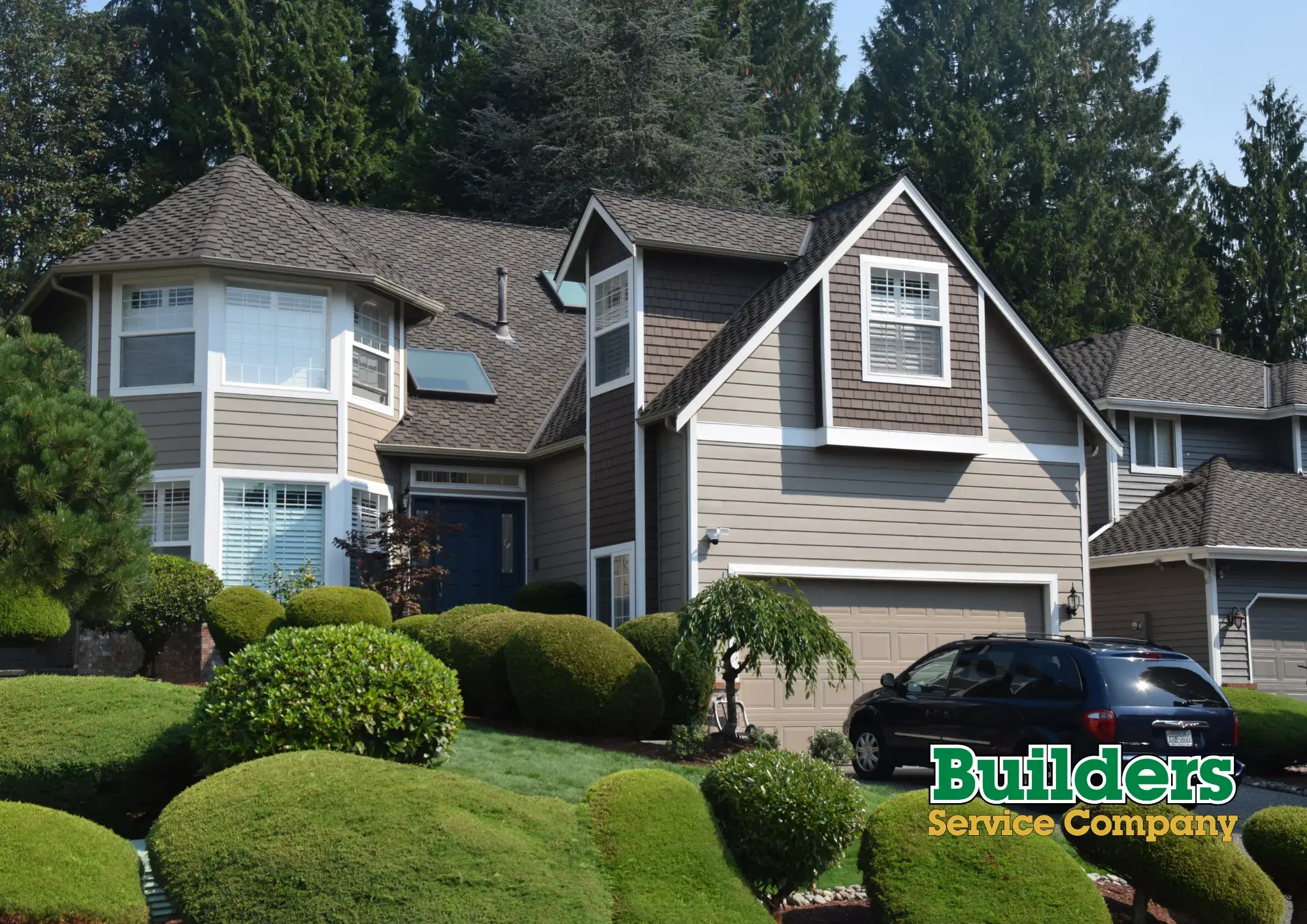
The assessor’s era breakdown explains most of what we find on Issaquah walls. Houses built since 2000 hold 56% of the single-family stock, and their siding is usually fiber cement or builder-grade vinyl now due for its first repaint or replacement. Another 19% date from 1980 to 1999, the era of composite and hardboard siding. Within that group, 11% of homes were built between 1985 and 1996, the years of LP siding, which has a known history of moisture failure.
Homes from 1950 to 1979 make up 22% and typically carry cedar, T1-11 or asbestos-cement shingles. Asbestos-cement siding may contain asbestos and should be tested before removal. Only 3% of houses predate 1950.
Neighborhoods follow the same split. Assessor records give West Highlands Park a median build year of 2011 and Talus 2004, while Mountain Park Estates, with 221 homes, has a 1965 median and Greenwood Point a 1978 median. Each era calls for a different tear-off plan.
Census data shows 35% of Issaquah housing units are detached houses and 22% are attached homes such as townhouses. The median single-family house has 2,440 square feet. Assessor records rate 24% of these homes in good or very good condition, and just 2% show a recorded renovation.
Choosing siding for Issaquah’s conditions
We usually recommend three siding types for Issaquah, plus stone for accents. The best option for your home is decided during the free in-home consultation, but local data points in clear directions.
Vinyl siding
Vinyl is the most versatile and least expensive siding we install, and it is the right call when budget leads the decision. On a median house of 2,440 square feet, with 74% of homes rising two or more stories, wall area adds up quickly, and vinyl keeps a large job within reach.
Evergreen Shield Siding System
The U.S. Forest Service rates wildfire risk around Issaquah as elevated, at the 82nd percentile statewide. That makes the Evergreen Shield Siding System a strong match, since it carries a Class A fire rating, the highest fire-resistance rating for construction materials. It is also our insulated option, covered in the next section.
Metal siding
Metal siding is the other choice that fits the wildfire rating. Issaquah home values sit about 5% above the King County median, and owners of higher-value homes more often choose metal or the Evergreen Shield Siding System as a long-term upgrade.
Stone veneer accents
Stacked stone and stone veneer are accent cladding for entries, columns, chimneys and wainscots, used alongside any of the siding above. Stone is noncombustible, so a stone base course also suits an elevated wildfire area near grade. Only 2% of Issaquah homes have any brick or stone exterior today.
All three siding types share one advantage in a wet climate: none of them is wood, so none of them will rot the way wood can. In our experience, cedar does not hold up well in Washington’s wet climate. On hillside lots open to east winds, whichever siding you choose should be installed to its wind rating.
Evergreen Shield Siding System in Issaquah
The Evergreen Shield Siding System is our exclusive insulated composite siding, designed for the Pacific Northwest climate. Two of its features line up with Issaquah’s conditions.
- Moisture: the composite material is built for water resistance against long wet seasons, humidity, mold and mildew.
- Insulation: an insulating graphite membrane gives the panels a thermal resistance of R-2.0, compared with R-0.61 for standard vinyl siding. Census data shows 52% of Issaquah homes heat with electricity, and where heating is costly, insulated siding has more room to pay back.
Ask to see it beside vinyl and metal at your consultation.
Signs your siding needs replacing
On a 2000s Issaquah house, the early signs are usually on the surface: fiber cement with peeling or chalking paint, or builder-grade vinyl that has faded, warped or cracked. Those are the cues for a first repaint-or-replace decision. On homes from 1985 to 1996, check the bottom courses and drip edges for hardboard or LP siding that has swelled, softened or flaked. Under heavy foothill rain, look at north walls and shaded sides for moss, and for rot at trim and corner boards. After an ice storm, walk the exposed side of the house for loose, cracked or missing pieces. Soft spots in a wall or water stains indoors mean water is already getting behind the siding. We suggest replacement only when it is actually needed.
Get a free siding consultation in Issaquah
Schedule a free in-home consultation and we will measure your walls, check what is on them now and compare vinyl, Evergreen Shield Siding System and metal for your house. Call 206-430-1927 or use our contact form. Work carries a lifetime warranty, financing is available, and we offer discounts for seniors, active military, veterans and first responders. See all our Issaquah home exterior services.
Issaquah siding FAQ
Which siding holds up best to Issaquah's wildfire risk and wet weather?
Evergreen Shield Siding System or metal siding is usually the best fit here. The U.S. Forest Service rates Issaquah's wildfire risk as elevated, at the 82nd percentile statewide, and the Evergreen Shield Siding System carries a Class A fire rating, the highest fire-resistance rating for construction materials. Neither product is wood, so neither will rot the way wood siding can through a long wet season. Vinyl remains the budget option, and we settle the final choice at the free in-home consultation.
What should I expect when replacing siding on a newer Issaquah home?
Expect the first full replacement of the original siding, not a repair of decades of patches. King County assessor records put the median build year for Issaquah single-family homes at 2003, so most walls still carry the fiber cement or builder-grade vinyl installed when the house was built. We remove it, check the sheathing and flashing underneath, and install vinyl, Evergreen Shield Siding System or metal siding with the trim details your house needs.
My house in Mountain Park Estates dates from the 1960s. Is residing it different?
Yes, an older house usually needs more checking before tear-off. Assessor records give Mountain Park Estates a median build year of 1965, and homes from 1950 to 1979 often have cedar, T1-11 or asbestos-cement shingle siding. Asbestos-cement shingles may contain asbestos and should be tested before removal. Once the old siding is off, we replace it with vinyl, Evergreen Shield Siding System or metal, and the consultation covers which one suits your house and budget.
Can new siding change the color of my Issaquah home?
Yes, a siding replacement is the simplest time to change your home's color. In 2026 we replaced the original cream siding on an Issaquah home with blue siding, which gave the house a more modern, distinctive look. The Evergreen Shield Siding System comes in 20 built-in [fade-resistant colors](/siding-colors) that resist chipping, peeling and fading, so the new color does not depend on a paint job. We bring options to the free in-home consultation so you can compare them against your house.