Duvall, WA
Roof Replacement in Duvall, WA
Roofing in Duvall starts with the age of the house. Census data shows 47% of the city’s homes were built between 1980 and 1999 and 49% in 2000 or later. That split means two very different roofs on the same street: houses from the 1980s and 1990s that are now the most likely to need a full replacement, and newer homes whose roofs have years of service left. Knowing which group your house falls into tells us where to start the inspection.
Roofs on Duvall homes
King County assessor records list 2,921 single-family homes in Duvall, with a median year built of 2001. Of those, 41% went up between 1980 and 1999 and 53% in 2000 or later.
On a house from that older group, we lift a few shingles at the eaves to count how many layers are on the roof, then check the sheathing for soft or delaminated spots before we plan a tear-off. Homes in the Duvall Plat Of area, 180 homes with a median year built of 1977, get the same check, since an older roof is more likely to have been covered over once already.
At the other end, The Ridge At Big Rock has a median year built of 2023, Duvall Village 2022 and North Hill 2019. Roofs there are still new.
The assessor counts 78% of Duvall homes as two or more stories, so most jobs here involve tall eaves, full roof staging and careful debris protection around the house.
Census data puts 79% of homes as detached, 13% as attached and 7% as mobile homes. On an attached home, the roof line continues onto the neighbor’s unit, so we plan the seam between the two roofs before work begins. Manufactured homes usually have a shallow roof pitch that calls for a different membrane and edge treatment than a typical pitched roof.
Duvall’s weather and your roof
Duvall sits in the Cascade foothills, a climate with more rain, ice storms and east winds, and higher lots carry snow load. Many of the city’s subdivisions are built on hillsides, which leaves some roofs more exposed to wind and snow than others on the same block. These are the details we focus on:
- East winds: we install wind-rated shingle systems with sealed starter courses at the eaves and rakes and wind-rated ridge caps, so gusts have no loose edge to catch.
- Ice storms: we run an ice-and-water membrane along the eaves, in the valleys and around vents and skylights, so water that backs up behind ice cannot work under the roofing.
- Snow on higher lots: we check the rafters or trusses and the roof sheathing before recommending a material, and we plan where snow will slide so it does not dump onto entries, walkways or decks.
- Rain: we lay underlayment across the full roof deck and balance intake and exhaust ventilation, which keeps the attic dry through long wet stretches.
Wildfire risk in Duvall is rated low, at the 15th percentile in Washington. That keeps the focus on water and wind, though both roof types we install come as Class A-rated assemblies if you want one.
Asphalt shingle or metal in Duvall
We install both and recommend them equally; the right choice depends on your lot and your plans for the house.
Asphalt shingle roofing is the cost-effective choice for most Duvall homes. The median home value here is about $830,000, roughly 10% below the King County median, and many owners want a durable roof without paying for a premium material. A wind-rated shingle system with good underlayment and flashing handles the local weather well, and it is easy to match to the rest of the neighborhood.
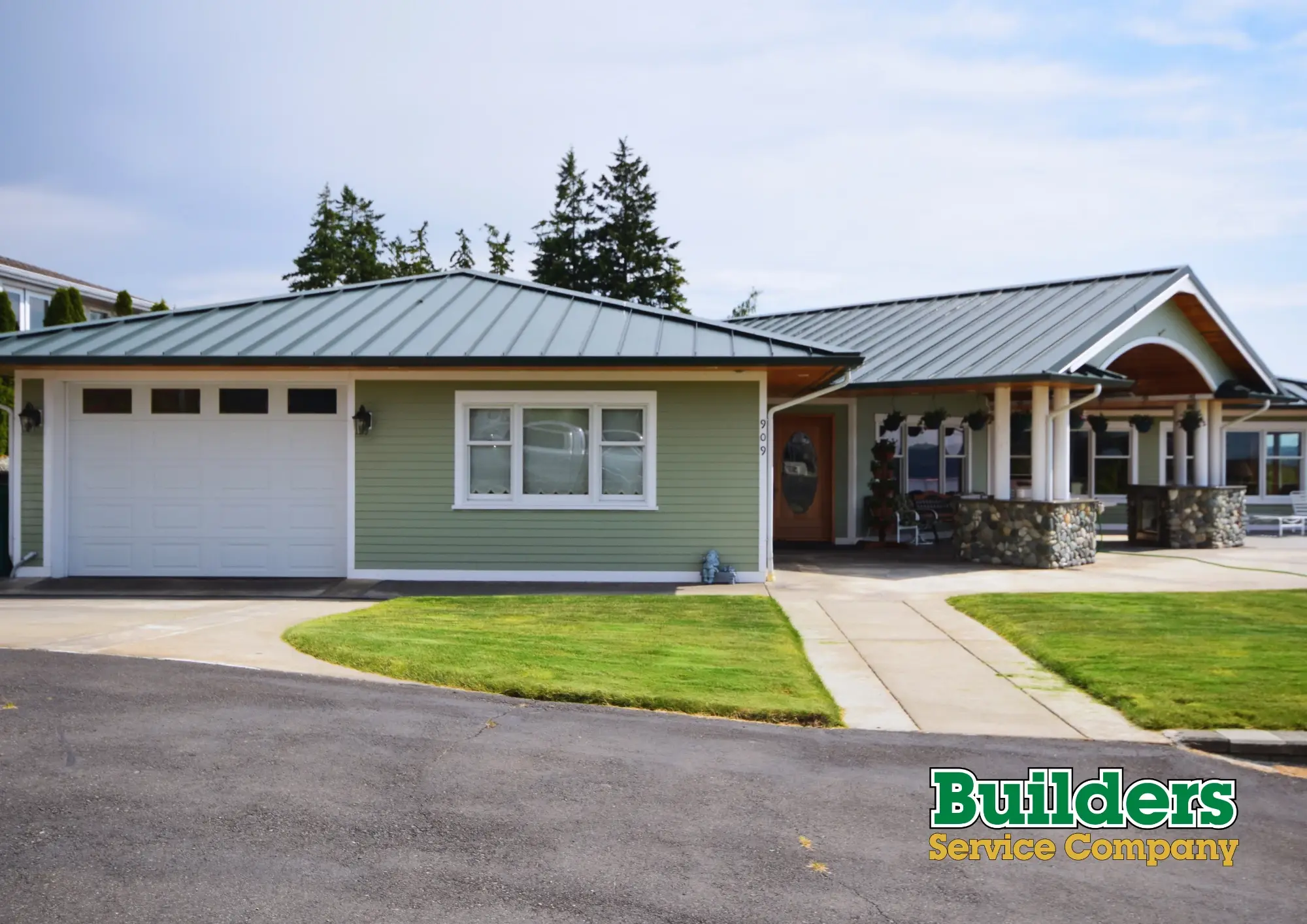
EDCO metal roofing earns its place on homes on higher lots and hillside streets, where snow load is a concern. Metal panels shed snow instead of holding it, which cuts down on the weight sitting on the roof. Because snow can slide off in a sheet, we plan snow guards or drop zones, and we confirm the roof structure before recommending it.
Census data shows 86% of Duvall homes are owner-occupied. If you plan to stay in your home for a long time, that can tip the decision toward metal. If you want a dependable roof at a lower upfront cost, asphalt is the practical pick. We walk through both during the consultation.
Signs your roof needs replacing
These are the warning signs we see most on Duvall roofs:
- Moss lifting shingles. In a wet climate, moss mats on shaded slopes hold water and push shingle edges up, letting rain reach the underlayment.
- Ice dam stains. Water marks on ceilings near outside walls, or heavy icicles along the gutters after an ice storm, point to water backing up at the eaves.
- Missing or creased shingles after an east wind. A shingle that has been bent back has lost its seal, even if it lies flat again.
- Soft spots underfoot or a sagging roof line. That points to wet or failing sheathing, which has to be replaced during a tear-off.
If you see more than one of these, it is time for a full inspection.
Get a free roofing consultation in Duvall
Schedule a free in-home consultation through our contact page or call 206-430-1927. Every roof we install comes with a lifetime warranty, financing is available, and we offer discounts for seniors, active military, veterans and first responders. For siding, windows and decks, see our Duvall home exterior services.
Duvall roofing FAQ
My Duvall home was built in the 1990s. What will you check before replacing the roof?
We start with layers and decking. Many Duvall homes from the 1980s and 1990s may already have been reroofed once, so we count the shingle layers at the eaves and check the sheathing for soft or damaged spots. A tear-off down to the deck lets us replace bad sheathing and install new underlayment and flashing. We price the job only after that inspection, during your free in-home consultation.
Does wildfire risk change which roof I should choose in Duvall?
Usually not. Duvall's wildfire risk is rated low, at the 15th percentile statewide, so most homeowners here choose between asphalt shingles and EDCO metal based on budget, appearance and the conditions on their lot. If you still want the added protection, both options are available as a Class A-rated roof assembly. We can explain the difference between the two during your consultation and point out any details around vents and roof edges.
Do you replace roofs on manufactured homes in Duvall?
Yes. Census data counts 7% of Duvall homes as mobile homes, and their roofs need different handling than a standard house. Most have a low pitch, so water drains slowly and the membrane, underlayment and edge flashing must be chosen for that slope. We look at the existing roof structure first, then recommend the material that fits it. Schedule a free in-home consultation and we will assess your home.
Can you replace the roof on just my unit of an attached home or townhouse?
Often, yes. About 13% of Duvall homes are attached, and on these the roof usually runs straight across to the neighboring unit. We plan the seam between your new roof and the neighbor's existing one so water cannot get in where the two meet, and we check how flashing ties into shared walls. We confirm the details during your free in-home consultation.