King County, WA
Siding, Roofing, Windows & Decks in Bothell, WA
King County assessor records count 5,439 single-family homes in Bothell, with a median build year of 1987, and 22% of them went up between 1985 and 1996, the years when LP and other hardboard siding was common. That siding has a known history of moisture failure, so many of these houses are due for new cladding, along with roofs, windows and decks of the same age. Builders Service Company replaces siding, roofing, windows and decks for homeowners across King County. The sections below cover what is typical for houses like yours and which materials fit them.
Homes in Bothell: what’s on them now
Census data puts the median home in Bothell at 1992, and 39% of homes were built in 2000 or later. Another 34% date from 1980 to 1999, 24% from 1950 to 1979 and 3% from before 1950. The assessor’s count of single-family homes leans older: 39% were built from 1950 to 1979, 28% from 1980 to 1999 and 28% since 2000. The city is split between King and Snohomish counties, and much of it was built out as 1970s to 1990s subdivisions.
What those eras usually mean for the outside of a house:
- 1950 to 1979: cedar, T1-11 or asbestos-cement shingle siding, with aluminum or early vinyl windows. Asbestos-cement siding may contain asbestos and should be tested before removal.
- 1980 to 1999: composite and hardboard siding, including LP siding, and first-generation vinyl windows.
- 2000 and later: fiber cement or builder-grade vinyl reaching its first repaint or replacement, plus builder-grade windows.
Neighborhood build years show the spread: Windsor Vista (median 1967), Carlyle (1975), Totem Estates (1977) and Bridlewood (1991).
Detached houses make up 54% of homes, attached homes 11%, apartments 29% and mobile homes 6%. The typical single-family home is 2,270 square feet, and assessor records show only 2% have been renovated.
Exterior permits here are handled by the City of Bothell.
Siding in Bothell
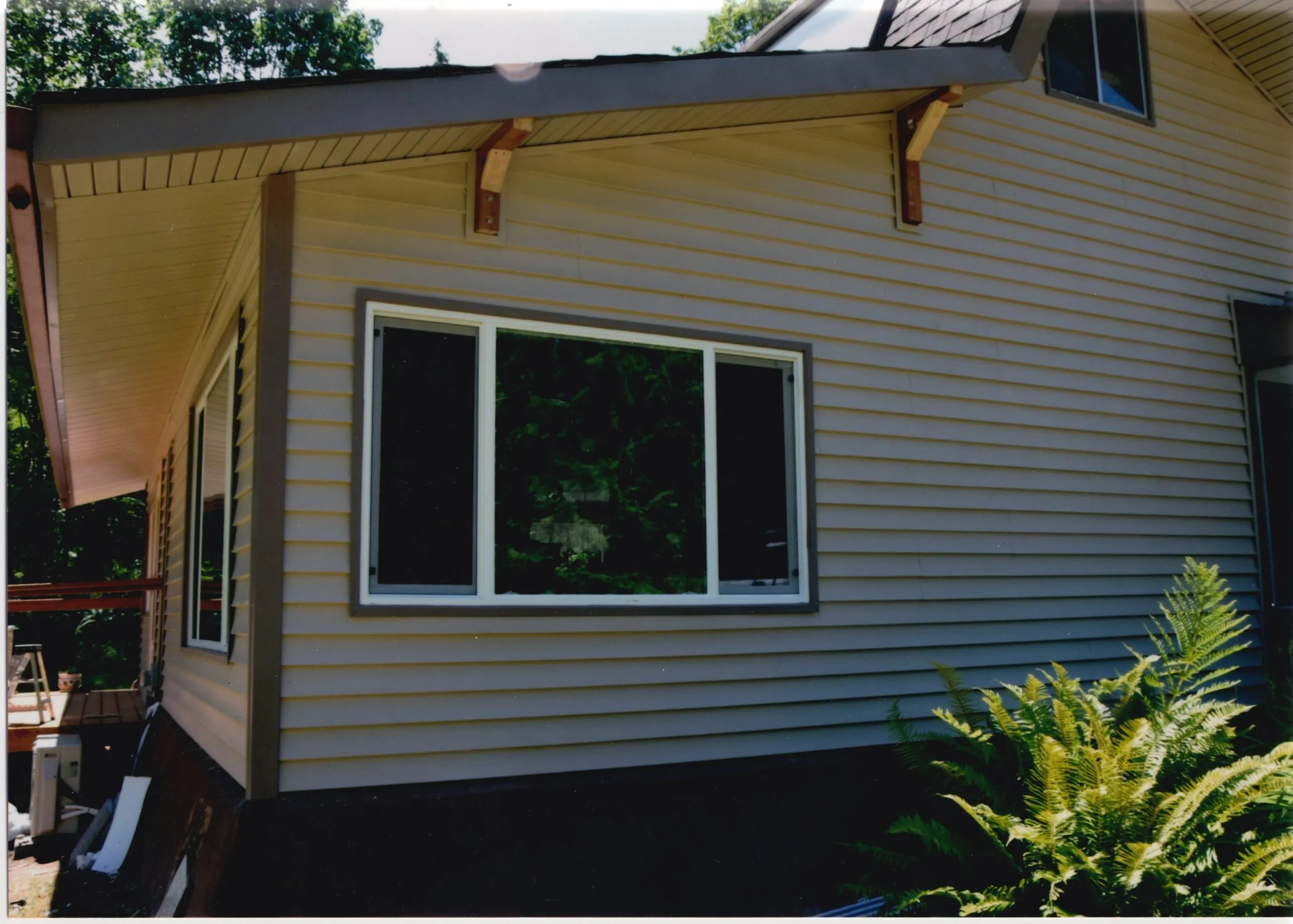
Of the single-family homes on the King County side of Bothell, 22% were built between 1985 and 1996, when LP and other hardboard siding went on many new houses. That siding has a known history of moisture failure. If your boards are swelling, soft along the bottom edges or flaking, replacing them usually makes more sense than another round of patching and paint.
The siding types we usually recommend here:
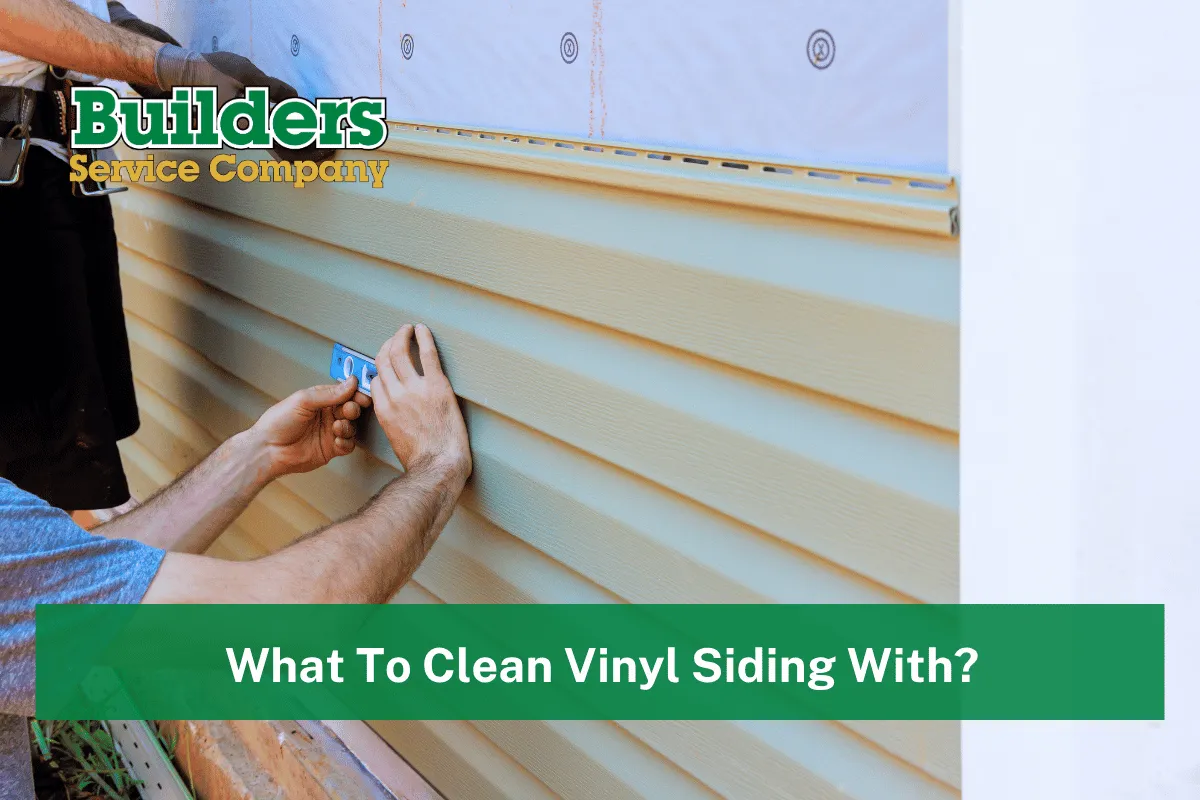
- Vinyl siding, the most versatile and least expensive option. It suits a tighter budget or a large wall area, and 53% of single-family homes here have two or more stories.
- The Evergreen Shield Siding System, our insulated composite siding, designed for the Pacific Northwest climate. Its insulating graphite membrane gives it a thermal resistance of R-2.0, compared with R-0.61 for standard vinyl siding. Census data shows 51% of homes heat with electricity, and where heating is costly, insulated siding pays back more. The composite panels are also built for water resistance through long wet seasons, mold and mildew.
- Metal siding, which many homeowners pick for a cleaner, more modern look.
- Stacked stone or stone veneer accents at entries, columns or a base course. Only 2% of single-family homes here have any brick or stone on the exterior, so a stone wainscot stands out.
None of these is wood, so none of them rots the way old hardboard does. Many Eastside subdivisions have HOA design review, so check your association’s rules before changing color or profile. The best option for your home is something we work out together at the free in-home consultation.
See our full guide to siding replacement in Bothell.
Roofing in Bothell
Census data shows 34% of homes in Bothell were built from 1980 to 1999, and many of the city’s 1970s to 1990s subdivisions still carry roofs from that era or from a first re-roof. Older homes may have more than one layer of shingles to strip, and we check the roof deck underneath once it is exposed.
The Eastside gets moderate rain, which is enough for moss to take hold on shaded slopes. Moss holds water against the roof, lifts shingles and works into the edges. Signs your roof is due:
- Cracked, curled or missing shingles
- Moss or algae that keeps coming back
- Water stains on ceilings or in the attic
- Leaks around vents, skylights or chimneys
We install two main roof types and give them equal weight:
- Asphalt shingle roofing, with underlayment, flashing and attic ventilation installed as one system so moisture does not build up under the roof.
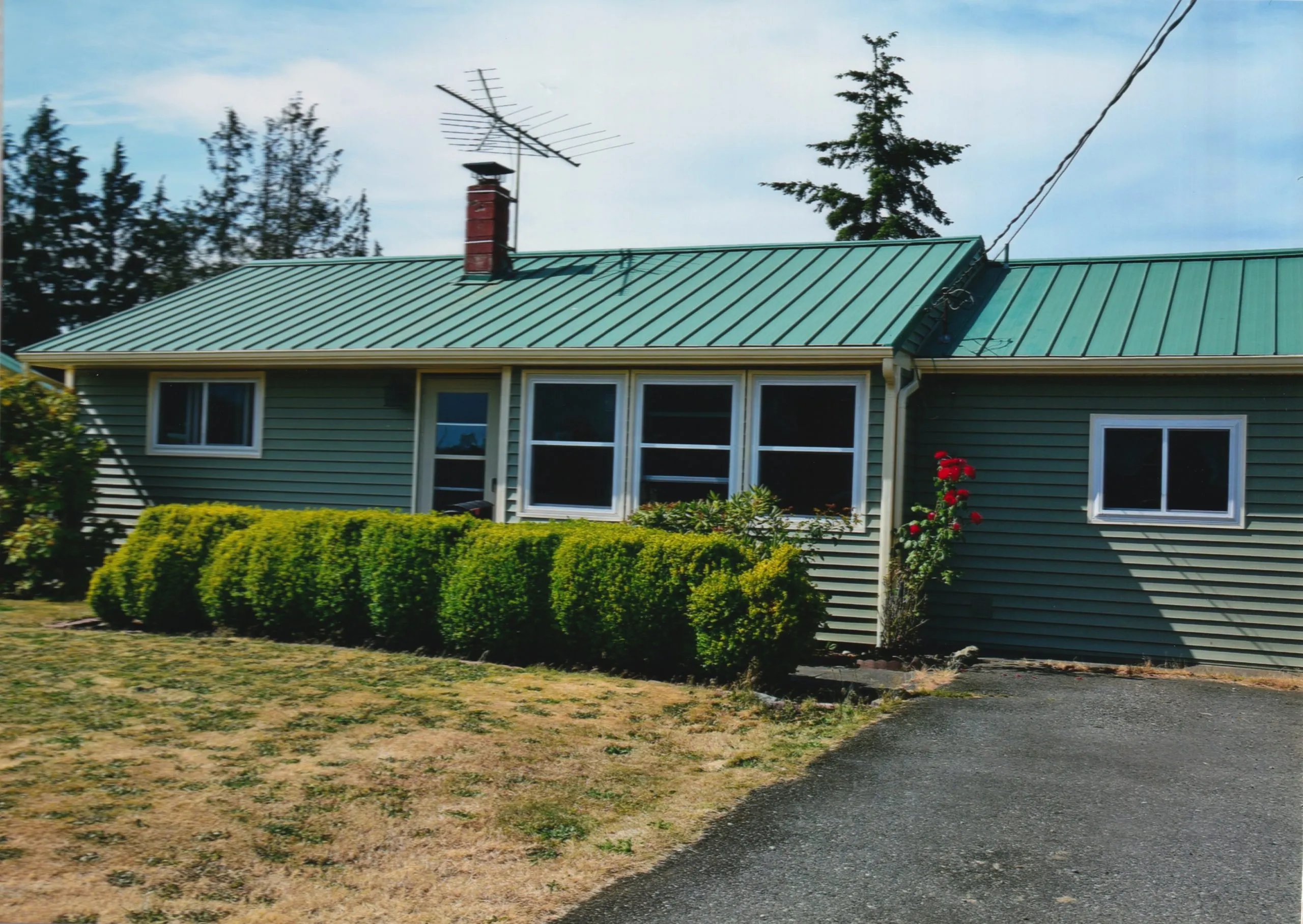
- EDCO metal roofing, with panels and trim detailed to shed water at every edge and seam.
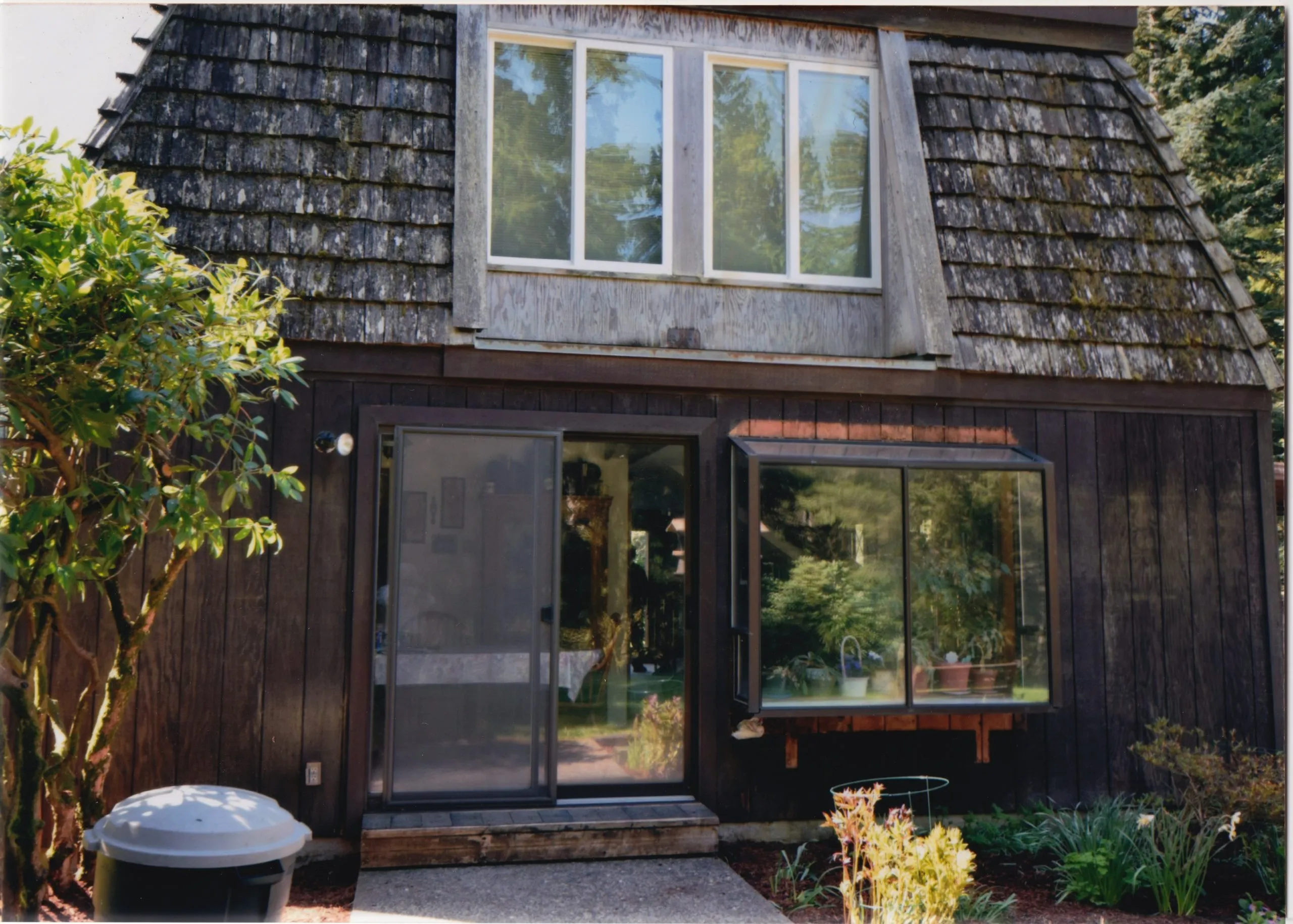
Old cedar shakes on a house here tend to hold moss and rot along the courses; either replacement ends that cycle.
Mobile homes make up 6% of housing, and their low-slope manufactured-home roofs need different details than a pitched house roof. Wildfire risk is rated Low, at the 55th percentile in the state, so moisture control usually matters more than fire rating when you choose a roof.
Learn more about roof replacement in Bothell.
Windows in Bothell
The assessor’s median build year for single-family homes on the King County side of Bothell is 1987. Homes from the 1980s and 1990s were fitted with first-generation vinyl windows, and newer subdivisions got builder-grade units. Both tend to fail at the seals. Once the seal between panes breaks, moisture gets in, the glass fogs and the window loses insulating value.
We install Preservation 9000 vinyl replacement windows, and we are the exclusive provider of Preservation 9000 windows in Washington. Matching styles to the house:
- Sliders or casements for upper floors and tight eaves. 53% of single-family homes here have two or more stories.
- Picture windows, or bay and bow windows, for the 6% of homes with a view.
- Casement, awning or hopper windows for kitchen and bath ventilation.
- Garden windows to bring light and shelf space to a kitchen.
- Double-hung profiles where HOA design review expects windows to match the originals. Check approvals before you change a style.
Heating cost shapes the payback. Census data shows 51% of homes here heat with electricity, and where heat is electric, efficient windows pay back more. Most homes are served by PSE, with Snohomish County PUD in parts of the north end; check with your utility for current rebate programs.
With 65% of homes owner-occupied, many owners plan to stay long enough to see that benefit.
Get details on window replacement in Bothell.
Decks in Bothell
King County assessor records show 51% of single-family homes in Bothell have a deck, with a median size of 220 square feet. Moderate Eastside rain keeps shaded boards damp for long stretches, and that is when moss, slick surfaces and rot show up.
We build with three materials:
- Composite decking: no rot and no staining, a good fit for shaded, damp yards.
- Vinyl decking: also rot-free and low upkeep.
- Wood decking: for a natural look or a tighter budget, with regular sealing to keep water out.
Whatever the material, we plan drainage under and between the boards and choose a slip-resistant surface. We also build covered decks, which keep the surface drier through the wet months.
For the 6% of homes with a view and the 1% on the waterfront, railing choices that keep sightlines open matter as much as the decking. Waterfront decks also need corrosion-resistant fasteners and hardware.
Read more about deck building in Bothell.
Get a free in-home consultation
Schedule a free in-home consultation and we will look at your siding, roof, windows and deck and talk through the options that fit your house. Call our Seattle office at 206-430-1927 or contact us online. Work comes with a lifetime warranty, financing is available, and we offer discounts for seniors, active military, veterans and first responders.
Bothell siding, roofing, window and deck FAQ
Does my 1980s or 1990s Bothell home have LP siding?
It might. Homes built from 1980 to 1999 came from the era of composite and hardboard siding, including LP siding, which has a known history of moisture failure. King County assessor records put 28% of the city's single-family homes in that range. Swollen, soft or flaking board edges are the usual signs. We can identify what is on your house at a free in-home consultation and replace it with vinyl, the Evergreen Shield Siding System or metal siding.
Should older siding be tested for asbestos before it comes off?
Yes, if your home has asbestos-cement shingle siding. That siding was common on homes built from 1950 to 1979, and it may contain asbestos and should be tested before removal. The assessor counts 39% of single-family homes here in that era, including neighborhoods such as Windsor Vista, where the median build year is 1967. We point out suspect siding during the free in-home consultation so testing can happen before work is scheduled.
Is metal or asphalt shingle roofing a better fit for a Bothell home?
Both suit homes here, and we install both: EDCO metal roofing and asphalt shingle roofing. Wildfire risk in the city is rated Low, at the 55th percentile in Washington, so the choice usually comes down to appearance, budget and your plans for the house. Either way, moss control, ventilation, underlayment and flashing details matter most in this wet climate. We compare both options for your roof at a free in-home consultation.
Why are the windows in my newer home fogging up?
Fogging between panes usually means a failed seal. Census data shows 39% of homes here were built in 2000 or later, and many of those came with builder-grade windows. Once the seal fails, moisture gets between the glass and the window loses insulating value. We replace them with Preservation 9000 vinyl windows, choosing styles such as sliders, casements or picture windows to suit each room.
What deck material holds up best in Bothell's rain?
Composite or vinyl decking holds up best in shaded, damp yards because neither one rots or needs staining. Wood is still an option for a natural look or a tighter budget, as long as you seal it regularly. King County assessor records put the median deck here at 220 square feet, so the material choice covers a fair amount of surface. We plan drainage and slip resistance into every deck we build.
Is the Evergreen Shield Siding System worth choosing over vinyl?
It depends on your goals and budget. Vinyl is the most versatile and least expensive option, which helps on larger houses; the typical single-family home here is 2,270 square feet. The Evergreen Shield Siding System is the long-term upgrade: an insulated composite with 20 built-in, fade-resistant colors that resist chipping, peeling and fading, so it never needs repainting. We show you both side by side at a free in-home consultation.