
How to Fix Loose Siding? A Step-by-Step Guide for Homeowners
Knowing how to fix loose siding can help protect your home from water damage, wind exposure, and expensive exterior problems. A panel that starts rattling during a storm or pulling away from the wall may seem minor, but ignoring it can allow moisture to reach the materials underneath.
In Washington, frequent rainfall, changing temperatures, and strong winds can make these problems worse. Fortunately, some loose panels can be secured without replacing an entire wall. The important part is identifying why the material came loose before attempting a repair.
What You Should Know Before Getting Started
- Loose panels often result from improper fastening, broken locking edges, or weather exposure.
- Minor vinyl siding problems may be corrected with a siding removal tool.
- High winds can loosen sections that were not properly secured.
- Panels must have enough room to expand and contract as temperatures change.
- Cracked panels, deteriorating fasteners, and moisture damage may require professional attention.
- Fixing the underlying cause helps prevent the same problem from returning.
Why Does Siding Become Loose?
Siding usually becomes loose when its fasteners fail, interlocking edges separate, or the material expands and contracts without enough room to move.
Identifying the cause is the first step in learning how to fix loose siding correctly.
Common causes include:
- Strong winds: Wind pressure can lift poorly secured panels and separate their locking edges.
- Improper installation: Fasteners driven too tightly or positioned incorrectly can restrict movement.
- Temperature changes: Vinyl expands in warm weather and contracts during colder months.
- Aging materials: Cracked edges, weakened fasteners, and worn components reduce attachment strength.
- Moisture problems: Water entering behind exterior panels can damage the underlying wood and fastening surfaces.
Check the surrounding pieces before making adjustments. A loose panel may be a symptom of a larger installation issue rather than an isolated problem.
Tools and Materials Needed for a Simple Repair
For a small, accessible area, you may need:
- Siding removal tool, commonly called a zip tool
- Hammer or suitable screwdriver
- Corrosion-resistant siding fasteners
- Measuring tape
- Replacement panels, if necessary
- Work gloves and safety glasses
A zip tool is especially useful because it releases interlocking panels without requiring excessive force.
Only attempt the work from a safe, stable position. For elevated sections, follow OSHA’s ladder safety guidance and consider professional assistance rather than working at height.
How to Fix Loose Vinyl Siding Step by Step
A loose vinyl siding panel can often be reattached by restoring its locking connection and checking the fasteners. However, the method depends on whether the panel is simply disconnected or physically damaged.
Step 1: Inspect the Loose Section
Examine the affected area for cracks, broken locking lips, missing fasteners, and signs of moisture.
Gently check whether the panel moves independently of adjacent pieces. If several surrounding pieces are loose, investigate the fastening system before continuing.
Step 2: Release the Interlocking Edge
If the nailing strip needs attention, use a zip tool to carefully unlock the panel above the affected section.
Insert the curved end into the seam, catch the locking lip, and gently pull outward and downward while sliding the tool along the connection.
Avoid excessive force, especially in cold weather when the material becomes less flexible.
Step 3: Check and Correct the Fasteners
Inspect the exposed nailing strip and supporting surface.
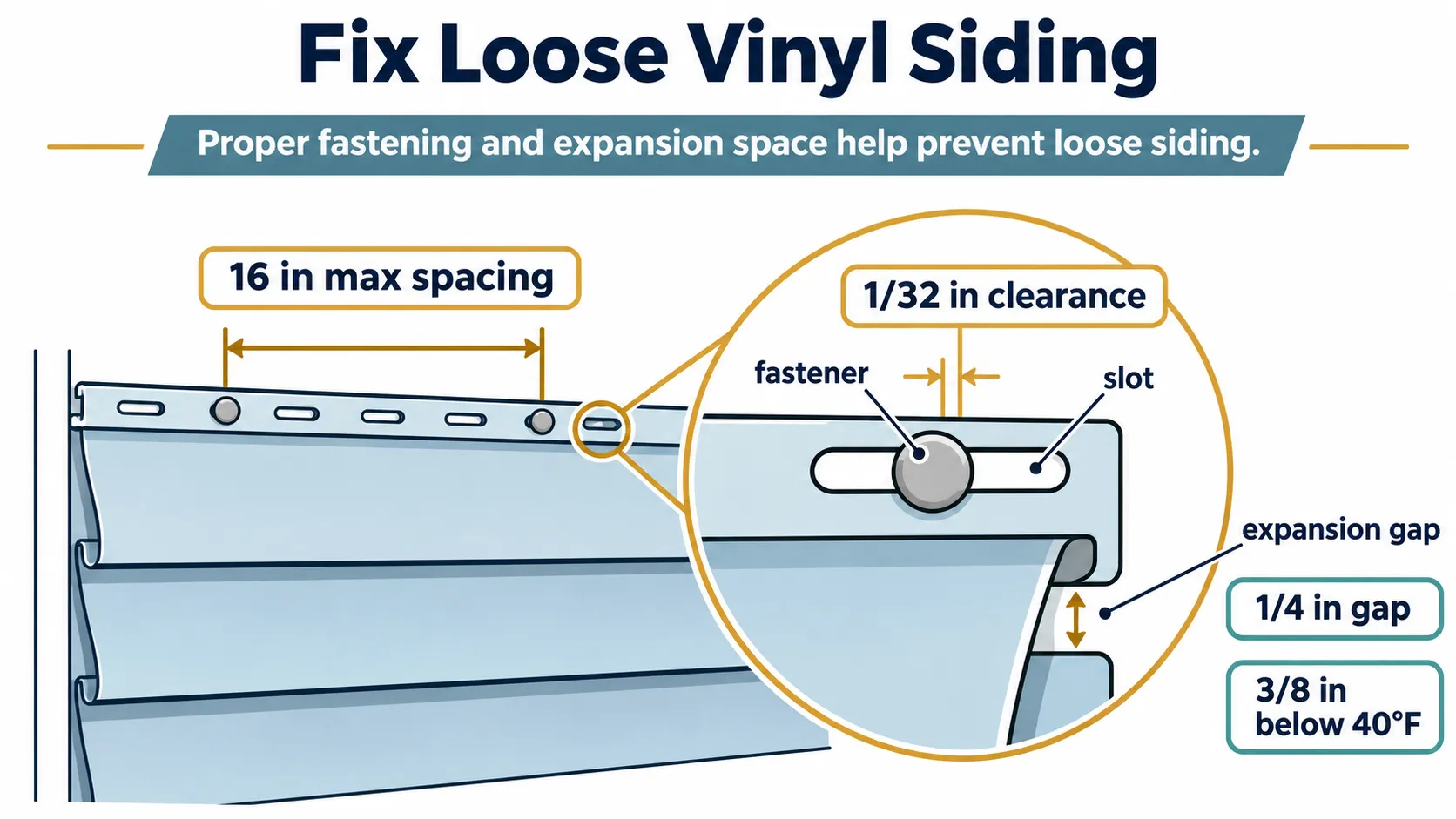
Replace missing or unsuitable fasteners with corrosion-resistant fasteners of the correct length. Position each fastener in the center of its mounting slot without pressing the head tightly against the panel.
The Vinyl Siding Institute installation manual recommends approximately 1/32 inch of clearance beneath fastener heads and a maximum spacing of 16 inches for standard horizontal installations, unless the manufacturer permits otherwise.
Important Installation Tip: Panels must remain free to move sideways. Tight fastening can create buckling instead of preventing future movement.
Step 4: Reconnect the Panels
Engage the affected panel’s bottom edge with the locking channel below it.
Then use the zip tool, if needed, to reconnect the upper panel. Work gradually along the joint until the connection is fully engaged.
Check that the repaired section sits evenly with adjacent pieces and moves slightly from side to side.
Step 5: Inspect the Finished Area
Look for visible gaps, uneven overlaps, and broken connections.
Do not put additional screws directly through the visible face simply to hold the panel against the wall. Face-fastening can restrict expansion and cause distortion.
If the panel still rattles or refuses to stay connected, its locking edge or supporting components may need replacement.
Why Silicone and Paint Are Not Permanent Solutions
Applying silicone sealant or adhesive beneath a loose panel may seem convenient, but it does not correct broken fasteners or damaged locking connections.
In fact, sealing the wrong joints can interfere with drainage and thermal movement.
The U.S. Department of Energy’s guidance on water-managed walls explains why exterior cladding needs an effective drainage system behind it.
Paint can improve the appearance of certain siding materials, but it cannot restore damaged attachment points.
Remember: A properly installed exterior manages water through overlapping materials, flashing, and drainage. Sealing every visible gap is not the solution.
When Is Repair Not Enough?
Learning how to fix loose siding also means recognizing when a small correction will not solve the underlying problem.
Use these signs to determine your next step.
| What You Notice | Recommended Action |
|---|---|
| One intact panel has disconnected | Carefully reconnect the locking edge |
| Missing or loose fasteners | Inspect the substrate and correct fastening |
| Cracked or broken panel | Replace the affected section |
| Multiple panels repeatedly detach | Have the installation professionally assessed |
| Soft wood or moisture behind panels | Investigate water damage before replacement |
Pay particular attention to areas beneath windows, around gutters, and where exterior walls meet rooflines.
If the underlying material is deteriorating, covering it with new siding will not resolve the moisture problem.
How to Prevent Siding From Becoming Loose Again
A few preventive tips can help homeowners protect their investment and avoid repeated repairs.
Inspect exterior walls after major storms, especially on elevations exposed to prevailing winds. Look for shifted panels, open seams, or sections pulling away from corners.
Keep gutters functioning properly to reduce unnecessary water exposure. Examine window trim and flashing for visible deterioration.
For standard horizontal vinyl installations, the Vinyl Siding Institute recommends at least 1/4 inch of expansion clearance at openings and stops, increasing to 3/8 inch when installing below 40°F.
These small installation details make a significant difference in long-term performance.
A Better Long-Term Solution for Washington Homes
When loose panels become a recurring problem, Builders Service Company helps Washington homeowners explore professional siding replacement options suited to their houses and local weather. Serving the region since 1974, the company specializes in exterior remodeling and offers vinyl, metal, and its exclusive Evergreen Shield Siding System.
Rather than simply covering existing problems, the company’s replacement process includes removing old materials, inspecting the underlying wall, addressing discovered damage, and installing new siding with appropriate trim and flashing. Its Evergreen Shield Siding System offers insulated composite panels designed for the Pacific Northwest’s wet climate, with R-2.0 thermal resistance and water-resistant construction.
During a free in-home consultation, homeowners can review the condition of their exterior, discuss suitable materials, compare samples, and understand available replacement options and pricing in person.
Why Homeowners Choose Builders Service Company
- Established in 1974: More than 50 years of Washington exterior remodeling experience.
- Licensed contractor: Washington contractor registration BUILDSC027JN.
- Locally owned: Founder Mason Ruppel continues to oversee projects and participate in consultations.
- Multiple siding options: Vinyl, metal, and the exclusive Evergreen Shield Siding System.
- Lifetime warranty: The company advertises a lifetime warranty on its siding work.
- Customer feedback: Published five-star reviews recognize installation quality, workmanship, and attention to detail.
Protect Your Home With Professional Siding Replacement
A loose panel should never become an ongoing problem for your home. When damage spreads, moisture enters the wall, or existing materials no longer perform properly, professional replacement can provide a more reliable long-term solution.
Builders Service Company serves homeowners throughout Washington, including Seattle, Tacoma, Everett, Olympia, Auburn, Wenatchee, and surrounding communities.
Schedule your free in-home consultation to discuss your siding concerns and explore exterior replacement options with an experienced local team.
Frequently Asked Questions
Can Loose Siding Cause Water Damage?
Yes, loose panels can expose vulnerable areas to wind-driven rain.
Although properly designed walls include water-resistant barriers, damaged flashing or underlying materials can increase the risk of moisture intrusion.
Can You Fix Loose Siding Without Removing It?
Yes, a panel that has simply disconnected may snap back into its locking channel.
If the fasteners or locking edges are damaged, additional disassembly may be necessary.
How Long Does It Take to Reattach a Loose Panel?
A straightforward, accessible panel reconnection may take approximately 15 to 30 minutes.
The work can take considerably longer when fasteners, trim, or underlying materials require attention.
Does Homeowners Insurance Cover Wind-Damaged Siding?
Homeowners insurance may cover sudden wind-related damage, depending on the policy.
Damage resulting from normal deterioration, deferred maintenance, or improper installation may be excluded.
Should I Replace Aluminum Siding That Keeps Coming Loose?
Repeatedly loose aluminum siding should be inspected before deciding whether replacement is necessary.
Damaged fastening points, bent sections, or deteriorated supporting materials may make replacement more practical than repeated adjustments.